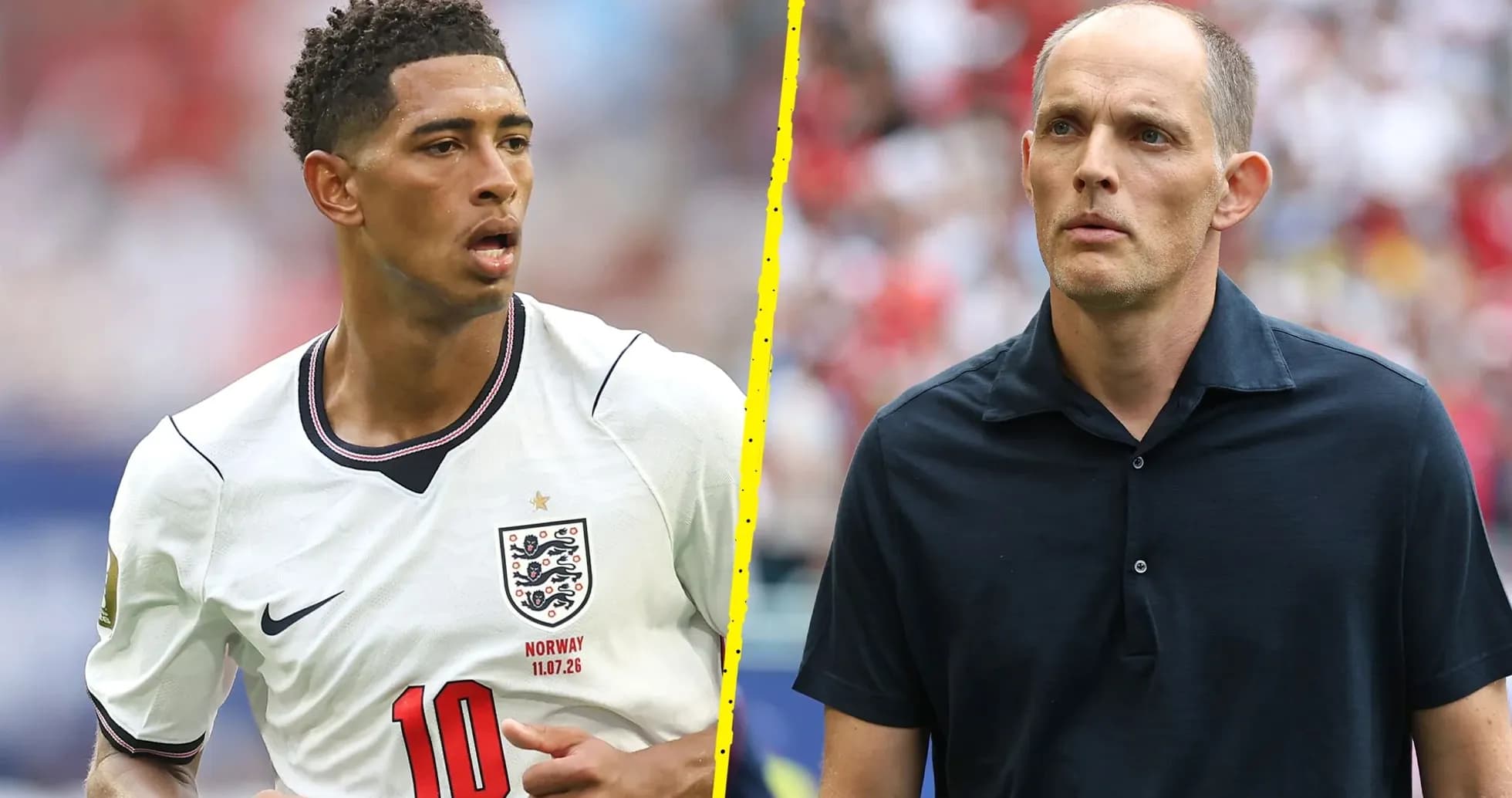
Tuchel Addresses Media Storm Surrounding England and Bellingham
Thomas Tuchel insists the only rift around England right now is the one being manufactured on television.
The England head coach moved decisively to shut down talk of tension with Jude Bellingham after the midfielder’s brusque “Yeah, well, whatever” response to being told of Tuchel’s post‑match criticism following the quarter-final win over Norway.
Bellingham had just dragged England into the World Cup semi-finals with both goals in a gruelling 120-minute epic. He walked off a match-winner, then walked straight into a storm.
Tuchel hits back at “cut” interview
Tuchel, speaking exclusively to talkSPORT, made it clear he believes the flashpoint was born in the edit suite, not the dressing room.
“I wonder who blows these things up,” he said. “So there is nothing to blow up and if it's blown up it's blown up in the media of course.”
The sequence was simple. Tuchel told ITV’s Gabriel Clarke he was “not happy” with England’s display against Norway, while rejecting any notion of a mentality problem. Clarke then put the critical part of that assessment to Bellingham. The midfielder, exhausted and still fizzing with adrenaline, snapped back.
For Tuchel, the issue is what Bellingham was not told.
“Like what do you expect of a player that just played 120 minutes and gave literally everything?” Tuchel said.
“If you shorten the comment of his coach, if you don't tell him that he was world-class, if you don't tell him that he has world-class actions, if you just cut all this and tell him, oh your coach said you were sloppy, what do you expect?
“Of course you get the comment that you get and then you try to blow it up and try to create misunderstandings and cracks where no cracks are.”
The German was not just defending his star midfielder. He was defending the relationship that has underpinned England’s campaign.
“We come from the same place, we come from being competitive and I'm a competitive coach,” he explained. “I push this team to the limit and that was my assessment and, like I said, I think the question was unfair in this moment of time towards Jude because he cut all the compliments out of my assessment and just asked about the critical points.
“So I can understand what you expect of a player that just gave everything and stands there in front of a microphone in a flash interview.”
Then came the line that really matters inside the camp.
“That's just what it is, but we're close as ever and closer than ever before. You can see that on the field, energy and mentality on campus is excellent through the last days and we're ready to go for it.”
No crack. No feud. Just a coach and his talisman, united by a shared edge.
From media storm to Messi
Tuchel has little appetite to linger on a media squall when a World Cup semi-final against Argentina is looming into view.
England are one game from a first World Cup final since 1966. To get there, they must go through Lionel Messi.
The eight-time Ballon d'Or winner is 39 now, the player who has covered the least ground in the group stages, the man who often walks while others sprint. None of that has dulled the threat. Messi sits level with Kylian Mbappé at the top of the Golden Boot race on eight goals and remains the tournament’s most dangerous magician.
Tuchel knows exactly what his players are walking into.
“A lot of people have tried throughout the last decades and not a lot have succeeded,” he said of the task of stopping Messi.
“You stop the supply to him, you stop passing options for him and still, he's a magician, he finds his ways, he finds gaps, he sees things just seconds earlier than anyone else.
“I have the feeling it's a different kind of vision going on. He is one of the all-time greats in this game and he proves it game after game after game in this tournament which is highly impressive.”
The respect is obvious. So is the intent.
“But we are here to beat him and to beat his team. So it's a big ask but we're up for it.”
The noise around Bellingham will fade. The noise around Messi will only grow. England and Tuchel now have 90 minutes – or more – to decide which story gets told for generations.