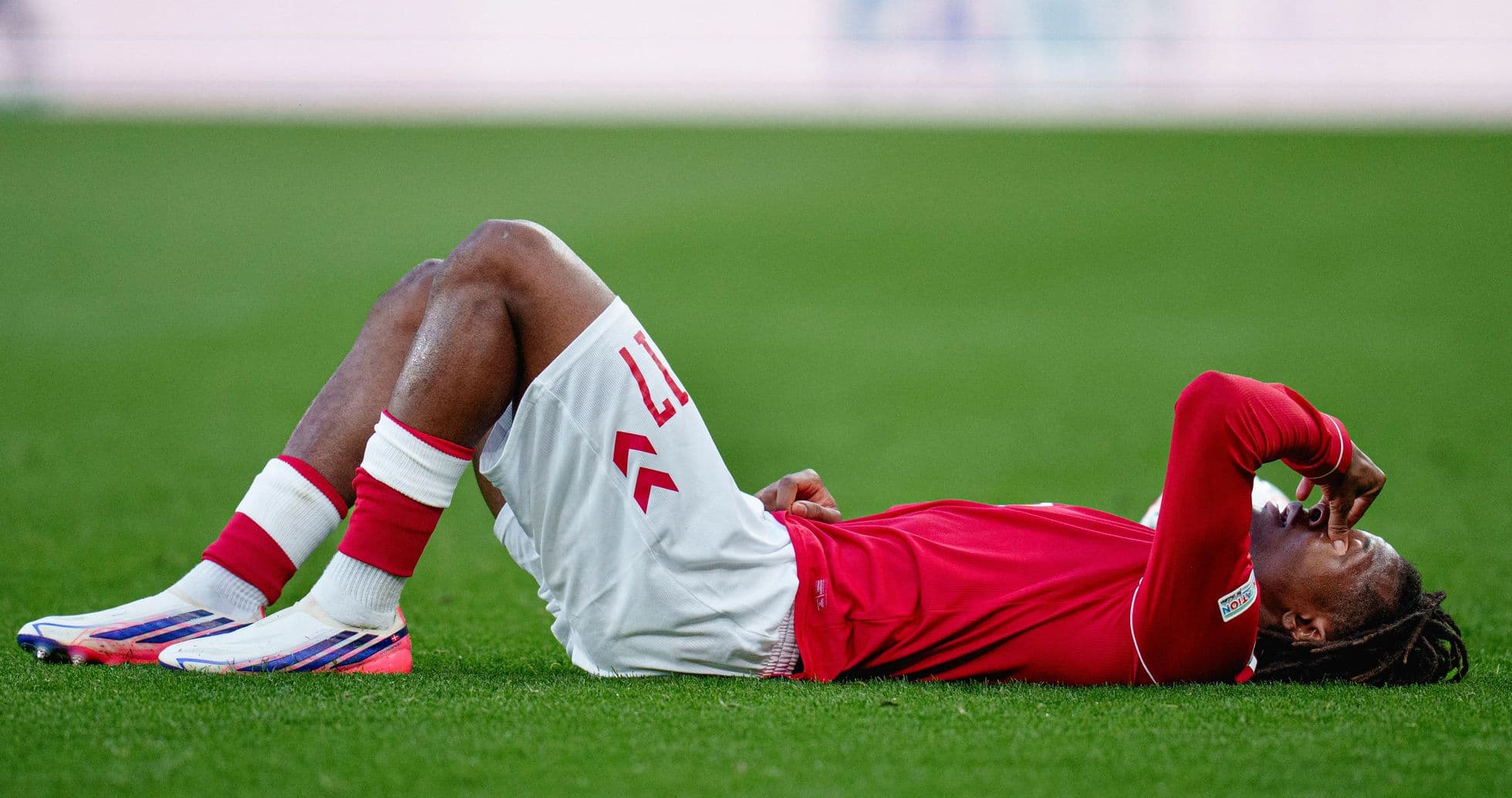
Tottenham’s Scoring Struggles: De Zerbi’s £320m Challenge
Four games into the new Premier League season and the table has an odd look. Tottenham Hotspur and Coventry City stand alone as the only sides yet to find the net. One of them has just thrown more than £320m at a rebuild, much of it on attacking talent.
So why does Roberto De Zerbi’s Tottenham still feel like a team rehearsing the final act without ever delivering the punchline?
De Zerbi’s risk-and-reward blueprint
The Premier League De Zerbi has returned to is not the one he left with Brighton in 2024, but his core ideas have survived the journey and are already visible in north London.
His football invites danger. Spurs slow the game down, roll passes backwards, and almost tease opponents into pressing high. The trap is set. When the pressure comes, they want to spring forward, slicing through the spaces behind the press with sharp vertical passes or strong ball-carrying.
De Zerbi summed it up neatly in a 2020 coaching seminar: “The stronger the pressure of the opponent, the more vertical [our] action becomes. [The fewer opponents behind], the easier it becomes to go and score.”
The pattern is familiar from his days at Marseille between 2024 and 2026, when his side averaged 2.3 goals per game. Forwards running into big spaces. Defences suddenly outnumbered. Games opening up.
At Tottenham, the structure is there. The outcomes are not. Not yet.
The 2-3-2-3 shell – and the players learning to live in it
In possession, Spurs often resemble a 2-3-2-3. It is not always obvious on first viewing, but the skeleton is consistent.
Rodrigo Bentancur usually holds the base of midfield, stationed just ahead of the two centre-backs. That trio stays relatively fixed, giving De Zerbi a platform to build from.
Ahead of them, the picture is more fluid. Wingers, full-backs and central midfielders rotate, but the demand is clear: keep the shape intact. If a player vacates a zone, someone else must fill it. No drifting for the sake of it. Every movement has a consequence.
On top of that positional discipline, De Zerbi layers his principles. He wants his teams to play through the centre, to tempt opponents into narrowing up, then punish them when the ball is released wide to direct wingers.
That worked at Marseille. It has flickered at Spurs. But the margins are thin, and the details are not yet second nature.
Central lanes, tight spaces, and the right profiles
De Zerbi pushes his players to use the middle of the pitch. The effect is twofold.
When Spurs’ centre-backs have the ball, opposition forwards and midfielders step up, worried about being played through. That opens pockets between the lines for Spurs’ attacking midfielders. At the same time, the more the opposition are dragged inside, the more room appears for wide players to attack on the outside.
It is a brave way to play. Receiving in traffic is non-negotiable. Some players relish it; others are still adapting.
Sandro Tonali, for instance, is more comfortable in big spaces, facing forward. De Zerbi has responded by rotating him with Archie Gray, who nominally starts at right-back. Gray, just 20, is not a natural central midfielder, but he has coped in those tight zones and, crucially, seems to grasp what his manager wants.
The return of James Maddison, back from a shoulder injury for last Tuesday’s Carabao Cup tie at Liverpool, changes the equation again. Maddison is built for those pockets between the lines. His presence should help Spurs reach dangerous areas more often and with more control.
But personnel is only part of it. De Zerbi is asking players to unlearn habits. Under Thomas Frank at the start of last season, Spurs largely avoided the centre in their build-up, funnelling play down the flanks to limit the risk of turnovers in the middle.
Now they are being told to go where the traffic is thickest. To take the ball under pressure. To pass through crowded zones. That kind of bravery with the ball rarely arrives overnight.
The missing pass: Spurs’ reluctance to pull the trigger
For all the careful construction, Spurs are repeatedly stalling at the critical moment.
Their build-up regularly gets them beyond the opposition midfield after luring teams into a press. From there, the pitch opens up. These are the situations De Zerbi lives for. Yet Tottenham are not turning them into goals.
Three things need to click: recognising the best pass, making the right runs ahead of the ball, and executing the delivery. The biggest blockage so far has come in the first and third steps. Spurs are either not seeing, or not daring to play, the through balls that split defences.
The movement is often there. Omar Marmoush, in particular, has made aggressive runs in behind. Too often, the pass never comes.
Gray has tried to slide balls down the line, but Spurs have not consistently found those penetrative passes through central areas. The return of Pedro Porro could be crucial here. For Spain this summer, as they won the World Cup, he operated more centrally in possession and showed his eye for creating chances.
If he brings that instinct into this Spurs side, De Zerbi’s vertical ideas may finally start to bear fruit in the final third, as they did so often at Marseille.
Runs, timing and the Marseille template
Off the ball, the learning curve continues.
At Marseille, one of De Zerbi’s clearest attacking patterns involved diagonal runs from wide attackers on the last line, hit by team-mates willing to play vertically and early. Igor Paixao’s goal in a 2-2 draw with Toulouse last season was a textbook example: a well-timed run, a direct pass, and a defence left scrambling.
Tottenham are still trying to replicate that choreography. Against Liverpool in midweek, Destiny Udogie repeatedly surged into promising positions down the left. With the game stretched, his physicality and timing allowed him to exploit the spaces left in behind, even though Andy Robertson has generally impressed at left-back this season.
Those moves got Spurs into good crossing positions against a disorganised Liverpool shape. The pattern was right. The finish was not.
The final act: crosses, cut-backs and the box
When an attacking team suddenly accelerates play, defences tend to retreat in a hurry, collapsing towards their own box. That creates a different kind of opportunity: space in front of the back line for late-arriving midfielders or strikers who cleverly drop off.
Marmoush has tried to exploit that by peeling away into those pockets, but again, the pass has not always found him.
On the flanks, there is another small but significant detail. Savio, a left-footed right-winger, prefers to drive to the byline on his stronger foot. Pulling the ball back across goal on his weaker side is harder, and it shows. By contrast, the left-footed Udogie and Robertson have produced clearer chances from their side with their crosses.
At Marseille, both the right winger and right full-back were comfortable cutting the ball back on their right foot. Those deliveries were then attacked by Pierre-Emerick Aubameyang, whose movement in the box at 37 was still razor sharp. The system amplified the qualities of ruthless finishers who thrived in space.
Tottenham are not yet at that level of cohesion in the area. The runs are sometimes there. The cross is sometimes there. The cut-back is sometimes there. Rarely all at once.
Close – but not close enough
Look closely at Spurs’ attacking moves and a pattern emerges: they are often one decision, one touch, one run away from creating clear chances. The framework De Zerbi is installing is recognisable, and it has a track record of producing goals at the highest level.
That does not guarantee perfection. Tactics are only as effective as the players who execute them, and Marseille’s forwards were clinical operators who knew exactly how to exploit the spaces De Zerbi created for them.
At Tottenham, the foundations are being laid. The habits are changing. The ideas are in place. If the small details across the pitch sharpen up, the goals should follow.
The real question is how long a club that has spent £320m on attacking talent is prepared to wait for the first one.