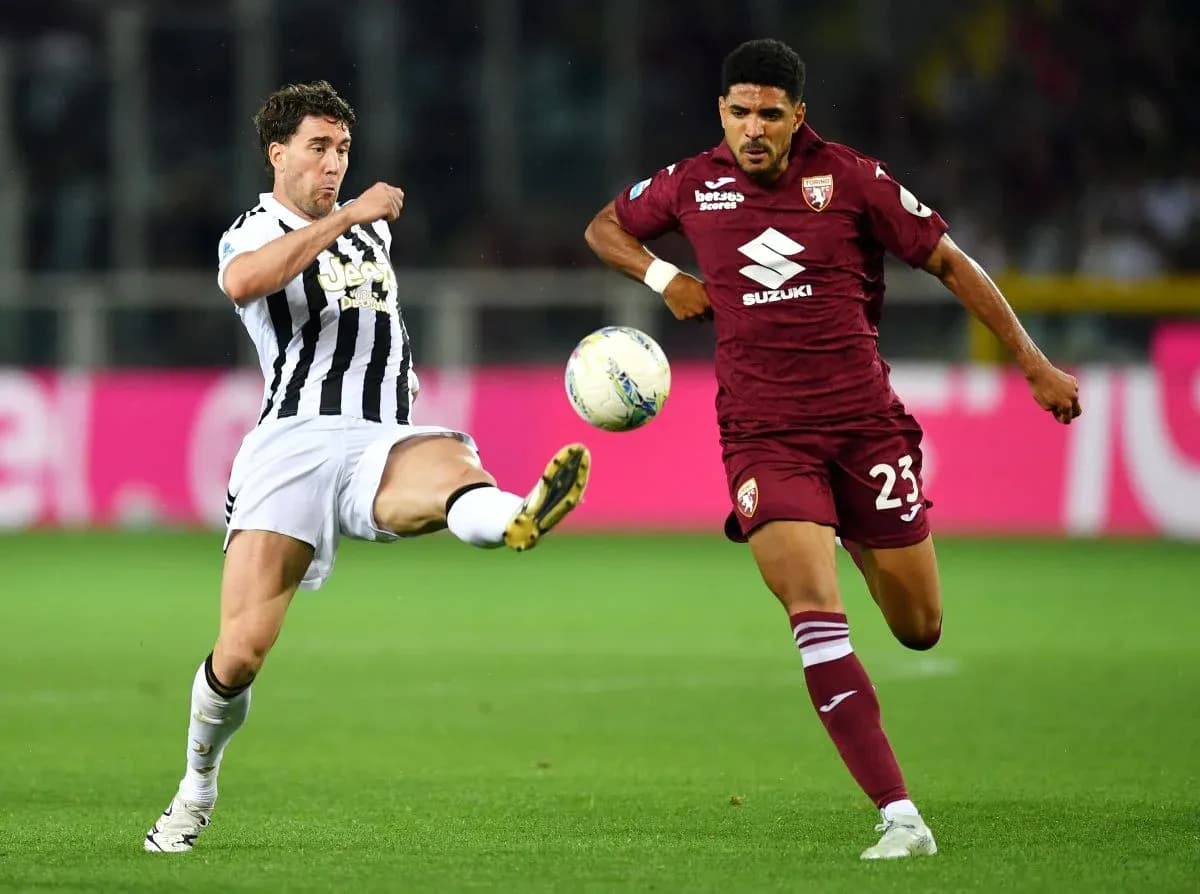
Torino vs Juventus: A Derby of Identity and Tactical Battles
Stadio Olimpico Grande Torino closed its Serie A season with a derby that felt like a manifesto for both clubs’ identities. Torino, 12th in the table on 45 points with a goal difference of -19 (44 scored, 63 conceded in total this campaign), fought back from a 0-1 half-time deficit to draw 2-2 with a Juventus side that finished 6th on 69 points and a total goal difference of 27 (61 for, 34 against). Following this result on the final day of the Regular Season - 38, the numbers underline a clash between a bruised but stubborn Torino and a structured, Europa League-bound Juventus.
I. The Big Picture – Shapes, context, and seasonal DNA
Leonardo Colucci set Torino up in a 3-4-1-2, a system that mirrors their broader season profile: flexible back three, industrious wing-backs, and a heavy reliance on direct forward play. At home this campaign they averaged 1.4 goals for and conceded 1.5, a narrow but telling imbalance that framed the risk of opening up against a side as efficient as Juventus.
Luciano Spalletti’s Juventus arrived in their default 3-4-2-1, the formation they used 24 times in total. On their travels they produced 1.4 goals per game while allowing only 0.9, a compact, counter-punching machine that usually suffocates opponents and then punishes them in transition. The first half, with Juventus leading 1-0 at the interval, fitted that script perfectly: Torino’s volume against Juve’s precision.
II. Tactical Voids – Absences and disciplinary shadows
Both squads were reshaped by notable absences. Torino were without Z. Aboukhlal (muscle injury), F. Anjorin (hip injury), and L. Marianucci (knee injury), stripping Colucci of attacking variety and midfield depth from the bench. More structurally damaging was the suspension of G. Maripan for yellow cards. In a season where Torino’s all-competitions defensive record read 63 goals conceded in 38 matches, losing a senior centre-back for a derby against a top-six attack was a clear fault line.
Juventus suffered a similarly symbolic loss: Bremer suspended for yellow cards. In a back three that has underpinned a campaign of only 34 goals conceded overall (0.9 per game in total), removing the central defensive pillar forced Spalletti to lean on F. Gatti and L. Kelly as the anchors, with P. Kalulu completing the trio. The absence of Bremer tilted Juve’s usual aerial and duelling dominance, particularly against a physical front line featuring G. Simeone and D. Zapata.
The disciplinary data of the season hinted at a volatile undercurrent. Torino’s yellow-card distribution shows a pronounced late-game surge, with 21.13% of their cautions arriving between 76-90 minutes and another 21.13% from 91-105. Juventus, by contrast, tend to flare earlier and just after the hour, with 23.08% of yellows between 61-75 minutes and 21.15% from 76-90. That pattern matched a derby that grew more fractured as Torino chased the game and Juve tried to manage it.
III. Key Matchups – Hunter vs Shield, Engine Room, and flanks
Hunter vs Shield
For Torino, the attacking spearhead was Giovanni Simeone, one of Serie A’s more industrious strikers this season. In total this campaign he scored 11 league goals from 32 appearances, taking 59 shots with 28 on target. His game is built on relentless duels (294 total, 112 won) and penalty-box aggression. Against a Bremer-less Juventus, Simeone’s movement between Gatti and Kelly was always going to be decisive. Without their usual defensive organiser, Juventus’ away record of only 18 goals conceded looked more vulnerable than the raw average suggested.
On the Juventus side, the “hunter” in the numbers is actually Kenan Yıldız, even though he started this match on the bench. Across the season he produced 10 goals and 6 assists, with 64 shots (40 on target) and a huge 76 key passes. He is not just a finisher; he is a creative axis. Even when not in the XI, his presence in the squad altered Torino’s preparation: Colucci’s back three had to be ready for a late injection of a dribbler who attempted 149 dribbles with 78 successful, a profile that could have exploited Torino’s tiring legs and their late-card tendency.
Engine Room – Locatelli vs the Torino midfield band
The central duel belonged to M. Locatelli against Torino’s trio of E. Ilkhan, G. Gineitis, and M. Pedersen. Locatelli’s season has been immense: 2805 passes at 88% accuracy, 47 key passes, 102 tackles, and 23 blocks. He is both metronome and shield. His ability to step into the half-spaces and break up play was essential in front of a reconfigured back three.
Torino’s midfield, by contrast, is less about star power and more about collective coverage. Gineitis and Ilkhan were tasked with pressing Locatelli and denying him clean forward lanes into D. Vlahovic and the double line of J. Boga and Francisco Conceição. When they succeeded, Juventus were forced wide and deeper, blunting the typical verticality of their 3-4-2-1.
Flanks and red-line risk – Cambiaso and McKennie vs Obrador and Pedersen
On the wings, Juventus leaned on W. McKennie and A. Cambiaso, two of their most influential season-long performers. McKennie, with 5 goals and 5 assists plus 48 key passes, is a late-arriving threat who attacks the box from the right. Cambiaso’s season is laced with edge: 3 goals, 4 assists, and a red card across 36 appearances, with 61 tackles and 7 blocks. He embodies Juventus’ willingness to live on the disciplinary line to control transitions.
They were confronted by R. Obrador and M. Pedersen in Torino’s 3-4-1-2, wing-backs who had to stretch the pitch while tracking Juve’s wide overloads. Without Maripan, any failure to protect the channels would leave S. Coco and E. Ebosse exposed in wide 1v1s against Conceição and Boga. Francisco Conceição, in particular, arrived with 5 assists, 42 key passes, and 54 successful dribbles from 102 attempts, a pure one-on-one menace. His duels with Obrador shaped much of Juventus’ right-sided thrust.
IV. Statistical Prognosis – What the numbers say about the 2-2
Following this result, the draw feels like the logical meeting point between Torino’s volatility and Juventus’ controlled aggression. Torino’s overall profile of 1.2 goals for and 1.7 against per match, combined with Juventus’ 1.6 for and 0.9 against in total, pointed toward a game where Juve’s superior defensive structure should have edged the xG balance. Yet the absence of Bremer and the physical mismatch against Simeone and Zapata eroded that advantage.
Juventus’ 16 clean sheets this season, split evenly with 8 at home and 8 away, underline how unusual it is for them to concede twice, even on their travels. For Torino, whose biggest home defeat was a 1-5 and whose defensive record has been fragile, scoring 2 against this Juventus side is a statement of attacking resilience more than systemic control.
From an expected goals perspective, Juventus’ compact 3-4-2-1 and their season-long habit of keeping away xG low would still suggest they edged the quality of chances, especially given their superior creativity through Locatelli, McKennie, Conceição, and the latent threat of Yıldız. But the derby context, the suspensions, and Torino’s willingness to overload the box with two strikers and N. Vlasic between the lines tilted the balance toward chaos.
In narrative terms, the 2-2 is a fitting closing chapter: Juventus confirm their Europa League trajectory with a performance that shows both their structure and their limits without key defenders, while Torino, mid-table and scarred, prove that on their day they can drag even the league’s most disciplined travellers into a wild, emotional fight.