Torino vs Inter: A Tactical Battle Ends in 2–2 Draw
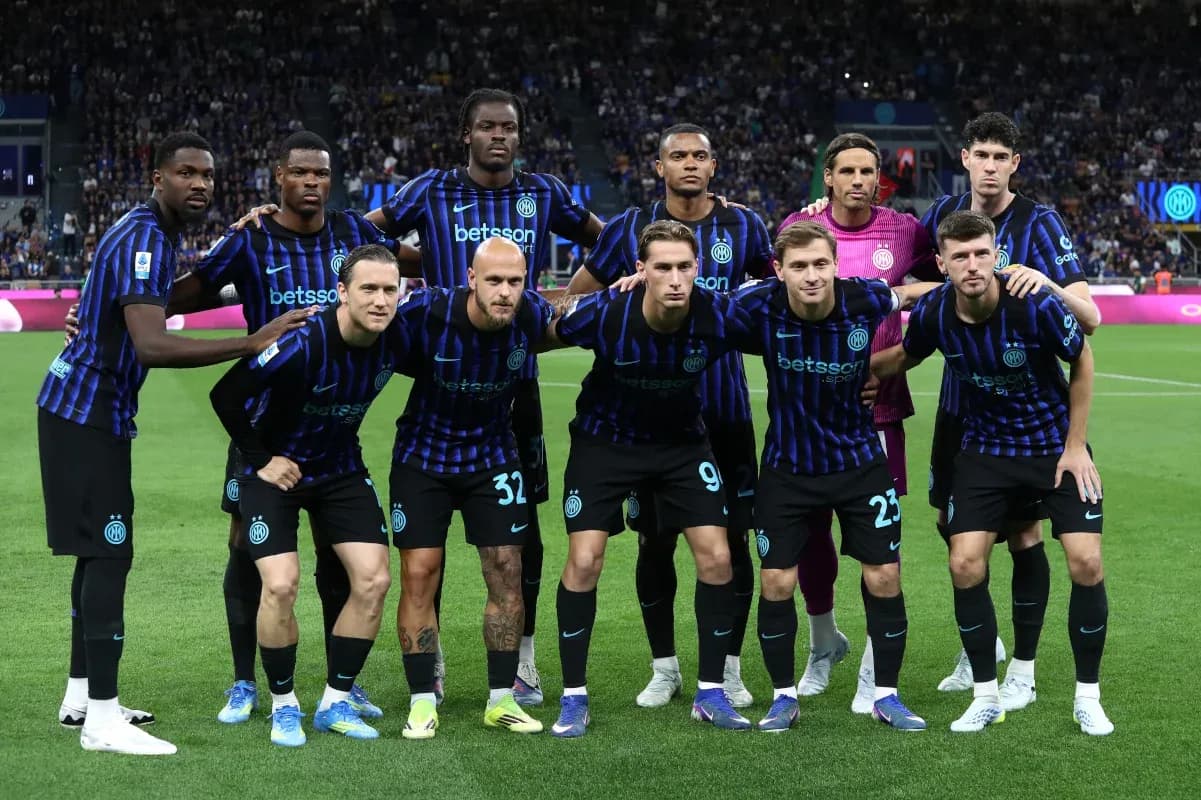
Torino and Inter shared a 2–2 draw at Stadio Olimpico Grande Torino in Serie A’s Regular Season – 34th round, a match that evolved from Inter’s apparent control to Torino’s assertive fightback. Inter led 1–0 at half-time and extended the advantage to 2–0 just after the hour, but Ivan Juric’s side (in a 3-4-2-1 structure) used substitutions and central overloads to claw back a point against Simone Inzaghi’s 3-5-2. Despite Inter’s 63% possession and superior passing accuracy (90% vs 80%), Torino’s more vertical, box-focused approach generated higher xG (2.46 vs 1.6), underlining a contest where territory and control belonged to Inter, but the better chances ultimately to Torino.
First Half
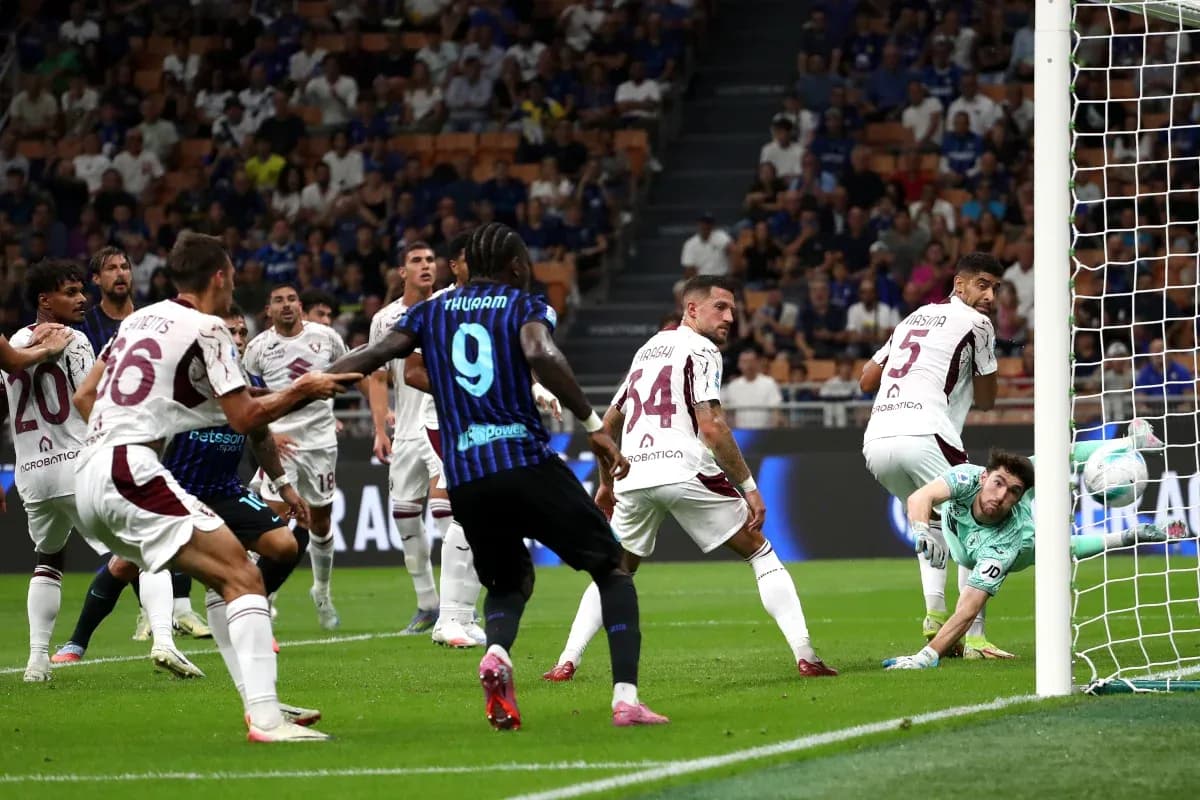
Inter struck first on 23'. Building from their left, Federico Dimarco advanced from his wing-back lane, receiving in space as Torino’s wide midfielder line failed to shift across. His delivery found Marcus Thuram attacking the inside-right channel; Thuram’s movement split Ardian Ismajli and Saúl Coco, and he finished clinically past Alberto Paleari for 0–1. That goal crystallised Inter’s early pattern: long possessions, width from Dimarco and Matteo Darmian, and central circulation through Nicolo Barella and Piotr Zielinski.
Second Half
Torino’s response came after the interval, driven by a reshaping of personnel. At 53', Saúl Coco (OUT) made way for Luca Marianucci (IN), injecting fresh legs into the back line. A minute later, Valentino Lazaro (OUT) was replaced by Alieu Njie (IN), a more direct wide presence. Inter’s first change at 61' saw Ange-Yoan Bonny (OUT) replaced by Francesco Pio Esposito (IN), but almost immediately Inter doubled their lead: at 61', again from the left, Dimarco delivered a set-piece-quality ball that found Yann Bisseck free in the box. Bisseck attacked the central channel and headed in for 0–2, capitalising on Torino’s disorganisation around the penalty spot.
Torino’s tactical gamble intensified at 67', when Che Adams (OUT) was replaced by Duván Zapata (IN), and Gvidas Gineitis (OUT) by Cesare Casadei (IN). The home side effectively moved from a 3-4-2-1 into a more aggressive 3-2-4-1, with Zapata and Giovanni Simeone pinning Inter’s back three and Casadei joining Emirhan Ilkhan between the lines. The impact was immediate: on 70', Ilkhan found a pocket of space in the right half-space and slid a vertical pass into Simeone, who attacked the channel between Manuel Akanji and Carlos Augusto. Simeone’s finish for 1–2 reflected Torino’s new emphasis on quick, central combinations rather than wide circulation.
The key equalising phase hinged on pressure and penalty-area occupation. At 76', VAR confirmed a penalty for Torino, with Duván Zapata central to the incident as he battled for position in the box. With Inter’s back line now pinned deeper by Zapata and Simeone, and wing-backs forced back by Torino’s wide threats, the defensive distances compressed. On 79', Nikola Vlasic stepped up and converted the penalty to make it 2–2, completing a turnaround that mirrored the xG trend: Torino’s chances grew higher in quality as Inter’s defensive structure loosened.
Final Minutes
Inter attempted to regain control with a triple substitution on 80'. Petar Sucic (OUT) was replaced by Henrikh Mkhitaryan (IN), adding experience and ball retention in midfield. Matteo Darmian (OUT) made way for Denzel Dumfries (IN), aiming for more direct wide running on the right. Dimarco (OUT), whose two assists had defined Inter’s attacking output, was replaced by Andy Diouf (IN), shifting the left side from a specialist crosser to a more interior-running profile. However, the loss of Dimarco’s delivery reduced Inter’s clarity in the final third.
The closing minutes were increasingly fragmented. At 84', Andy Diouf received a yellow card for a foul, symptomatic of Inter’s attempts to halt Torino’s transitions. One minute later, at 85', Enzo Ebosse was booked for a foul, reflecting Torino’s own need to disrupt Inter counters. On 86', Barella was also shown a yellow card for a foul, as midfield duels became more aggressive. Inter’s final structural tweak came on 87', when Bisseck (OUT) was replaced by Davide Frattesi (IN), effectively converting the back three into a more fluid back four or situational 4-3-3 in possession, with Frattesi adding late-box runs. Torino’s last change at 90' saw Simeone (OUT) replaced by Adrien Tameze (IN), a move to stabilise midfield and protect the draw after the comeback.
Tactical Analysis
From a tactical perspective, Torino’s 3-4-2-1 was initially stretched by Inter’s 3-5-2, particularly on the flanks. With Rafael Obrador and Lazaro tasked with both tracking wing-backs and supporting attacks, Inter found repeated overloads via Dimarco and Darmian. Barella and Zielinski exploited the spaces behind Torino’s first pressing line, allowing Inter to maintain long spells of possession (596 passes to Torino’s 343). However, Torino’s defensive trio of Ebosse, Ismajli, and Coco managed to keep Inter’s central shots relatively contained: Inter produced 14 total shots but only 9 inside the box, many from less dangerous angles.
Paleari’s role was controlled rather than spectacular; he registered 3 saves, aligning with Inter’s xG of 1.6 and suggesting that while Inter were territorially dominant, they were not relentlessly testing the goalkeeper. At the other end, Yann Sommer faced just 2 shots on target but conceded twice, with no goals prevented relative to the xG model. Torino’s 14 shots included 11 inside the box, underlining how their more direct, central approach in the second half created higher-quality chances despite lower volume of possession.
The disciplinary pattern (one yellow card for Torino, two for Inter) mirrored the tactical narrative: Inter’s late fouls, particularly from Diouf and Barella, came as they struggled to contain Torino’s more aggressive central surges after the introduction of Zapata and Casadei. Overall Form-wise, Inter looked the more polished possession side, but Torino’s Defensive Index and attacking efficiency in high-value zones tilted the underlying metrics in their favour. The 2–2 final score, with Torino leading xG 2.46 to 1.6, reflects a match where Inter’s structural control was ultimately matched and then neutralised by Torino’s in-game tactical adjustments and superior chance quality.