Valencia Edges Girona 2–1 in Tense La Liga Clash
Under the late afternoon light at Estadio de Mestalla, Valencia edged Girona 2–1 in a La Liga contest that felt more like a knife-edge relegation-avoidance chess match than a mid-table dead rubber. Following this result, the table snapshot shows Valencia in 12th on 39 points with a goal difference of -11, Girona in 15th on 38 with a goal difference of -14. Both sides came in with 33 matches played, both hovering in that uneasy zone where safety is likely but not guaranteed, and every point still shapes the narrative of their season.
The game pitted two distinct seasonal identities against each other. At home, Valencia have been functional and often efficient: 16 matches, 7 wins, 5 draws, 4 defeats, with 23 goals for and 19 against. On their travels, Girona have been stubborn rather than spectacular: 17 away games, 3 wins, 7 draws, 7 losses, 17 scored and 26 conceded. Overall, both teams share the same scoring average of 1.1 goals per game in total this campaign, but Girona’s defensive frailty (50 goals conceded overall) has consistently undercut their attacking intentions.
Carlos Corberan leaned into Valencia’s familiar 4-4-2, a shape they have used 20 times overall this season, while Michel stayed loyal to Girona’s 4-2-3-1, their primary structure with 17 uses overall. The final scoreline – 2–1 to Valencia after a 0–0 half-time – reflected not just tactical tweaks, but also the way both squads have been sculpted by injuries and disciplinary trends across the year.
Tactical Voids and Structural Adjustments
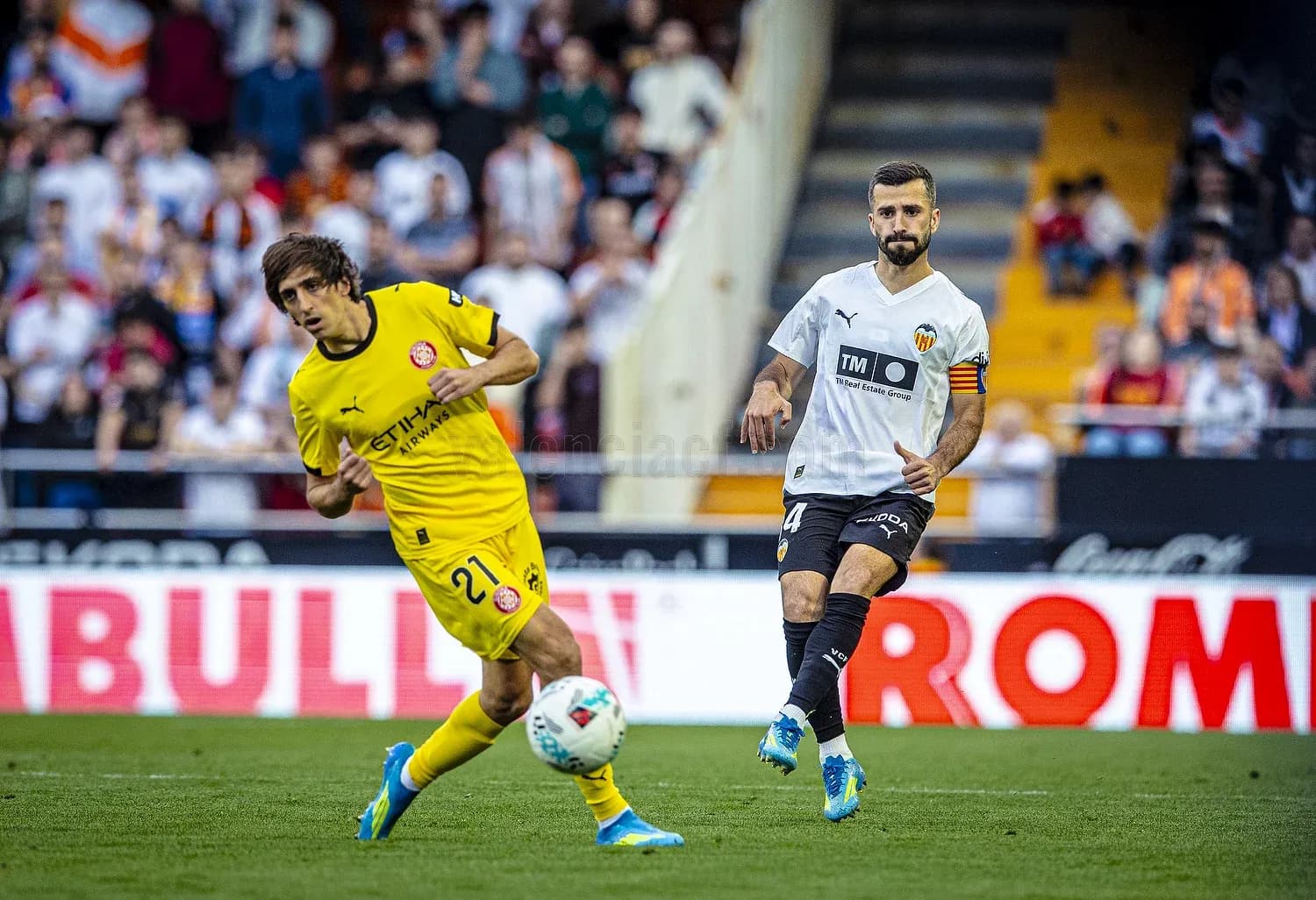
Valencia’s defensive resources were heavily hit. J. Agirrezabala, E. Comert, J. Copete, M. Diakhaby, D. Foulquier and T. Rendall were all listed as missing, stripping Corberan of depth and variety in his back line. That made the choice of Pepelu as a listed defender particularly telling: his presence in the back four alongside Renzo Saravia, C. Tarrega and José Gayà suggested a more ball-playing, step-out-from-the-line approach rather than a pure low block.
Those absences forced Valencia into a compact, horizontally tight 4-4-2 where the full-backs, especially Gayà, had to manage the dual task of width and defensive leadership. Given Gayà’s disciplinary profile this season – 6 yellow cards and 1 red in La Liga – there is always a fine line between aggression and risk, but his tackling volume (59 tackles, 5 blocked shots, 20 interceptions overall) underpins Valencia’s willingness to defend on the front foot.
Girona were not spared by the injury list either. Juan Carlos, Portu, A. Ruiz, V. Vanat, M. ter Stegen and D. van de Beek were all unavailable, depriving Michel of rotation options in goal, wide areas and midfield creativity. That made the starting presence of Vitor Reis (listed as Vitor Nunes in the disciplinary stats), Daley Blind and A. Martinez even more central to Girona’s build-up and defensive stability.
Disciplinary trends shaped the risk map of the contest. Heading into this game, Valencia’s yellow cards peaked late: 23.08% of their cautions arrived between 76–90 minutes, with another 16.92% between 91–105. Girona were even more volatile late on, with a striking 42.03% of their yellows coming in the 76–90 window and 14.49% from 91–105. In a tight match, that pattern all but guaranteed a fractious, stop-start finale – exactly the environment that tends to favour a home side defending a narrow lead.
Key Matchups – Hunter vs Shield, Engine Room vs Enforcer
The Hunter vs Shield narrative started on the Valencia bench. Hugo Duro, the club’s top league scorer with 9 goals overall, began as a substitute despite his 31 appearances and 18 starts. His profile – 26 shots, 12 on target, plus 1 scored penalty from 1 taken – makes him Valencia’s clearest penalty-box reference. With Valencia averaging 1.4 goals at home this season and Girona conceding 1.5 goals per game both at home and away in total, the late introduction of Duro was always likely to be a decisive card in Corberan’s deck.
Up front from the start, U. Sadiq and L. Beltran formed a more mobile, pressing-oriented front two. Their role was less about volume of shots and more about pinning Girona’s first phase, especially Daley Blind and A. Witsel, who together form the spine of Michel’s build-up. Blind’s experience and Witsel’s calm in the double pivot were designed to give Girona control between the lines, but the 4-4-2 press – with J. Guerra and G. Rodriguez stepping up from midfield – repeatedly tried to cut those supply lines.
On the flanks, the Engine Room duel revolved around Luis Rioja and L. Ramazani against Girona’s full-backs and wide midfielders. Rioja’s season numbers tell the story of Valencia’s creative heartbeat: 5 assists, 33 key passes and 60 dribble attempts with 34 successful overall. Stationed wide right in this game, he was the natural outlet whenever Valencia broke Girona’s press, tasked with driving at A. Moreno and looking to isolate Vitor Reis when Girona’s back line shifted across.
For Girona, the creative burden fell on V. Tsygankov, T. Lemar and Azzedine Ounahi behind C. Echeverri. Their 4-2-3-1 tried to overload the half-spaces around Pepelu and Tarrega, forcing Valencia’s back four to constantly adjust their line. But against a Valencia side that has kept 4 clean sheets at home overall and concedes just 1.2 goals per game at Mestalla, Girona needed more incision than their season-long 1.0 away goals-per-game average has typically provided.
Defensively, Vitor Reis stood out as Girona’s Shield. Across the season he has blocked 37 shots, a huge number that underlines his front-foot defending. Yet his disciplinary record – 6 yellows and 1 red overall – mirrors Girona’s late-game volatility. As Valencia pushed after the interval, especially once fresh legs like Hugo Duro and possibly A. Danjuma or D. Lopez were introduced from the bench, Reis was dragged into more duels in wide and central zones, increasing the risk of costly fouls and dangerous set-pieces.
Statistical and Tactical Verdict
Following this result, the numbers continue to underline a familiar pattern. Valencia, with 10 wins, 9 draws and 14 losses overall, are not a dominant side, but at Mestalla they are efficient: 23 goals scored at home, 19 conceded, and a negative overall goal difference of -11 that is softened by their home solidity. Girona, with 9 wins, 11 draws and 13 defeats overall and 36 goals for against 50 against, remain a team whose attacking promise is persistently undermined by defensive concessions, especially away where they have allowed 26 goals.
Expected Goals data is not provided, but the structural indicators are clear. Valencia’s home scoring average of 1.4 and Girona’s away concession rate of 1.5 strongly support a scenario in which the hosts generate the better chances, particularly after half-time when Girona’s card count and defensive fatigue tend to spike. Girona’s own away scoring average of 1.0 suggests they will usually find moments – especially via Tsygankov or late crosses towards C. Stuani off the bench – but not enough to consistently overturn deficits against organised home back lines.
In narrative terms, this 2–1 victory fits the season’s arc. Valencia leveraged their familiar 4-4-2, their creative axis in Luis Rioja, and the late impact potential of Hugo Duro to tilt a finely balanced match. Girona, stretched by injuries and betrayed again by their defensive record, played their part but left Mestalla with nothing more than another reminder that in this La Liga campaign, their margins for error – especially away from home – are brutally thin.