Como Secures 2–0 Victory Over Genoa in Serie A Match
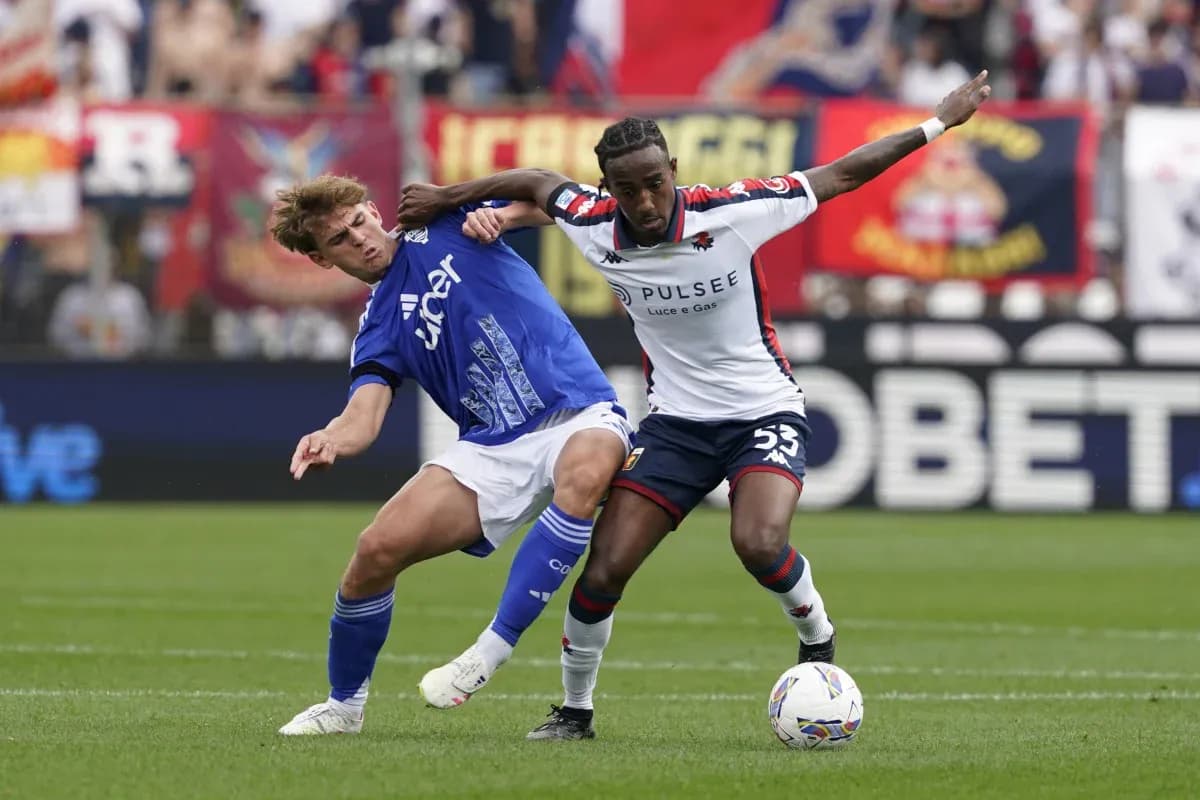
Genoa’s 2–0 home defeat to Como at Stadio Comunale Luigi Ferraris unfolded as a controlled away performance in Serie A’s Regular Season - 34, where Como’s superior structure in and out of possession outweighed the hosts’ territorial parity. With the game effectively decided by goals from Anastasios Douvikas on 10' and Assane Diao on 68', Como managed the tempo, protected their box, and translated a marginal xG edge (1.06 to Genoa’s 0.59) into a fully efficient scoreline. Despite identical 50% possession, Genoa’s 3-5-2 lacked vertical incision, while Como’s 4-2-3-1 consistently accessed the spaces between and behind Genoa’s back three.
The scoring opened early: on 10', Como’s first real pattern through the right half-space paid off. Lucas Da Cunha found A. Douvikas, who finished a Normal Goal for 0–1, exploiting the channels around Genoa’s wide centre-backs. That advantage allowed Como to dictate the risk profile for the rest of the half.
Discipline began to shape the tone late in the first period. On 37', Diego Carlos received a yellow card for an off-the-ball foul, a sign of Como’s willingness to disrupt Genoa’s attempts to counter through their front two. Two minutes later, on 39', Assane Diao was booked for a foul, underlining Como’s aggressive counter-press whenever possession was lost in midfield.
Halftime arrived with Como 1–0 ahead, a lead fully aligned with the game’s flow: fewer shots but better locations, and Genoa’s single shot on target offering little threat.
Second Half
The second half opened with immediate structural changes. At 46', Genoa replaced goalkeeper Justin Bijlow (OUT) with Nicola Leali (IN), a rare halftime switch that altered their build-up dynamics from the back. Simultaneously, Como made a like-for-like control adjustment: Nico Paz (OUT) made way for Maxence Caqueret (IN), shifting the 4-2-3-1 towards a more stable double pivot geared to protect the central lane and manage transitions.
On 57', Genoa reshaped their right side when Sebastian Otoa (OUT) was replaced by Junior Messias (IN), effectively turning the nominal back three into a more aggressive structure with Messias pushing higher from the flank. Como responded in the same minute: Diego Carlos (OUT), already on a yellow, was replaced by Marc Kempf (IN), a pragmatic defensive substitution to avoid a second caution and maintain back-line stability.
The decisive second goal came on 68'. With Genoa stretched and their wing-backs higher, Como attacked the vacated channels. A. Diao, now operating with more freedom ahead of the double pivot, finished a Normal Goal after being supplied by M. Caqueret, doubling the lead to 0–2 and validating Como’s more conservative, control-first adjustments.
Genoa chased the game with a double substitution on 70'. Jeff Ekhator (OUT) made way for Lorenzo Colombo (IN), and Alexsandro Amorim (OUT) was replaced by Ruslan Malinovskyi (IN), signalling a clear shift towards added attacking presence between the lines and a stronger long-range shooting threat. On 81', Stefano Sabelli (OUT) was withdrawn for Maxwel Cornet (IN), pushing Genoa into a more winger-driven final phase, with Cornet tasked to attack the wide channels and deliver from deep.
Como, protecting a two-goal lead, rotated their attacking line in the same 81' window. A. Douvikas (OUT) was replaced by Alvaro Morata (IN), providing a hold-up and outlet option to relieve pressure. A. Diao (OUT) departed for Ignace Van der Brempt (IN), a clear defensive tilt, reinforcing the flanks and turning the 4-2-3-1 into something closer to a 4-3-3/4-5-1 without the ball.
Late tension produced two further bookings in stoppage time. At 90+3', Junior Messias was shown a yellow card for argument, reflecting Genoa’s frustration at their inability to break Como’s block. Seconds later, also at 90+3', Marc Kempf received a yellow card, likewise for argument, as Como defended their lead in a scrappy closing phase. The final substitution arrived at 90+4', with Martin Baturina (OUT) replaced by Nicolas-Gerrit Kühn (IN), a time-management and fresh-legs move with the result already secured.
From a tactical standpoint, Genoa’s 3-5-2 never solved Como’s compact central structure. The back three of Alessandro Marcandalli, Leo Østigård, and Sebastian Otoa initially offered secure circulation but lacked progressive angles into midfield. The wing-backs, Sabelli and Johan Vásquez, were often pinned by Como’s wide midfielders Assane Diao and Martin Baturina, preventing consistent overloads down the flanks.
In central midfield, Morten Frendrup, Alexsandro Amorim, and Mikael Ellertsson were tasked with both screening transitions and feeding the front two. However, Como’s double pivot of Máximo Perrone and Lucas Da Cunha, later reinforced by Maxence Caqueret, repeatedly shut off the vertical lanes into Vitinha and Jeff Ekhator. Genoa’s 459 passes at 82% accuracy show they could retain the ball, but the limited xG of 0.59 and only 1 shot on goal reveal that most of this circulation was in sterile zones, in front of Como’s compact block.
The substitution of Bijlow for Leali at 46' did not materially alter Genoa’s attacking profile. With zero goalkeeper saves recorded for Genoa, the defensive line was breached in ways that left their keepers largely exposed rather than offering shot-stopping showcases. Conversely, Jean Butez for Como made 1 save, but the real defensive work was done by the structure in front of him: a back four that held its line, a double pivot that screened cutbacks, and wide players that diligently tracked Genoa’s wing-backs.
Como’s 4-2-3-1 was the more balanced system. The back four of Ivan Smolčić, Jacobo Ramón, Diego Carlos/Marc Kempf, and Álex Valle stayed narrow, inviting Genoa to play wide while defending crosses with numbers. Ahead of them, Perrone and Da Cunha, later joined by Caqueret, controlled the rhythm, ensuring Como’s 455 passes at 85% accuracy were purposeful and progressive. Between the lines, Nico Paz in the first half and then the more conservative structure after his substitution allowed Como to adjust from creative occupation of the half-spaces to game management once ahead.
In attack, the trio of Diao, Paz/Baturina, and Da Cunha behind Douvikas gave Como multiple lanes of entry into the box. Seven of their eight shots came from inside the area, reflecting a clear emphasis on working the ball into high-value zones rather than speculative efforts. Their xG of 1.06 aligns closely with the two goals scored, indicating not an overperformance but a clinical conversion of well-crafted chances.
Statistically, the match was finely balanced in surface metrics: 50% possession each, 9 total shots for Genoa versus 8 for Como, 2 corners to 3, and similar passing volumes. Yet the underlying patterns show Como with the superior Overall Form on the day: better shot quality, more incisive use of possession, and a structure that turned modest attacking numbers into decisive moments. Defensively, Como’s unit posted a stronger Defensive Index: they conceded only 1 shot on target, limited Genoa’s xG to 0.59, and, despite committing 15 fouls and collecting 3 yellow cards, managed those interventions tactically rather than chaotically.
Genoa’s Defensive Index was undermined by the early concession and the second-half transition goal, with no goalkeeper saves and 2 goals conceded against 1.06 xG. Their single yellow card, to Junior Messias for argument, spoke more to frustration than to tactical aggression. In the end, Como’s capacity to control zones, adjust personnel intelligently, and execute their 4-2-3-1 principles under pressure translated a marginal statistical edge into a clear 2–0 away win.