England's World Cup Dream Ends as Tuchel Takes Responsibility
Argentina 2–1 England. Two goals in the final 20 minutes. One World Cup dream ripped away.
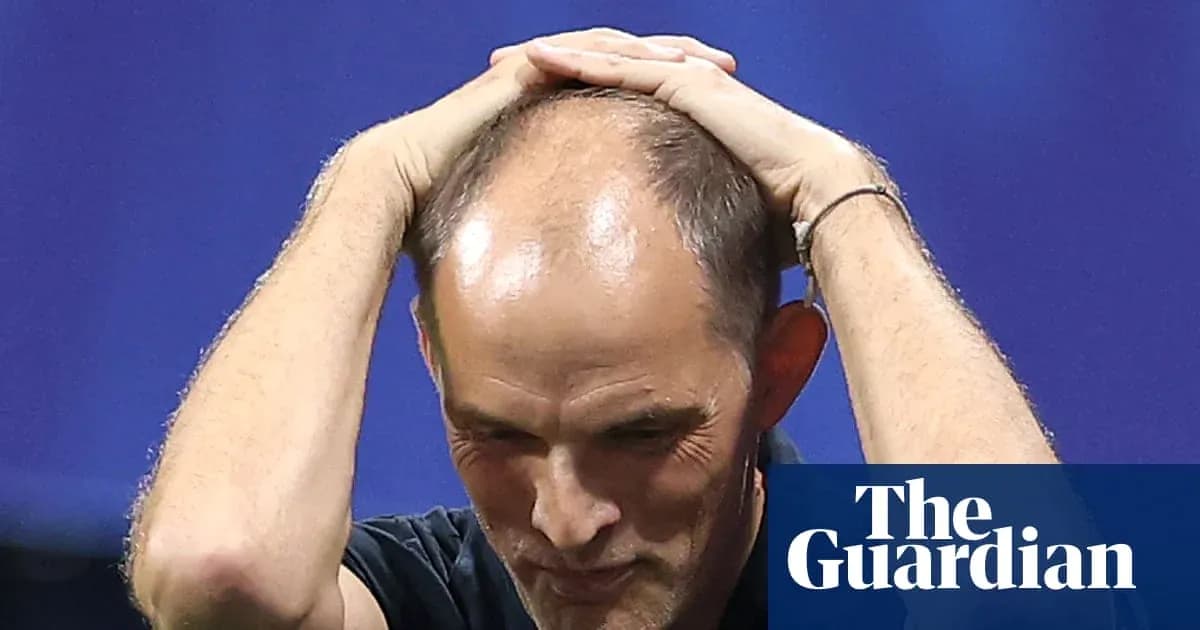
Thomas Tuchel walked into the mixed zone with the look of a man who already knew the inquest had begun. He did not dodge it. He stepped into it.
“Of course the responsibility is on the coach,” he said, owning the decision that turned a controlled semi-final into a siege England could not survive.
A lead, then a retreat
For an hour, England had one foot in history. Anthony Gordon’s crisp finish early in the second half had them within touching distance of a first men’s World Cup final on foreign soil. They were organised, brave on the ball, and for once, the occasion seemed to fit them rather than suffocate them.
Then the instinct to protect, not to push, took over.
Argentina, the reigning champions, had been kept at arm’s length. Lionel Messi probed without quite finding the angles. Enzo Fernández and Alexis Mac Allister kept recycling possession, but England’s structure held.
Tuchel blinked first.
With his side 1-0 up, he withdrew Declan Rice and Reece James and switched to a back five. Three minutes later, Fernández stepped into the space England had surrendered and detonated a piledriver past a helpless goalkeeper. From there, it felt like a countdown rather than a contest.
“We decided to go to a back five because the gaps were far too open,” Tuchel explained. “Argentina played with more risk, played with more rhythm and played with the feeling maybe that they had nothing to lose any more, which freed them up and pulled us back. Because we obviously played suddenly with a feeling that we had a lot to lose.”
It showed. Between Gordon’s goal and Lautaro Martínez’s winner, England had just 12% of the ball. Twelve. For a team with Harry Kane, Jude Bellingham and Phil Foden on the pitch, that number reads like a confession.
Wave after wave
The pattern was brutal and relentless. White shirts sank deeper, almost by instinct. Blue-and-white stripes poured forward, emboldened by every second England spent retreating.
“Once we went 1-0 up we just seemed to try to hold on which, at this level, is not enough,” Kane admitted. “After the goal, whether it was them putting more men forward or us being able to match them man for man, it just was wave after wave and we were just trying to hold on, put the blocks in, but in the end it wasn’t enough.”
The pressure finally broke them in stoppage time.
Lautaro, introduced from the bench, had already sniffed out half-chances. When the ball fell for him in the second minute of added time, he did what serial winners do: he buried it. Low, ruthless, final. Argentina’s bench exploded. England’s players sank.
On the halfway line, Messi dropped to his knees and punched the air. Another final. Another shot at immortality, this time against Spain in New York on Sunday.
At the other end, Bellingham wiped away tears. Kane gathered his players and led them over to the travelling support, a slow, hollow walk that felt like a familiar English ritual.
Tuchel stood apart, replaying decisions in his head.
“At the moment no regrets,” he insisted. “The team gave everything and we were very very close. We deserved to be up 1-0. We played one of our better matches, maybe our best match under the circumstances. The team was top – we couldn’t bring it over the line.”
No “English curse”, just a brutal pattern
The questions will not stop at tactics. They rarely do with England on this stage.
Is this a mentality flaw, a national trait, a curse? Tuchel rejected the easy narrative.
“I don’t believe so much in an English thing and a curse or whatever,” he said. “It’s repeating itself in different moments. It’s different coaches, different players, different situations.
“What cost us today was that we were not active enough in any structure.”
That word again: active. England stopped playing, and Argentina smelled it.
Lionel Scaloni, emotional and unguarded, described exactly that shift.
“This team plays best when they are facing adversity,” the Argentina head coach said. “We had a challenging situation, there was blood in the water and we went for it. We had six or seven chances and the ball wouldn’t go in but the team fought until the end. After they scored, we really proved ourselves – it shows what football means to us and it goes beyond tactics.”
Argentina had already come from 2-0 down to beat Egypt in the last 16. They have made a habit of walking towards the fire, not away from it.
“England pressed hard for about 60 minutes,” Lautaro Martínez said. “After finding the goal, they dropped back, and that gave us more composure in circulating the ball and spreading the play.”
England, by contrast, shrank into their own penalty area.
Frayed tempers and raw edges
When the final whistle went, the emotional spillover was immediate.
Bellingham appeared to strike Argentina substitute Valentín Barco on the back of the head after the game had finished and had to be dragged away by reserve goalkeepers Dean Henderson and James Trafford. The officials did not punish him, but the images will linger.
On the pitch, Lisandro Martínez celebrated with a banner reading “Las Malvinas son Argentinas” – “The Malvinas are Argentinian” – a pointed reference to the Falklands war that will ignite its own storm away from the football.
England’s players eventually disappeared down the tunnel, some in tears, some staring straight ahead, all knowing how close they had come.
Tuchel will live with the decision to change shape, the decision that turned control into chaos. He took the blame. The numbers backed up the story. Twelve per cent possession when it mattered most.
Argentina march on to another World Cup final, fuelled by defiance and a sense of inevitability. England fly home with the same old question hanging over them: when the moment comes again, will they finally keep playing – or will they retreat into the shadows once more?