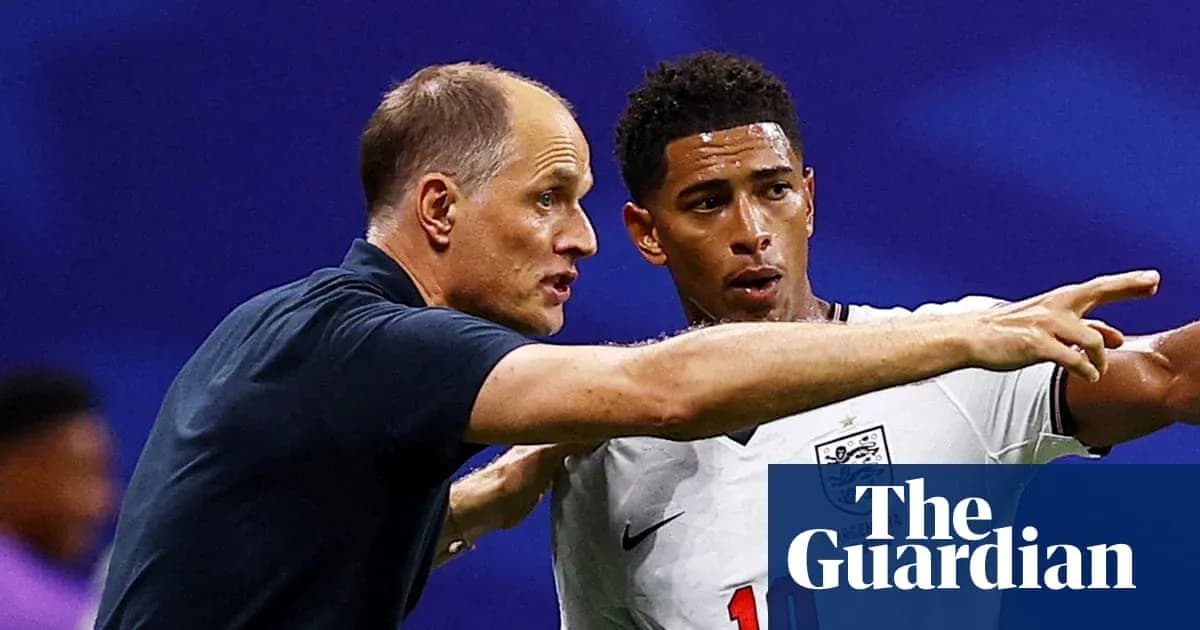
Thomas Tuchel's England: Moving On from World Cup Heartbreak
Thomas Tuchel has been back haunting Premier League touchlines this season, a familiar silhouette in the directors’ boxes and technical areas. In one VIP lounge, he summed up his mood in four words to a colleague: “People are killing me.”
Still.
Two months have passed since England’s 2-1 World Cup semi-final defeat by Argentina in the United States and the wound has not closed. The emotions remain raw: heartbreak, anger, disbelief. A sense that something golden slipped through English fingers yet again. For many, the scars will not fade.
From that night in New Jersey, the arguments have split in two clear directions.
On one side stands a furious section of the fanbase, those who cannot forgive the loss of a 1-0 lead with five minutes to play. For them, the collapse belongs at Tuchel’s door. The substitutions, the retreat, the optics of it all. Their minds are made up.
On the other side is a quieter, more reflective camp. They see a manager who led England to only their fourth World Cup semi-final, who coaxed personality and courage from his squad, who gave them nights that will live long in the memory. Mexico in the last 16 at the Azteca. Norway in Miami in extra-time and 40C heat. The wild opening win over Croatia. Then the third-place victory against France, sealing England’s best World Cup finish since 1966.
Both versions of the truth exist. Both are loud in their own way. Tuchel hears them all, but the criticism cuts deepest. He remains bruised, slightly bewildered that a semi-final with a third-place win can be framed as failure in a country that does not make the last four as a habit.
The impossible job, again
This is the tension that follows him into the next cycle, running towards Euro 2028, when England will co-host with Scotland, Wales and the Republic of Ireland. On Friday he will name his squad for the opening four Nations League fixtures: Spain at Wembley, Czechia home and away, Croatia in Zagreb.
Tuchel wants to look ahead. So do his employers at the Football Association. He would be wise to stop relitigating every minute of the Argentina defeat, no matter how hysterical he found the reaction, no matter how it has skewed the perception of the wider campaign.
There is a reason the England job is routinely described as impossible. Expectation crushes perspective. Every defeat brings a storm of blame. Every storm makes it harder for the next team to play freely. The cycle feeds on itself.
The only way out is to win.
The FA, though, has given Tuchel something solid to lean on: unwavering backing. The clearest measure of that faith is simple. His job was not on the line even when England trailed the Democratic Republic of the Congo 1-0 with 15 minutes left in the last 32, staring at an Iceland 2016-style humiliation. Tuchel himself wondered if this was how his World Cup ended. Harry Kane refused that script, scoring twice to drag England through one of the most stressful knockout ties in living memory. On that night alone, some at the FA would happily hand him the Ballon d’Or.
What mattered to the FA was not just the result, but how it was achieved. Tuchel’s in-game changes swung that tie, as they did at other points in the tournament. They loved the tactical bravery. They loved the unity he created. The “brotherhood” he kept talking about was not a PR slogan; it was visible in the way the squad lived and played together. The FA has nailed its colours to that mast. The idea that he should have resigned or been sacked after taking England to a semi-final is, in their view, nonsense.
Tuchel arrived at the World Cup with a bold mission statement: put a second star on the shirt. He fell short. Did that death-or-glory rhetoric amplify the pain of defeat? Probably. But what was the alternative? To talk about being content with a quarter-final? To frame a semi-final as the ceiling?
Inside the FA, the mood was more cautious. England went to the tournament as fourth seeds. Privately, there were doubts that they could punch hard enough above that ranking to lift the trophy, especially once the draw dropped. The schedule was awkward: a late start, a long gap between the first and second group games, then a compressed run. Travel, altitude, heat. It was always going to be brutal.
Euro 2028 feels different. A home tournament in all but name, with familiar pitches, familiar skies, familiar noise. The FA pushed hard to be co-hosts for a reason. It believes this group, with this manager, can peak on its own patch.
Can England let Argentina go?
The question is whether the country can move on from that semi-final. Whether Tuchel’s explanations for his decisions that night can ever be accepted.
The second half against Argentina is the crux of the case against him. England could not get a grip on the game as Argentina ratcheted up the intensity, playing with a kind of feral fury. That failure belongs to the manager. But the context matters. England were running on fumes after 10 men at altitude against Mexico, then 120 minutes against Norway in Miami’s furnace.
They began to sink deeper long before the second-half hydration break. The legs went first, then the ambition. When Tuchel brought on Ezri Konsa for Anthony Gordon and shifted to a back five, it only underlined the retreat. England were already in survival mode. They barely touched the ball. Tuchel could not find a way to change the flow. That, too, is on him.
The decision to reinforce the defence was cold, calculated. Tuchel saw a team out on its feet and chose what he believed was the percentage call: shut the game down, protect the lead, grind it out. It failed. When it failed, it looked awful. Five at the back, hanging on, then broken. Would more attacking changes have delivered a better ending? Nobody can say. What is certain is that, by the end, England were comprehensively second best.
Now comes the reset. England are back in Nations League Group A, where the tests are sharper and the margins thinner. Spain at Wembley next Saturday will set the tone.
Last time, being marooned in Group B hurt more than the FA expected. The fixtures against Ireland, Finland and Greece lacked edge, even if Greece’s 2-1 win at Wembley was anything but straightforward. World Cup qualifying had been gentle, too. The hope is that Spain, Czechia and Croatia will harden England for what is to come in 2028.
Selection puzzles and a new tone
Tuchel’s squad announcement carries its own intrigue. Injuries are likely to rule out four World Cup players: John Stones, Dan Burn, Djed Spence and Jordan Henderson. The door opens again for a younger defensive cast. Tino Livramento, Levi Colwill, Jarrad Branthwaite and Lewis Hall are all pushing hard for recalls.
Midfield brings another knot. Does Kobbie Mainoo keep his place after a World Cup that never really got going for him? His Manchester United form has been a rare bright spot in their stuttering start. Alex Scott and Myles Lewis-Skelly are also in the frame for returns.
Further forward, the No 10 slots could be hotly contested. Cole Palmer and Phil Foden are both hoping to be restored to central roles. Eberechi Eze and Noni Madueke have yet to hit their stride at Arsenal since the World Cup, which may count against them. There is real noise around Josh King and Ryo Ngumoha, and the same goes for Dominic Calvert-Lewin and Liam Delap in the striking positions.
All of which sets up Friday’s announcement as more than a simple squad list. The cameras and microphones will be trained on Tuchel, waiting not just for names, but for a shift in tone. The last time he went on the defensive, it ended with England pinned back and broken by Argentina.
Now he has to decide: does he double down again, or does he dare to lean into the risk that might finally bring England the second star they crave?