The Trophy, the Year and a Bold New Vision: What the World Cup 2026 Logo Really Says About Football's Future
There are moments in sport when a logo becomes more than just a visual mark. When it carries the weight of expectation, the promise of something larger, and the quiet confidence of an institution that knows exactly what it represents. The official logo for the FIFA World Cup 2026 is one of those moments — and understanding why requires looking beyond the design itself.
A Different Kind of World Cup Needs a Different Kind of Brand
The 2026 tournament isn't a routine edition of the World Cup. It is, by almost every measurable standard, the most ambitious version of the competition ever attempted:
- 48 nations competing for the first time in history
- 104 matches across the full tournament
- 16 host cities spread across an entire continent
- 3 countries — the United States, Canada and Mexico — sharing the stage simultaneously, the first tri-national hosting arrangement in men's World Cup history
That scale creates a branding challenge unlike any FIFA has faced before. How do you build a single visual identity capable of representing New York and Mexico City, Vancouver and Dallas, a tournament that stretches across three distinct national cultures? The answer, it turns out, was to stop trying to say everything — and instead say the one thing that matters most.
The Trophy at the Centre of Everything
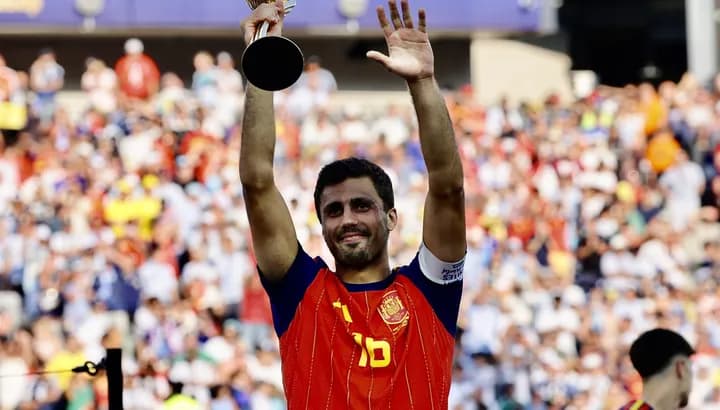
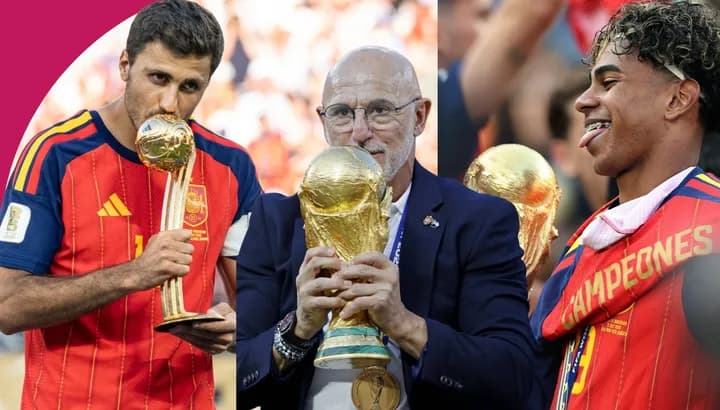
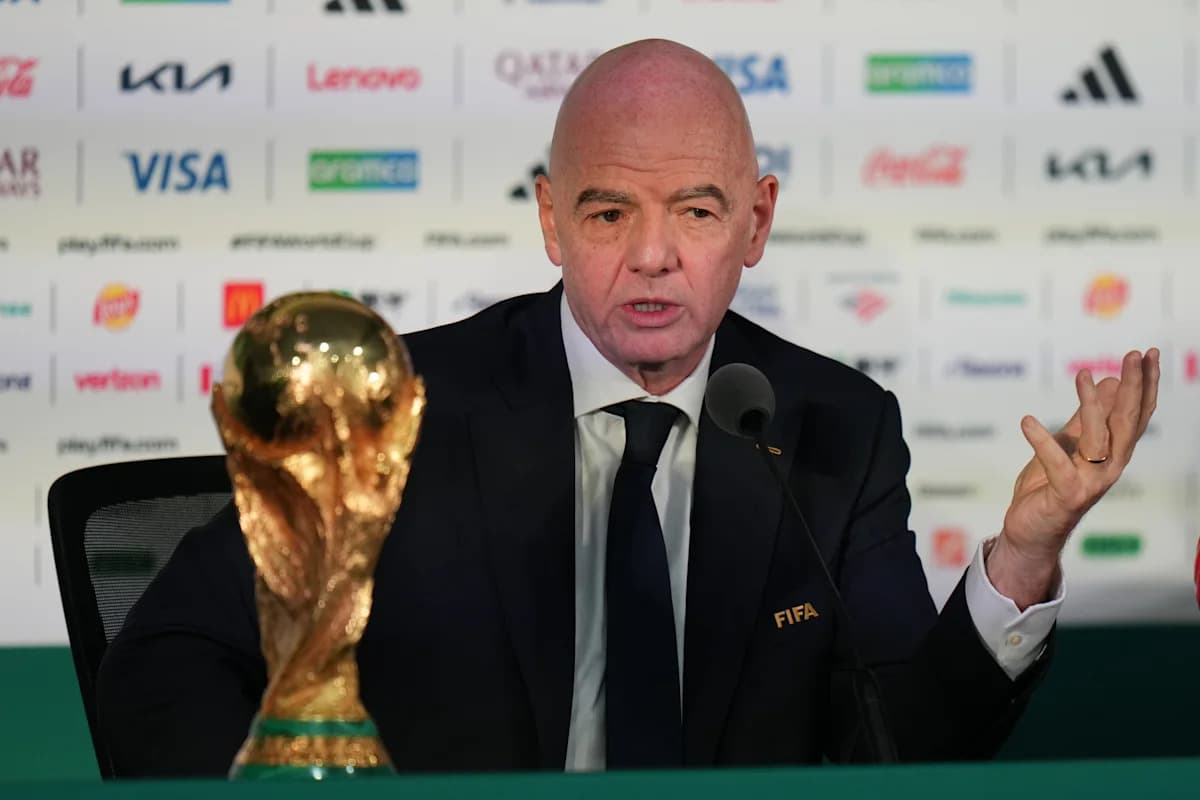
Unveiled in May 2023 at the Griffith Observatory in Los Angeles — in the presence of FIFA President Gianni Infantino and two-time World Cup winner Ronaldo — the logo made an immediate statement by doing something no World Cup emblem had done before: it put the actual FIFA World Cup Trophy front and centre, alongside the year of the tournament.
It sounds simple. And that's precisely the point.
Previous World Cup logos leaned heavily on abstract symbolism — local landscapes, stylised figures, cultural motifs from the host nation. They told stories specific to a time and place. The 2026 logo takes the opposite approach. Instead of metaphor, it offers clarity. Instead of a local symbol, it presents the universal one — the trophy that every player on earth dreams of lifting, the object that needs no translation in any language.
Behind the trophy sits the number 26, bold and structural. But it functions as more than a year. It is the architectural spine of an entire visual system — a modular framework that can be adapted across host cities, cultural contexts and future tournaments without losing its essential identity.
Why This Moment in History Demanded a New Approach
To understand what makes this logo significant, it helps to trace where the World Cup has come from. The tournament's expansion over the decades tells its own story:
- 1930 — 13 teams, Uruguay
- 1954 — expanded to 16 teams
- 1982 — expanded to 24 teams
- 1998 — expanded to 32 teams, a format that held for nearly three decades
- 2026 — the biggest leap yet: 48 teams, 16 cities, 3 host nations
That final step is not an incremental change. It is a fundamental reinvention — and it arrives alongside something equally unprecedented: a tri-national hosting model that goes far beyond the Japan/South Korea experiment of 2002.
Three sovereign nations, each with their own football culture, fan base and national identity, united under a single tournament banner. That context makes the logo's design logic not just understandable — it makes it inevitable. A brand built around one nation's symbols would have felt exclusionary. A brand built around abstract ideas would have felt hollow. A brand built around the trophy itself? That belongs to everyone.
A System, Not Just a Symbol
What separates the World Cup 2026 branding from most sports logos is that it was never intended to be a single, static image. FIFA designed it as a scalable visual framework — one built to evolve while remaining instantly recognisable.
Each of the 16 host cities will carry its own version of the logo, derived from the same trophy-and-year template but adapted to reflect local identity. Whether the emblem appears in Kansas City or Guadalajara, Toronto or Miami, it remains unmistakably part of the same World Cup family. The design system works on several levels at once:
- Structure — the trophy and year provide a consistent visual anchor across all 16 city versions
- Typography — bold uppercase lettering with diagonally cut horizontal bars communicates movement and authority without unnecessary ornamentation
- Colour — a restrained black-and-white base lets the gold-and-green trophy command full attention, while a secondary multicolour palette celebrates the global, pluralistic nature of the game
- Adaptability — the modular framework allows local expression without fragmenting the overall brand identity
Consistent in structure, diverse in expression — which is, not coincidentally, exactly what the tournament itself is trying to be.
"WE ARE 26": Giving the Brand to the People
Alongside the logo reveal, FIFA launched the "WE ARE 26" campaign — a deliberate attempt to shift ownership of the tournament's identity away from the institution and toward the fans, communities and cities that will actually live it.
The campaign puts faces before fixtures and places before schedules, built around a few core ideas:
- Celebrating the human geography of North America — its cultures, neighbourhoods and stories
- Making the World Cup feel personal to the millions who will experience it from the inside
- Inviting participation rather than simply demanding attention
As Infantino framed it at the launch: a moment when three countries and an entire continent declare themselves united in welcoming the world.
It's an unusual move for an organisation that has historically kept tight control over its image. But it reflects something real about what the 2026 World Cup is trying to accomplish. With matches spread across 16 cities in three countries, this tournament cannot be experienced from a single vantage point — and a brand that opens itself up is better equipped to travel.
More Than Marketing
It would be easy to read all of this as sophisticated corporate branding — and it is that. But it is also something more. The decision to place the trophy at the heart of the logo is a statement about what the World Cup fundamentally is: not a tournament that belongs to any one host, sponsor or governing body, but a competition defined by the object at its summit and the journey required to reach it.
By anchoring the visual identity to the trophy itself, FIFA has created something with unusual longevity. This isn't a logo that belongs to 2026 the way previous emblems belonged to their editions. It establishes a template — a visual grammar that could carry the World Cup brand forward across future tournaments, each distinguished by its year while sharing the same essential identity. The implications of that shift are significant:
- Future tournaments can adopt the same framework without starting from scratch
- The trophy becomes a permanent, recognisable constant across editions
- Host nations can express their individuality within a shared visual language
- Fans can build a sense of continuity and legacy across multiple World Cups
That's a quietly radical idea in sports branding — and whether or not you find the logo beautiful, there's something genuinely ambitious about an organisation that looked at the complexity of staging the biggest sporting event in history and responded by making things simpler.
The Final Word
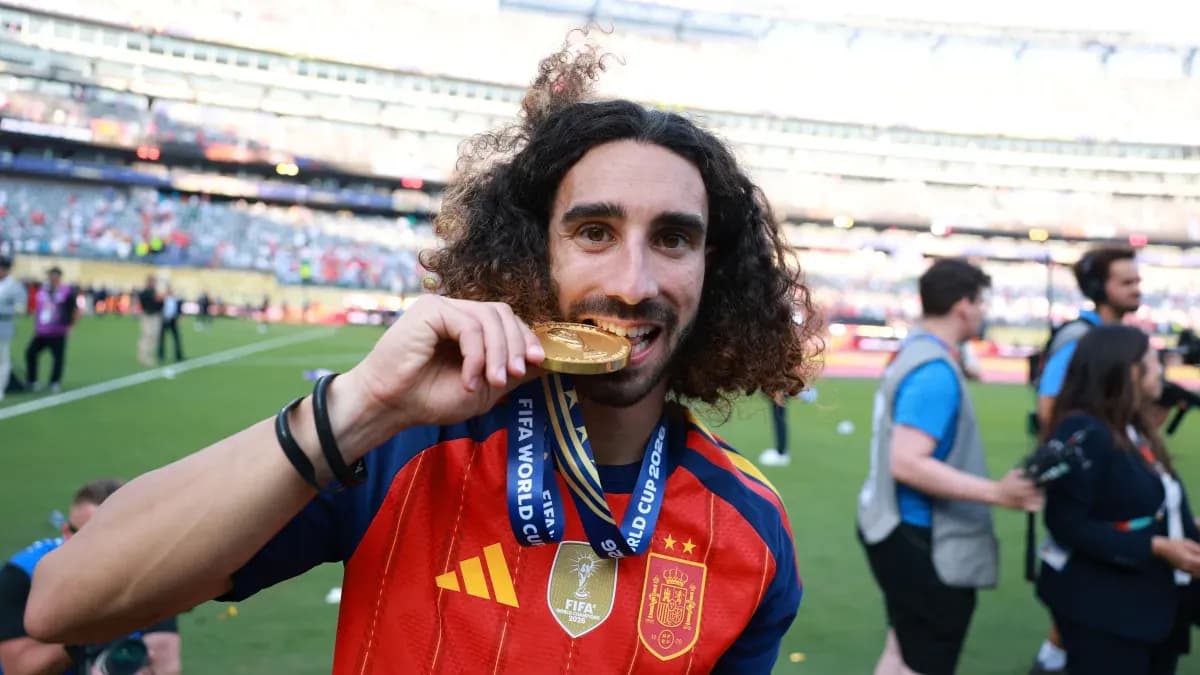
When the World Cup final kicks off at MetLife Stadium in New Jersey on July 19, 2026, billions of people will be watching. Most of them won't be thinking about branding. They'll be watching football. But somewhere in the corner of the screen, on the shirts of the players, on the flags in the stands and the banners outside the stadium, the trophy and the number 26 will be present — quiet, confident and unmistakable.
That, ultimately, is what a great sports logo does. It doesn't demand your attention. It simply makes itself impossible to forget.