Tennessee Women’s Basketball Faces Unprecedented Rebuild
Tennessee women’s basketball has seen bad months before. It has never seen one like this.
A program built on continuity and legacy will walk into next season with neither. The Lady Vols, once synonymous with stability, are staring at a roster with no returning players who have ever worn the jersey in a game.
All eight players with remaining eligibility are leaving. Every single one.
An empty locker room
The unraveling followed a 16-14 season that started unevenly and ended in free fall. Tennessee closed with eight straight losses, bowed out of the NCAA Tournament in the first round to NC State, and trudged through the first winless March in program history. The on-court slide has now spilled into the offseason.
The latest departure came Monday. Freshman guard Jaida Civil announced on Instagram that she is entering the transfer portal, adding her name to a list that has grown longer by the week.
The Lady Vols were already set to lose four seniors, including key contributors Janiah Barker and Zee Spearman. Graduation alone would have meant a reset. Then the portal announcements began to stack up.
Freshman twins Mya and Mia Pauldo made their intentions public with a joint statement, also on Instagram.
“After much thought, conversation, & soul-searching we have decided to enter the transfer portal,” they wrote. They thanked the staff, thanked their teammates, thanked the fan base, and then turned the page: “Excited to accept the challenge of the next phase in our journey.”
The sentiment was polite. The message was blunt. They were gone.
They were not alone. Junior forward Alyssa Latham has already found her next stop and will suit up for Virginia Tech. Civil, Kaniya Boyd, Lauren Hurst, Deniya Prawl and Talaysia Cooper are all in the portal, still searching for new homes.
Every announcement chipped away at what little continuity remained. Eventually, there was none left.
A recruiting blow on top of it all
The exits have not been limited to players already on campus.
Tennessee has also lost a cornerstone of its future. Oliviyah Edwards, the No. 2 recruit in the SC Next 100 class of 2026, has decommitted, pulling back from a verbal pledge that once looked like a building block for the post-Pat Summitt era.
As of now, just one incoming player is locked in for next season: wing Gabby Minus, a four-star recruit and, at this point, the lone confirmed member of a team that will have to be rebuilt almost entirely through the portal and late additions.
For a program that long sold itself on history, banners and the promise of competing for titles, the pitch has suddenly changed. Tennessee is no longer talking about reloading. It is starting over.
Caldwell under the spotlight
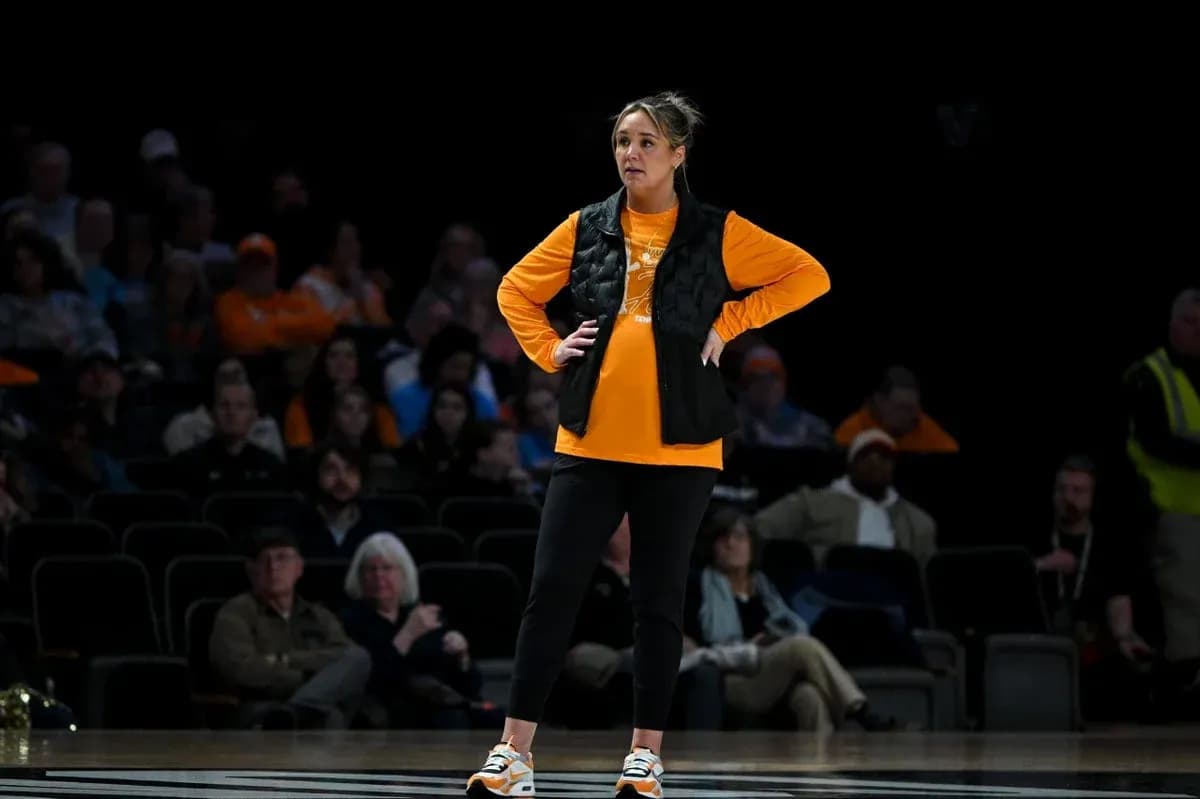
All of it drops squarely at the feet of head coach Kim Caldwell, whose second season in Knoxville turned stormy in a hurry.
Caldwell arrived and immediately steadied the ship, guiding Tennessee to the Sweet 16 in her debut campaign and restoring some of the swagger that had faded in recent years. That first year suggested a climb back toward the sport’s elite.
Year two told a different story.
The Lady Vols faded badly down the stretch. The low points were brutal and public. On Feb. 8, they were hammered 93-50 by South Carolina, the largest defeat in program history. A week earlier, they had been routed by UConn by 30. Those two scorelines cut against everything the orange and white brand once represented: toughness, pride, resistance.
The season ended with that first-round NCAA loss to NC State. The offseason has been even more unforgiving.
Tennessee’s status as a historic powerhouse remains intact on paper. The trophies are still in the case. The last national title, though, came in 2008. The distance from that standard grows wider with every spring like this one.
Caldwell is not on a short leash contractually. Her deal runs through 2030 and includes a $4 million buyout, significant protection in an era when big programs think twice before swallowing that kind of money. The financial commitment signals belief, or at least patience.
But patience will be tested now in a way it hasn’t been since the program’s heyday ended.
A rebuild unlike any other
Coaches talk often about “culture resets.” Tennessee is facing something more drastic: a cultural reboot from zero.
No returning players. One incoming freshman locked in. A fan base that measures success against national titles, not just tournament appearances. A league that has only grown tougher, with South Carolina setting the pace and others surging around them.
This is the job in front of Caldwell.
She must restock a roster almost entirely through the portal while convincing recruits and transfers that Knoxville is still a place where careers are made and championships are chased, not just remembered. She must do it under the glare that comes with inheriting one of the most storied names in women’s basketball.
The banners at Thompson-Boling Arena aren’t going anywhere. The question now is whether the next group of Lady Vols—whoever they are, wherever they come from—can live up to them, or whether this spring marks the start of a very different era in Tennessee basketball.