Sunderland's Struggles as War Approaches
On the eve of war, Sunderland’s worries were supposed to be simpler. Could Bill Murray, barely months into the job, restore the swagger that had brought a league title in 1936 and the FA Cup in 1937? Could Roker Park feel like a fortress again?
For 90 minutes on 30 August 1939, the answer was brutally clear: not yet.
A new manager, old expectations
Murray had stepped up in March, replacing his old boss Johnny Cochrane and inheriting a club that had slumped badly from its recent peak. He knew exactly what Roker Park demanded. He had lived it as a player. The aim was obvious – drag Sunderland back to the standards that had once made them the best side in the country.
An opening-day win over Derby County in the 1939-40 season hinted at a revival. The mood flickered with optimism. Then Huddersfield Town arrived and snapped everyone back to reality.
Early blow, fragile response
The tone was set almost immediately.
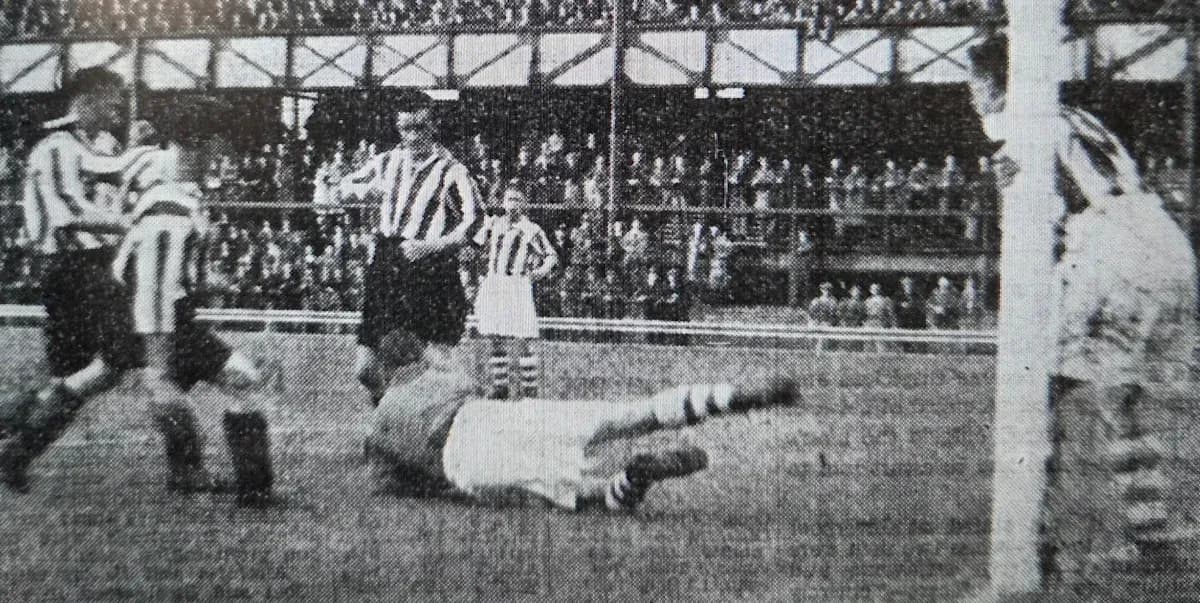
After just four minutes, Huddersfield were in front. Billy Price met a cross with a firm header, and while some in the ground were adamant it was his goal, the referee marked it down as an own goal by Jimmy Gorman, who had challenged him in the air. The debate rumbled on in the stands, but the scoreboard was all that mattered. Sunderland 0, Huddersfield 1, and the home side already chasing.
At the back, Sunderland looked hesitant. Marking was loose, decisions slow. At the other end, the forwards never really clicked. Attacks broke down before they could build any pressure, and the crowd grew restless.
Match reports the next day pointed a finger at the officials, accusing them of letting Huddersfield push the limits with a string of borderline fouls. The sense of grievance was there, but it didn’t disguise the deeper problem. Sunderland simply weren’t good enough over the course of the game.
The turning point, if it could be called that, came when Raich Carter took a knock. The captain, usually the heartbeat of the side, was suddenly restricted, unable to glide across the pitch as he normally did. His movement dulled, so did Sunderland’s imagination. Carter still found a way to drag his team back into it, levelling on 33 minutes, but he was clearly short of full mobility.
That was when others needed to take responsibility. They didn’t. The criticism in the press was blunt: too many hid when their leader was struggling.
Only Johnny Mapson escaped with real credit. The goalkeeper, by general agreement, could do little about either Huddersfield goal and prevented the scoreline from looking even worse.
Price settles it, doubts deepen
As the second half wore on, the game drifted away from Sunderland. Huddersfield’s shape held. Their organisation, so evident from the start, never slipped.
The pressure finally told with ten minutes to go. Price, who had been at the heart of that disputed opener, struck again, this time without any argument. His late winner made it 2-1 to Clem Stephenson’s side and emptied the home stands in subdued acceptance. There were no serious complaints about the result as supporters filed out. The better team had won.
What they pondered on the way home, though, went far beyond Murray’s rebuilding job.
Football in the shadow of war
Anyone who had picked up a newspaper before heading to Roker Park that day knew the wider picture was darkening fast. Front pages were dominated not by football but by the looming threat of a second world war.
The Sunderland Echo and Shipping Gazette carried reports of French radio being handed over to military control and tense negotiations across Europe. A stark photograph showed workmen stacking sandbags in front of the Royal Infirmary. Inside, there was a chillingly practical article about helmets and respirators for parents and children in Sunderland, detailing demonstration and collection points at local schools.
- Redby
- Hudson Road
- Cowan Terrace
- Thomas Street
- Commercial Road
- Hylton Road
- Diamond Hall
- High Southwick
- James William Street
- Barnes
were all listed as venues where children could be fitted with equipment, with specially adapted respirators for infants. It was everyday life edging towards wartime routine.
All of that hung over Roker Park. No matter how hard people tried to treat the match as an escape, the tension seeped into the afternoon. Among the 16,315 in attendance were soldiers and sailors already called up, uniforms visible on the terraces. They were allowed in for half price, as long as they were prepared to enter via what was usually the “boys gate.” A small gesture, but a telling one.
The football on offer did little to lift the mood. Some in the crowd, sensing what was coming, must have wondered if this would be their last glimpse of Sunderland for quite some time.
Records wiped, a season erased
Those fears were swiftly realised. By the time Sunderland travelled to Arsenal the following weekend, German forces had invaded Poland. A larger conflict was no longer a possibility; it was a certainty.
The match at Highbury went ahead, but under altered conditions. Kick-off was pushed back to 17:00 so that emergency public transport timetables would be under less strain and so a hurried evacuation of local children could be completed. Football was still being played, but it felt like an afterthought.
Soon, even that thin sense of normality disappeared. The results against Derby, Huddersfield and Arsenal were struck from the official records as the league season was abandoned. The campaign that had started with hope for Murray’s Sunderland simply vanished from the books.
Instead of masterminding a rebuild, Murray spent the coming months and years in a very different role. He oversaw fitness training for troops stationed in County Durham, with Roker Park itself designated as an evacuation zone and left largely idle for the next two years.
On 30 August 1939, the conversation had been about defensive frailty, Carter’s injury and Huddersfield’s superior organisation. Within days, those concerns were dwarfed by events far beyond Roker Park, and the question hanging over Sunderland was no longer about form or tactics, but when – or even if – normal football would truly return.