Spain Edges Portugal 1-0 in World Cup Round of 16
Portugal’s 0-1 defeat to Spain at AT&T Stadium in this World Cup Round of 16 tie was decided on fine tactical margins, with Spain’s superior control and late bench impact ultimately breaking a contest that had been balanced for long stretches.
Spain imposed their usual possession game, finishing on 55% of the ball to Portugal’s 45%. Luis de la Fuente’s side built through Rodri and Pedri as central organisers, using wide midfielders Lamine Yamal and Dani Olmo to stretch Portugal’s back four. The passing data underlines that control: Spain completed 467 of 531 passes (88%), compared to Portugal’s 357 of 426 (84%). That extra security in circulation allowed Spain to keep Portugal pinned for longer phases and to sustain pressure rather than play in bursts.
Out of possession, Roberto Martinez’s Portugal looked set up in a compact mid-block, with Cristiano Ronaldo as the reference in the first line and Bruno Fernandes, João Félix and Pedro Neto working back from midfield lines. Portugal were relatively clean defensively with 9 fouls, but that also hints at a strategy of containment rather than aggressive counter-pressing. Spain, by contrast, committed 13 fouls, reflecting their willingness to counter-press immediately after loss and disrupt Portuguese transitions at source.
The shot profile is where Spain’s territorial edge translated into threat. Spain generated 15 total shots to Portugal’s 10, with both teams recording 3 blocked efforts. Crucially, Spain hit 6 shots on goal versus Portugal’s 2, and they created more volume in the box (8 shots inside the box to Portugal’s 7). The expected goals data matches the eye-test of Spain’s territorial dominance: Spain posted 1.77 xG to Portugal’s 0.58. This suggests Spain not only shot more, but crafted better-quality chances, especially in central areas.
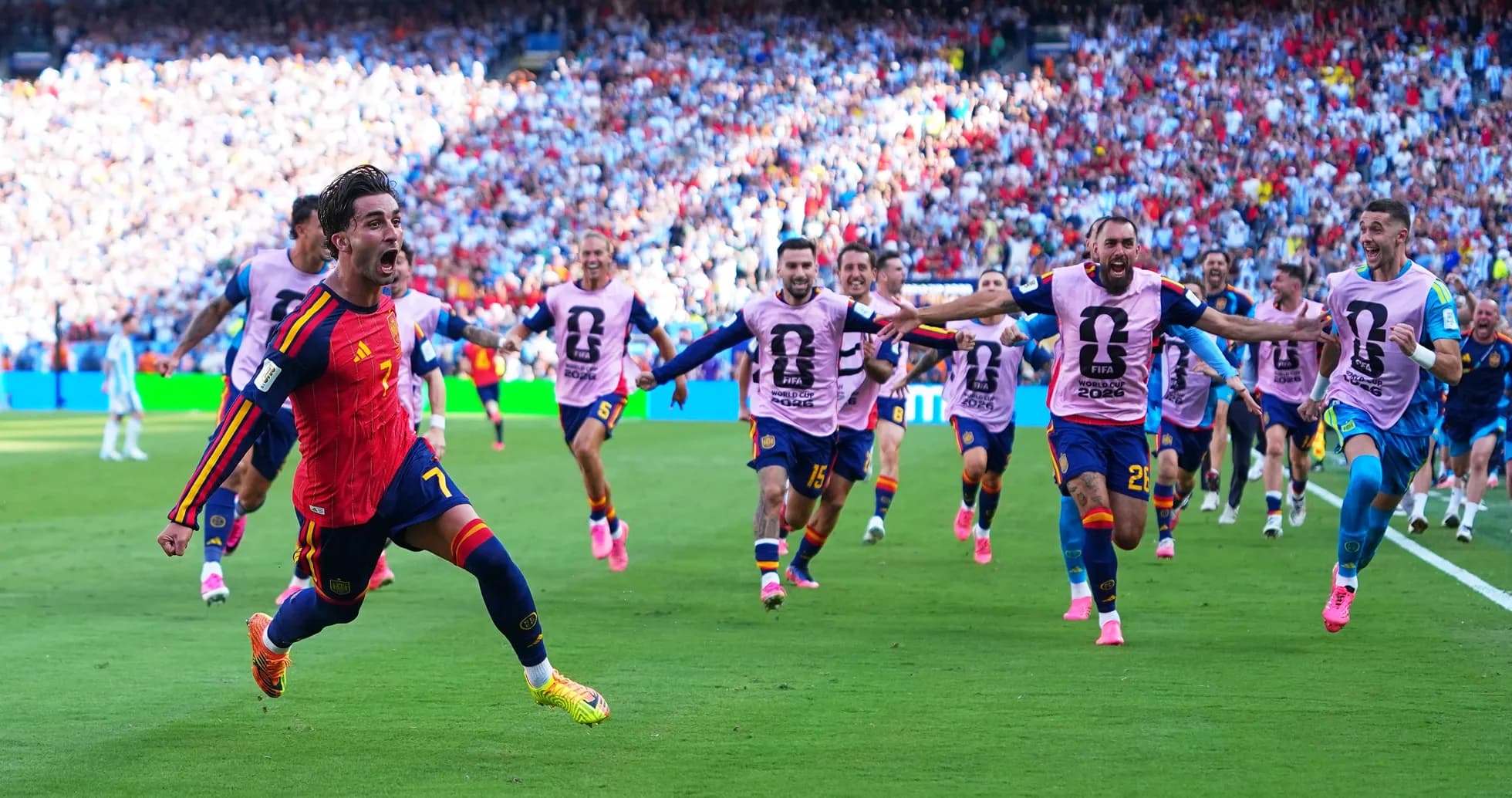
The decisive moment came in added time. Spain’s substitutions were clearly designed to tilt the game: Ferran Torres entered for Alex Baena on 75', then Mikel Merino replaced Dani Olmo and Fabián Ruiz came on for Pedri at 85'. That triple injection of fresh legs and late runners into the box changed the dynamic. Merino, arriving from deeper positions, finally broke Portugal’s resistance with the 90+1' winner, assisted by Ferran Torres. It was a textbook example of Spain using late midfield surges to attack a tiring block.
Portugal’s own substitution pattern signalled a shift towards directness and individual creativity, but without the same structural payoff. Nuno Mendes made way for Nélson Semedo on 56', hinting at a desire for more thrust on the right while keeping João Cancelo initially on the opposite side. On 71', Cancelo was replaced by Diogo Dalot and João Félix by Rafael Leão, moves that increased verticality and dribbling threat down both flanks. Later, at 83', Vitinha and Pedro Neto were withdrawn for Bernardo Silva and Francisco Conceição, injecting technical quality and 1v1 ability for the closing stages. Yet despite these changes, Portugal’s shot volume and xG remained modest; they struggled to turn those extra attackers into clear central chances.
Discipline-wise, Portugal’s late frustration showed. Bernardo Silva was booked for “Foul” on 89', and Renato Veiga followed at 90+4' with another “Foul” caution, both reflecting attempts to stop Spain’s late waves. Spain’s only booking came at 90+9' when Ferran Torres was shown yellow for “Foul” after already having made the key assist, emblematic of Spain’s intense but controlled pressing game.
In goal, Diogo Costa (Portugal) and Unai Simón (Spain) both delivered solid performances, but the context of their numbers is revealing. Diogo Costa (Portugal) made 5 saves, closely aligned with Spain’s 6 shots on target, and his goals prevented figure of 0.87 indicates he significantly outperformed the xG of the shots he faced. That reinforces the idea that Spain created enough to score more than once and were repeatedly denied by high-level goalkeeping. Unai Simón (Spain), by contrast, faced only 2 shots on goal and made 2 saves, with a goals prevented value of 0.87. That suggests the few chances Portugal did generate were of relatively high quality, and Simón’s interventions were decisive in preserving the clean sheet.
Structurally, Spain’s back four of Pedro Porro, Pau Cubarsí, Aymeric Laporte and Marc Cucurella benefited from the protection of Rodri screening in front, which helped keep Portugal’s central combinations—through Bruno Fernandes, Vitinha and João Neves—largely outside dangerous zones. Portugal’s 7 shots inside the box show they did occasionally find gaps, often via wide-to-central actions involving Rafael Leão and Cristiano Ronaldo, but the lack of sustained possession and Spain’s compactness meant those situations were sporadic rather than continuous pressure.
From a statistical verdict, the 1-0 scoreline is consistent with the underlying metrics. Spain’s 1.77 xG versus Portugal’s 0.58, plus a 15–10 total shot edge and 6–2 shots on goal advantage, point to a game Spain largely controlled and deserved to edge, even if Diogo Costa’s performance kept Portugal alive deep into added time. Both goalkeepers’ identical goals prevented value (0.87) underlines how much this match was shaped by high-quality shot-stopping at both ends.
Discipline and control also tilted slightly Spain’s way. While they committed more fouls (13 to 9), they took only one yellow card to Portugal’s two, and maintained structural stability even under Portugal’s late attacking reshuffle. In the end, Spain’s superior passing rhythm, bench impact, and sustained box presence translated into the late winner that Portugal’s more sporadic, transition-based threat could not match.