
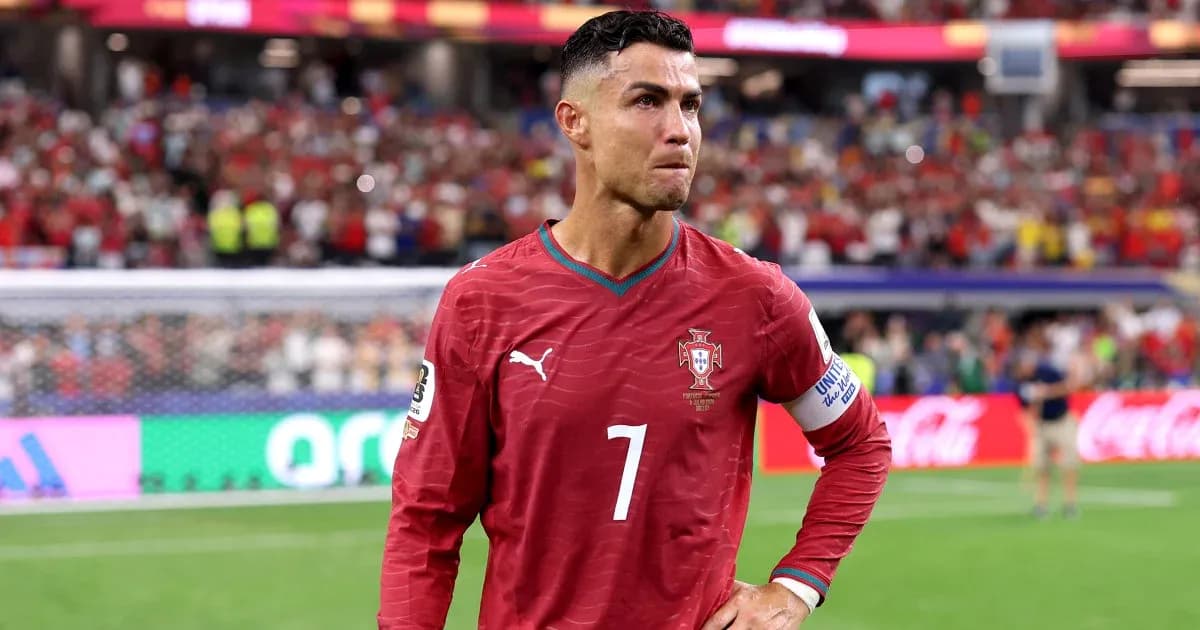
Cristiano Ronaldo's Emotional World Cup Farewell
Cristiano Ronaldo walked off the World Cup stage for the final time with tears in his eyes and his head held high.
Portugal’s captain watched his last shot at the one trophy that always eluded him disappear in the 92nd minute in the round of 16, Mikel Merino’s stoppage-time header sealing Spain’s 1-0 win on Monday and closing the book on Ronaldo’s sixth World Cup.
There was no dramatic farewell goal, no late rescue act. Just the cold finality of the whistle and a 39-year-old standing alone for a moment, absorbing it all.
A giant exits, on his own terms
Ronaldo didn’t hide the pain.
“Well, it’s normal, sad, to leave the World Cup like this,” he said through an interpreter afterward. The emotion was raw, but the message was steady. He had already framed this moment the day before, insisting he was at peace with whatever came.
“I gave it my all, I gave my best. And I leave with a clear conscience.”
This was not the defiant Ronaldo of his early years, raging against any hint of decline. This was a veteran who has lived every extreme of the game and now speaks its hardest truth with a shrug: “That’s football, that’s the life of a footballer. Sometimes you win, sometimes you lose.”
The finality was unmistakable.
“It was my last World Cup, yes,” he confirmed. The rest of his future, he said, can wait. Time with his family first. No decisions “in the heat of the moment.” No rush to define the next chapter.
No World Cup crown, but a towering legacy
The record will show that Cristiano Ronaldo retires from World Cup duty without a title and without ever playing in a final. The closest he came was in 2006, his first tournament, when a young, electric winger helped drive Portugal to the semifinals and a fourth-place finish.
On paper, that absence of a World Cup trophy is the one gap critics have circled for years. The numbers tell a different story.
Ronaldo leaves the competition with 11 goals in 27 World Cup matches, and a place in a club of two: alongside Lionel Messi as the only men to play in six World Cups. Longevity at that level is not an accident. It is obsession, discipline, and a refusal to let go.
He was, in many ways, even more ruthless on the continental stage. In the European Championship, Ronaldo scored 14 times in 30 games and, crucially, dragged Portugal into a new era in 2016. That night in Paris, when Portugal beat France to win Euro 2016, changed the country’s football history and his own.
“Before Cristiano, Portugal hadn’t won any titles,” he reminded everyone. It wasn’t bragging. It was context. For him, that night remains the pinnacle.
“The truth is that the biggest title I won with the national team was in 2016, which for me has the same significance as the World Cup, honestly.”
For a player so often defined by statistics, it was striking how little he leaned on them here. No mention of goals, caps, records. Just that same refrain: “I leave with a clear conscience, having done my best, and that’s it.”
Beyond the final whistle
This is how a giant of the game chooses to step away from the World Cup: not with a trophy in his hands, but with his body of work behind him and the calm to accept what never came.
“Tomorrow will be a new day, and life goes on,” he said. Simple words from a man who has spent two decades living in a permanent spotlight.
Life, for now, still includes club football. Ronaldo remains under contract with Al-Nassr in the Saudi Pro League for one more season, the club he has called home for the past four years. This coming campaign may be his last, though he has not confirmed it.
The World Cup chapter is closed. The debate over his place in its history will rumble on, as it always does with players of his stature. But the image that lingers from this night is not a missed chance or a final defeat.
It is Cristiano Ronaldo walking off the biggest stage of all, empty-handed yet unbowed, convinced that what he gave was enough.



