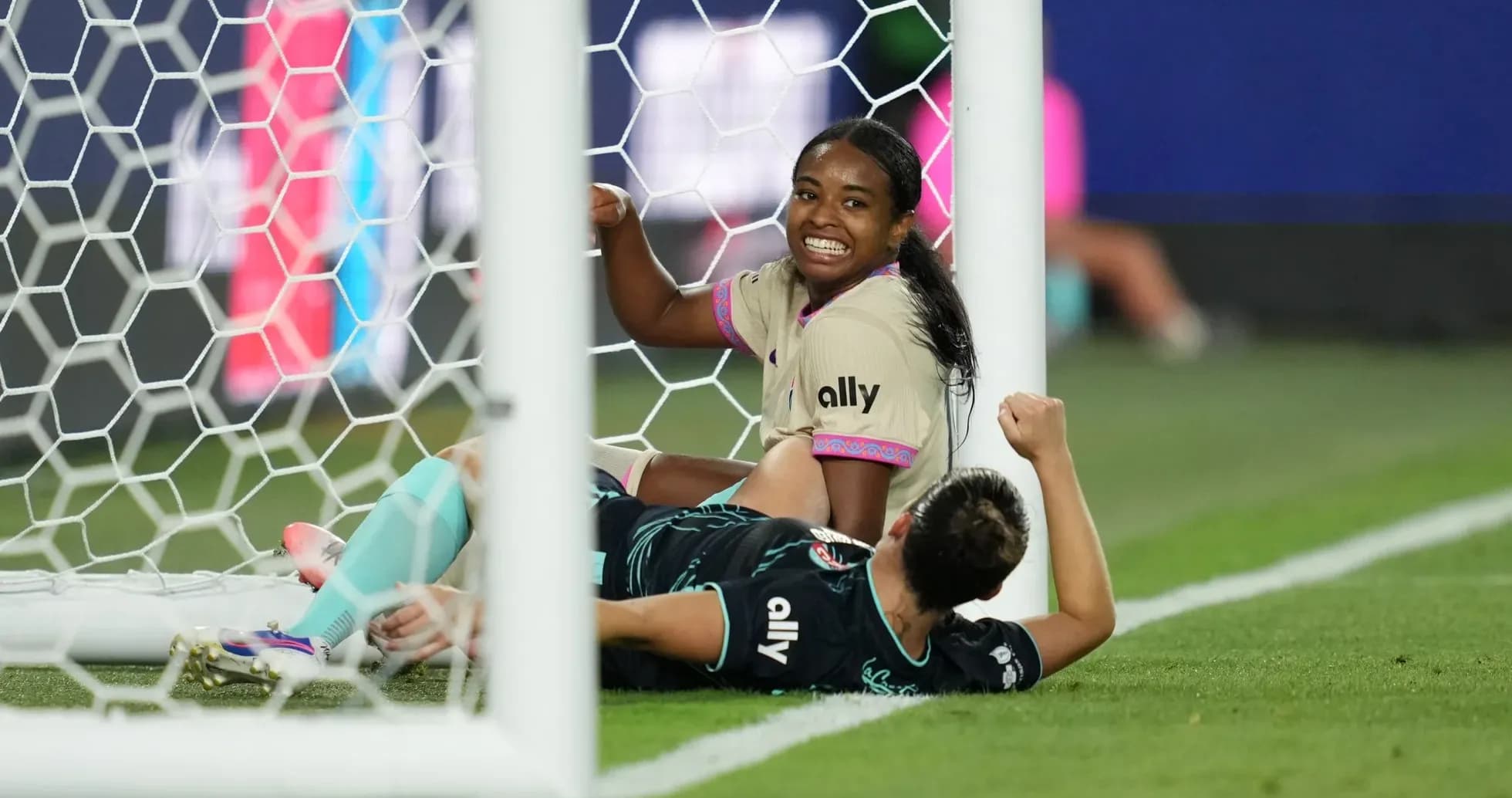
San Diego Wave Dominates Kansas City W in NWSL Clash
On a cool night at Snapdragon Stadium, San Diego Wave W and Kansas City W walked out not just as group rivals in the NWSL Women Group Stage, but as two very different interpretations of how to chase a playoff run. The final scoreline – 2-0 to San Diego – felt like the logical conclusion of their season-long identities: the Wave as a high-variance contender with a sharp home edge, Kansas City as a side that can overwhelm at home but loses definition on its travels.
Heading into this game, San Diego sat 2nd with 45 points from 25 matches, their overall goal difference of 9 the product of 36 goals scored and 27 conceded. At home they had been solid if imperfect: 8 wins, 1 draw and 5 defeats from 14, with 21 goals for and 15 against. Kansas City arrived in 7th on 38 points from 25, with a total goal difference of 3 (39 scored, 36 conceded), a record built on a fortress home (8 wins, 4 draws, 0 losses, 28 for and 12 against) and a fragile away profile: 3 wins, 1 draw and 9 defeats from 13, with 11 goals scored and 24 conceded.
I. The Big Picture – Structures and Seasonal DNA
San Diego’s choice of a 4-1-4-1 under J. Eidevall was a subtle but telling departure from their more common 4-3-3 and 4-2-3-1 shapes. With Sandra Paños in goal and a back four of A. D. Van Zanten, K. Wesley, K. McNabb and Perle Morroni, the Wave built a platform that mirrored their season numbers: at home they concede an average of 1.1 goals, but they keep enough control to win more than half of their fixtures.
Ahead of the back line, K. Ascanio sat as the single pivot, screening and linking into a creative band of four: Melanie Barcenas and Kenza Dali centrally, with Luisa Agudelo and Gia Corley providing interior width and half-space presence. Up front, T. Byars led the line, the same Byars who has 9 total league goals this season from 20 appearances and has grown into one of the competition’s most efficient finishers.
Kansas City, by contrast, stayed loyal to their season-long blueprint: a 4-2-3-1 that has been used in 19 matches. Lorena started in goal behind a back four of L. Rouse, E. Ball, K. Sharples and I. Rodriguez. The double pivot of L. LaBonta and V. DiBernardo underpinned an attacking trio of M. Cooper, Debinha and T. Chawinga behind forward H. Hopkins. On paper, it is an aggressive, line-breaking unit – and the numbers back that up at home, where they average 2.3 goals – but away from home their attacking average drops to just 0.8 goals per game, a stark contrast that framed this fixture.
II. Tactical Voids and Discipline
There were no officially listed absences, so both coaches could lean heavily on their primary cores. The more interesting void was structural: Kansas City’s away fragility. On their travels they concede an average of 1.8 goals per match and have kept only 1 clean sheet, while failing to score in 6 away games. That profile played directly into San Diego’s willingness to stretch the field with aggressive full-backs and a mobile front five.
Disciplinary trends hinted at how the match might become fractured. San Diego’s yellow-card distribution shows a late-game surge: 23.08% of their yellows arrive between 76-90 minutes, with another 19.23% between 61-75. Kansas City, meanwhile, cluster 23.81% of their yellows in each of the 31-45, 61-75 and 76-90 minute windows, and their only red card of the season has come late, between 76-90. L. Rouse embodies that edge: 2 yellows and 1 red this campaign, combined with 41 tackles and 27 interceptions, mark her as a defender who plays on the line.
For San Diego, the disciplinary heartbeat runs through Morroni and Dali. Morroni has 6 yellows in 24 appearances, backed by 60 tackles, 4 blocked shots and 25 interceptions – a full-back who defends on the front foot and accepts the booking risk. Dali, with 5 yellows and 1 missed penalty this season, is both creative hub and emotional barometer in midfield.
III. Key Matchups – Hunter vs Shield, Engine Room
The headline duel was always going to be Temwa Chawinga against the Wave back four. Chawinga entered the fixture as one of the league’s most dangerous attackers: 10 total league goals, 2 assists, 25 shots with 16 on target, and 32 dribble attempts with 13 successful. She thrives in transition, especially in the 46-60 minute window where Kansas City as a team score 30.77% of their goals. That period overlaps with a San Diego side that can occasionally wobble after halftime, though their overall defensive averages (1.1 goals conceded per game both home and away) suggest a fairly stable unit.
Opposite her, Van Zanten and Morroni formed an aggressive full-back pair. Van Zanten’s 63 tackles, 6 blocked shots and 34 interceptions this season, plus her own red card on the record, show a defender unafraid to step high and engage early. The risk-reward equation against Chawinga was clear: win the duels and Kansas City’s main outlet is suffocated; mis-time them and the Malawian star runs free into space.
In the engine room, the contest between Kansas City’s creators and San Diego’s midfield technicians defined the tempo. For the visitors, Croix Bethune – even though not in this particular starting XI – sets the season’s creative standard with 10 total assists, 630 passes and 31 key passes. On the night, much of that responsibility shifted onto M. Cooper and Debinha. Cooper’s season numbers (5 goals, 4 assists, 18 key passes, 24 tackles and 3 blocked shots) mark her as a true two-way midfielder, tasked with both linking the thirds and tracking Dali and Agudelo.
For San Diego, Agudelo is the quiet metronome: 5 total goals, 3 assists, 597 passes at 81% accuracy, 30 key passes and a defensive line of 27 tackles, 2 blocked shots and 8 interceptions. She has also missed a penalty this season, a reminder that the Wave’s spot-kick record is a glaring weakness: they have taken 2 penalties and missed both, with a 0% conversion rate and 100.00% of their penalties this campaign going astray. Any penalty awarded to them in a tight game remains a psychological test rather than a guaranteed advantage.
Out wide and between the lines, Corley and Barcenas offered San Diego’s cutting edge. Corley has 4 total assists, 25 key passes and 22 tackles, a classic modern wide midfielder who can both create and press. Barcenas adds 5 goals, 1 assist and 4 yellow cards, her 25 tackles and 1 blocked shot underscoring how much defensive work she contributes. Together, they were tasked with pinning back Rouse and Rodriguez, preventing Kansas City’s full-backs from joining attacks and isolating Hopkins up front.
IV. Statistical Prognosis – xG Logic Without the xG
Even without explicit xG values, the season data sketches a clear probabilistic picture. San Diego at home average 1.5 goals scored and 1.1 conceded. Kansas City away average 0.8 scored and 1.8 conceded. Overlay that with Kansas City’s tendency to concede early – 19.44% of their goals against come in the first 15 minutes, 22.22% between 31-45 – and the Wave’s capacity to control games once ahead, and a home win with a clean sheet always looked a strong outcome.
Kansas City’s main offensive surge typically comes right after halftime, with that 46-60 window accounting for nearly a third of their total goals. But against a San Diego side that has kept 6 clean sheets overall and failed to score in 8 matches total (5 of those at home), the visitors needed Chawinga and Cooper to be hyper-efficient. On their travels, however, they have already failed to score in 6 away games this season, a pattern that repeated itself here.
Defensively, San Diego’s structure – a single pivot in Ascanio with Dali and Agudelo ahead – allowed them to flood central areas, deny Kansas City clean receiving lines into Debinha and Chawinga, and funnel play wide toward Morroni and Van Zanten, both strong in duels. With Paños’ experience behind them, the Wave were set up to turn Kansas City’s away vulnerabilities into sustained pressure rather than a chaotic end-to-end contest.
Following this result, the numbers and the narrative align. San Diego looked every inch a top-two side, their 4-1-4-1 unlocking the creative potential of Dali, Agudelo, Corley and Barcenas while giving Byars the service a 9-goal striker deserves. Kansas City, for all their home brilliance and individual stars, again found their 4-2-3-1 dulled on the road, their away averages and defensive minute-distribution weaknesses exposed under the Snapdragon lights.