Sam Hutchinson: From Chelsea Star to Heart Attack Survivor
Sam Hutchinson has lived the Chelsea dream and the footballer’s nightmare, often at the same time.
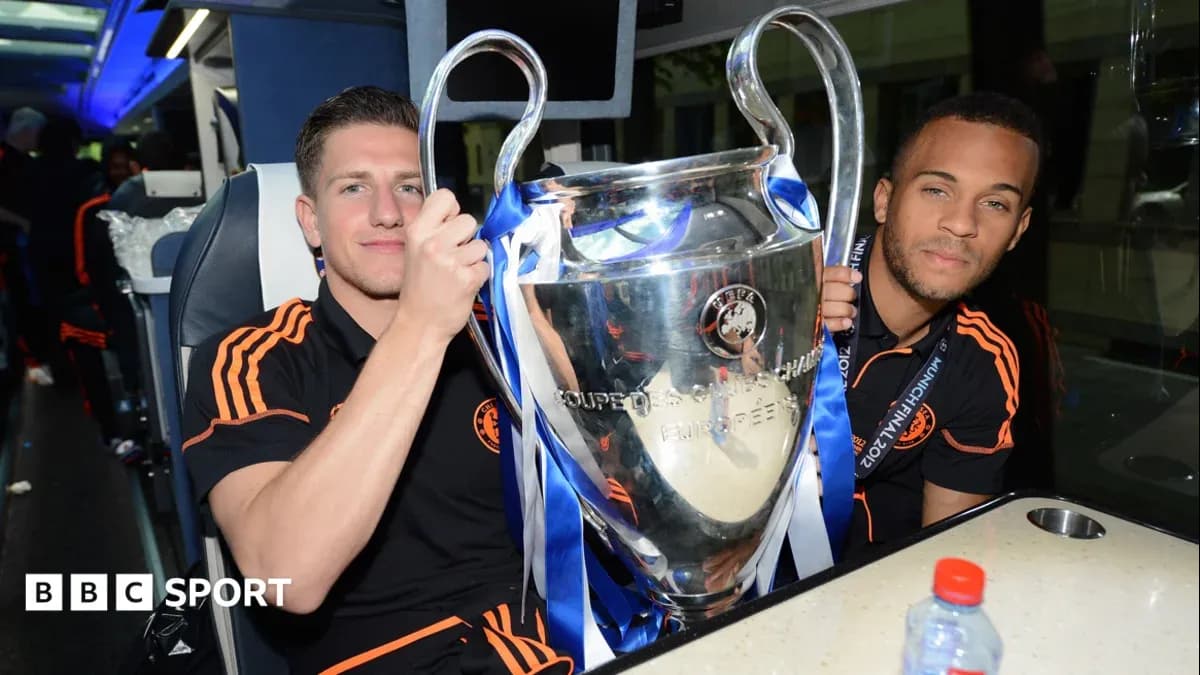
He came through the club’s academy, signed as a seven-year-old, broke into the first team at 17 under Jose Mourinho, captained England Under-19s and once teed up Frank Lampard in a 7-0 rout of Stoke City at Stamford Bridge. He was in Munich in 2012, suited up with Roberto di Matteo’s squad as Chelsea finally climbed Europe’s highest peak, beating Bayern Munich on penalties to win the Champions League.
Yet when Hutchinson looks back, he talks about regret. About what might have been.
A career stopped at 21
The turning point came far from the spotlight, in a reserve game at Aston Villa. A serious injury led to the diagnosis of a chondral defect – a hole in the cartilage of his right knee. For a defender on the brink of a breakthrough, it was devastating.
He fought, rehabbed, tried to come back. The knee would not cooperate.
So in 2010, at just 21, a player Mourinho had publicly praised as a bright prospect walked away from professional football. Retired. Finished before he had really started.
The decision broke him.
“I was just a kid,” he recalls. He had already played for Chelsea’s first team, already heard his manager talk him up in interviews. Then everything collapsed. Depression followed, and with it, what he describes as “dark thoughts”.
He eventually reached out for help.
“Unless you get help, you never know how bad you are,” he says. Talking about it now, he admits, still feels like therapy. Sharing the story, he believes, halves the weight. Suffering in silence, he learned, only makes it heavier.
Treatment at the Priory helped him stabilise. Surgeons finally fixed the knee. The door he thought had slammed shut creaked open again.
In December 2011, he came out of retirement and re-signed for Chelsea.
Back from the brink – again and again
The comeback was never going to be straightforward. More injuries followed. His Chelsea career ultimately amounted to just six senior appearances.
On paper, that looks like a sad ending. In reality, it became the start of a different kind of journey.
Hutchinson built a strong Championship career, most memorably with Sheffield Wednesday, where he played more than 200 games in the second tier and earned genuine affection from the Hillsborough stands. He took his boots abroad, to Vitesse Arnhem in the Netherlands and Pafos in Cyprus. He represented Nottingham Forest, Reading and AFC Wimbledon.
Sixteen years on from that first retirement, the father of three is still playing at 37. This summer he signed a two-year deal with non-league Farnham Town.
He does so with the knowledge that, not long ago, he was told he had suffered a heart attack.
The day everything tightened
Wind the clock back to Monday, 26 May 2025. AFC Wimbledon fans will never forget the date: promotion to League One, secured at Wembley with a play-off final win over Walsall.
They got there because of Hutchinson.
Three weeks earlier, away at Grimsby, he scored the goal that nudged the Dons into the play-offs. It looked like a classic veteran’s moment – a big player stepping up when it mattered.
Inside his body, something far more serious was unfolding.
“Throughout the first half my chest was getting increasingly tighter and I was in so much pain,” he remembers. He felt dizzy. His hands were sweating. He was “rapidly going downhill”.
Then football’s chaos intervened. A centre-back won a towering header, the goalkeeper tipped it on to the bar, the ball dropped loose. Hutchinson was there, calm enough to tap it over the line.
While the travelling Wimbledon support erupted, he had only one thought: get through the game, get home to his wife and three children in Ascot.
He did not make it home that night.
On the journey back to London, his condition worsened. The team coach diverted to a hospital in Nottingham. Tests there were worrying enough for doctors to move him quickly to a nearby cardiac unit.
“I was put in the back of an ambulance and I remember hearing the blues and twos,” he says. Blood tests showed serious damage. He was in trouble.
A couple of paramedics recognised him from his time at Nottingham Forest. They joked, with a blunt edge of truth: “You can thank us later for saving your life.” Then came the diagnosis: he had suffered a heart attack.
Hutchinson spent five days in hospital. A branch of an artery was 75% blocked. He underwent an angiogram and had a stent fitted by a specialist – a professor who had also worked with Tom Lockyer and Christian Eriksen.
The message was clear: his case was different. This was a blockage, fixed by surgery. No need for a defibrillator, no need for the kind of long-term device that has defined other players’ comebacks.
Back on his feet, back on the pitch
Messages flooded in. Among those checking on him was John Terry, his former Chelsea team-mate. Hutchinson was well enough to make it to Wembley to watch AFC Wimbledon complete the job and win promotion.
A month later, the club announced he had signed a one-year extension, having been given the all-clear to return to training.
Reality, again, was harsher than the headline. He managed only a handful of appearances in the 2025-26 season. In May, 12 months on from that dramatic afternoon at Grimsby, Wimbledon confirmed he would be leaving at 36.
“Sam played a pivotal role in getting us over the line, not only with that iconic goal at Grimsby but his performances leading up to that,” the club said in a statement marking his departure.
For many, a heart attack, a major operation and a promotion-clinching farewell would have been the cue to stop. To step away while the story still had a neat ending.
Hutchinson chose a different script. He signed for Farnham Town and carried on.
Chelsea roots, lasting impact
For all the pain and frustration, Chelsea remains central to who he is.
He remembers the club that nurtured him, the standards it set, the way it supported him through his darkest moments. “They brought me up and gave me values,” he says. He speaks warmly of the way they looked after him, even as injuries derailed the career they had once mapped out together.
He still works with the club, contributing to Chelsea TV, a familiar face from a different era in blue.
Off the pitch, his battles have shaped a new purpose. He has supported the British Heart Foundation, using his story to highlight cardiac health. He has spoken openly about mental health, about the depression that followed his first retirement and the importance of asking for help.
So where is he now, mentally?
“I’m in a different place,” he says. The regrets are still there – how could they not be, for a player once tipped by Mourinho who never got the Chelsea career his talent promised? But the bitterness has faded. “I do have regrets [because of the injury] but I have also lived a life that has been good.”
Plenty of players, he points out, have gone through worse.
He has seen the top of the game from the inside of a jubilant dressing room in Munich. He has stared at the end of his career twice – once because of a knee, once because of his heart. He has walked away, come back, and kept going.
Now, at 37, on non-league pitches far from the Champions League lights, Sam Hutchinson is still doing the thing that nearly cost him everything.
He is still playing.