Romeo Lavia's Journey: From Injury to Chelsea's Midfield Star
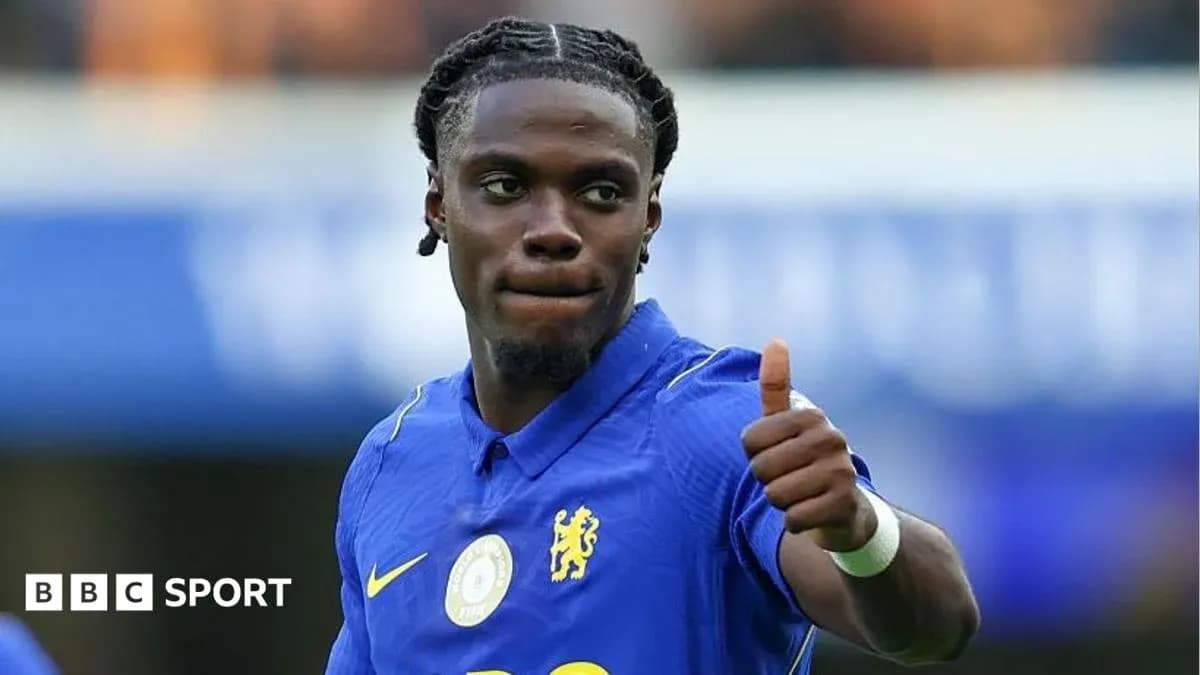
Romeo Lavia leans back in his chair at Cobham and smiles. Not the polite, media-trained smile. A lighter one. The smile of a footballer who finally feels his body belongs to him again.
“I felt free,” he says of that first Chelsea goal against Brighton. The word hangs there. For a player who has spent two years shackled by his own muscles, it means more than it should for a routine league strike in a 4-3 win.
From treatment room to turning point
Lavia is 22 now. For much of his Chelsea career, the number has felt cruelly out of sync with his story. Young, gifted, expensive – and barely seen.
One appearance in his first season at Stamford Bridge, wrecked by a serious hamstring injury. Thirty-three games missed in his second campaign, down from 42 the year before but still a blur of scans, setbacks and lonely gym sessions. A player signed to anchor a new era spent anchoring the club’s injury list.
Last season finally brought a shift. Lavia featured in around half of Chelsea’s matches, a small but vital step towards normality. This summer, he quietly cleared another hurdle: available for every pre-season session, every friendly, every early kick of the new campaign.
Now comes the next marker. If he gets through an hour against Brentford on Friday, he will set a personal best for minutes played in a single uninterrupted spell at Chelsea – 518 and counting, including pre-season. It is an oddly specific milestone, but for someone who has lived by medical reports, the numbers matter.
“There is so much that goes on behind the scenes,” he tells BBC Sport. He talks about his checklist – the small rituals and details he ticks off before every game to feel ready. Hydration. Stretching. Activation work. Sleep. A private system built to keep his body on the pitch.
“It’s a big process,” he says. “But we’re doing well at the moment.”
Breaking the mental block
The physical pain was one thing. The mental grind was another.
Repeated comebacks. Another twinge. Another scan. Another date circled on the calendar, then crossed out. It wears on you. It makes you cautious. Too cautious, at times.
Lavia admits the real battle has been in his head. How do you play with intensity when you’re scared of the next sprint? How do you throw yourself into a tackle when the last one stole six weeks of your career?
Xabi Alonso saw it early. In August, during a pre-season match against AC Milan, the Chelsea manager pushed him through the barrier of a full 90 minutes. No early substitution. No protective bubble. Just a midfielder being told to trust his body again.
Lavia listened.
“I’ve learned you can always go further than you think you can. You can always push your limits, especially when you feel like everything is going against you,” he says.
“It’s always easy to think about giving up, or to feel that whatever you do will take you back to the same point where you started.
“But luckily, with the help of team-mates, staff, everyone at the club and people close to me outside football, we’ve been able to create a sort of bubble where you concentrate only on what you can control.”
That bubble matters at Chelsea, where he is far from the only player trying to outrun his own medical file. Reece James and Wesley Fofana have lived the same cycle of hope and frustration. Their stories, slowly, are changing. Lavia wants his to follow.
From supporting cast to central figure
The timing of his resurgence could hardly be more significant.
Enzo Fernandez has gone, sold to Manchester City for £125m on deadline day. Moises Caicedo has barely featured this season, restricted to just 14 minutes so far. The midfield that was meant to define Chelsea’s future has been torn up and re-drawn.
In the middle of it stands Lavia, now a regular in Alonso’s side, often alongside captain Reece James, who has shifted infield from right-back. The Belgian is no longer the promising understudy. He is the one with the ball at his feet, the one team-mates look to when the game needs calming or quickening.
“It’s part of my game as well to take responsibility and have some character,” he says. “I really like being in that position and also being at this club.
“Having this responsibility, it’s not even pressure, it’s just like privilege, so I’m actually living the dream.
“This is why you’ve been playing and training all these years for, so just go and enjoy it.”
Chelsea have backed him to become that figure. Publicly. Privately. Through the long months when he was more theory than reality, they insisted he would be central to what comes next.
Now, finally, he has the chance to prove them right.
New faces, new energy
Chelsea’s broader reset has helped. The club’s recruitment has shifted, nudging away from pure potential and towards a blend of youth and experience.
The headline arrival is Morgan Rogers, the £117m club-record signing from Aston Villa, who once shared academy pitches with Lavia at Manchester City. Rogers has joined an attacking unit already brimming with Cole Palmer and Joao Pedro.
The result has been explosive. Six games, 18 goals in all competitions. Stamford Bridge, so often tense and tight in recent seasons, has started to breathe again.
“It’s honestly amazing,” Lavia says. “Obviously I knew Morgan, but just the way he’s come in and then they’ve all clicked together up front. Sometimes I wish I could go in the stands and enjoy watching it.
“It makes your job easier, because it’s like ‘you guys go and work your magic and then we do the rest’.
“So we’re really, really happy to have them all and hopefully we can achieve great things together.”
He talks about the “love” of his team-mates, the trust of a dressing room that has seen his struggle up close. For a long time, he watched others score and celebrate. Now he is part of the noise.
Changing the narrative
That goal against Brighton meant more than a number on a stats sheet.
“It was just a moment where I felt free,” Lavia says. “It feels like all the work that you’re putting in, you gain the reward of it, so it was a very emotional moment.”
His first Premier League goal came against Chelsea, for Southampton in 2022. It always felt “a bit strange” to him that his breakthrough memory in England was at the expense of the club he would later join. Scoring in blue, at last, felt like a correction.
“I wanted to change the narrative,” he says. “I saw all my team-mates score, so I was waiting for it to be my turn and when it happened I was very, very happy and excited. I wanted to express it as much as possible with the fans and I really loved it.”
The narrative, though, is not just about goals. It is about durability. Reliability. Being there every week, not once a month.
Lavia knows Chelsea have been “too immature” as a team in recent seasons. He knows the temptation is to get carried away by a few thrilling attacking displays and a wave of optimism around Alonso’s ideas. He refuses to do it.
He talks instead about realism. About “becoming the team that we and everyone thinks we can be” step by step. About ticking off milestones, just as he does on that private pre-match checklist.
Stay fit. Hit 60 minutes. Then 90. Then a run of games. Then a season.
Chelsea want to become a force again. Lavia wants to become the midfielder he was always meant to be. Both ambitions are now intertwined.
The question is no longer whether his body will let him dream. It is how far, and how fast, he can drive this new Chelsea from the heart of midfield.