Roberto De Zerbi's Gamble on Lucas Bergvall at Brentford
Roberto De Zerbi did not pretend otherwise. He gambled on Lucas Bergvall at Brentford — and lost.
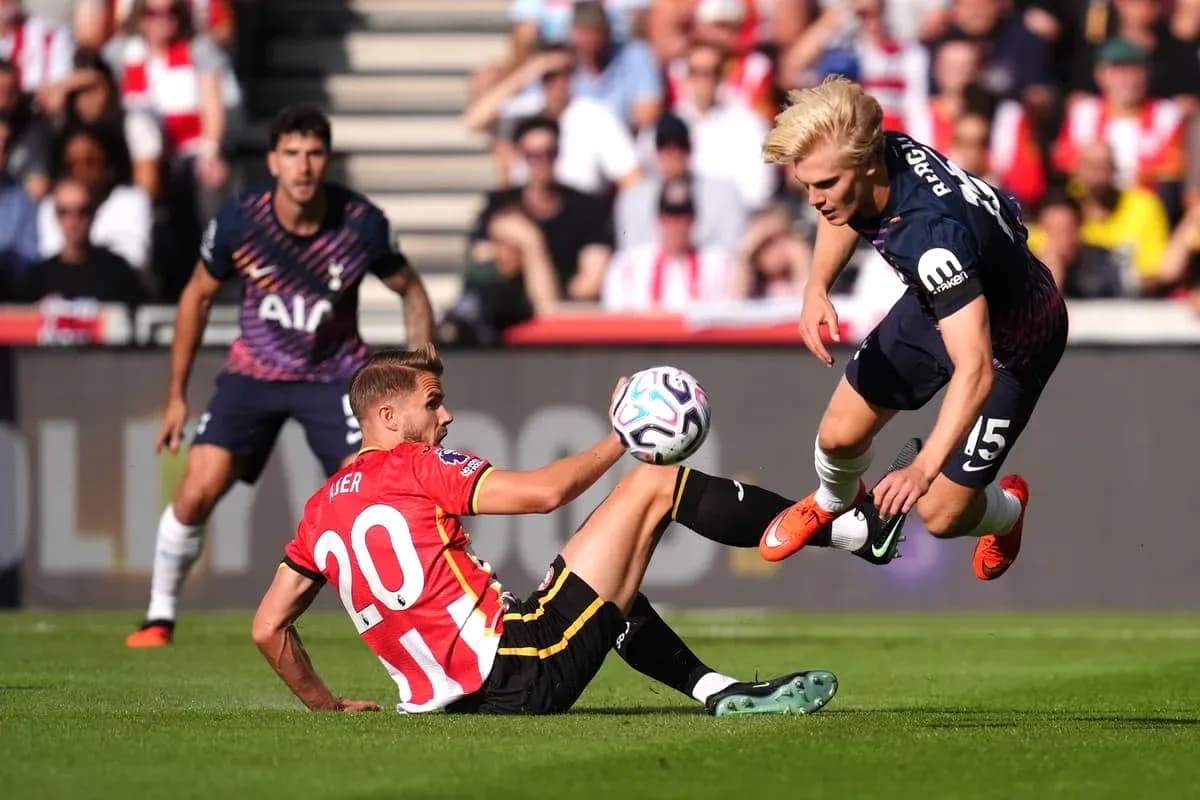
Tottenham’s new head coach watched his side taken apart 3-0 at the Gtech Community Stadium on the opening weekend, and the young Swede found himself at the heart of the storm. Thrown in from the start alongside Sandro Tonali, Bergvall was asked to handle the intensity of Brentford’s midfield. He never got close to doing it.
A selection born of necessity
This was not a romantic punt on youth. It was a calculation.
Mateus Fernandes is managing calf fatigue. Rodrigo Bentancur reported back late after the World Cup and has not yet hit the physical levels De Zerbi demands. With both short of fitness, the Italian turned to the player he had actually worked with all pre-season.
“In the pre-season, we worked with Lucas Bergvall,” De Zerbi explained. The message was clear: this was the plan they had prepared, not a last-minute whim.
He framed it within the wider rebuild. Last season’s defensive line — Pedro Porro, Kevin Danso, Micky van de Ven, Destiny Udogie — had been ripped up. At Brentford, Archie Gray, Jean Paul van Hecke, Marcos Senesi and Andy Robertson formed a completely new back four. In front of them, two more changes: no Bentancur, no Joao Palhinha, but Bergvall instead.
At the “beginning of the new project”, as De Zerbi put it, he felt it was “right to play with Lucas Bergvall”. Right for the long term, at least.
A brutal lesson
The reality on the pitch was harsher.
Brentford swarmed the midfield, hunted in packs, and Spurs never settled. Bergvall, just 20, looked exactly that. His touch was tidy enough at times, but he struggled to dictate tempo or cope with the home side’s aggression.
The key moment came with Brentford already on top. Bergvall was caught in possession in a dangerous area, and the hosts punished him, racing away to score their second goal. The stadium roared; Tottenham sagged. The error did not lose the game on its own, but it underlined the gulf in physical and mental sharpness.
By half-time, with Brentford 2-0 up inside 33 minutes and Tottenham reeling, De Zerbi acted. Bergvall was hooked at the break, a chastening end to his first start of the season.
De Zerbi stands his ground
If the substitution looked brutal, De Zerbi refused to turn it into a public execution.
He insisted Bergvall “didn't play bad”, even as he acknowledged the mistake for the second goal. The Italian’s tone was not of a manager washing his hands of a failed call, but of one doubling down on the logic behind it.
He admitted he had known the risks. Bergvall in this “type of game” might “suffer more” than Bentancur, nine years older and vastly more experienced. He picked him anyway, convinced that Spurs cannot build a new era while forever hiding their younger players from difficult nights.
“We go, and we try to build something good for the club,” he said. That line cut through the immediate anger. This was not just about Brentford away in August; it was about what Tottenham want to look like in two years’ time.
Bergvall’s own summer added another layer. Having previously pushed for a move, he is now back in favour and being trusted in one of the most demanding roles on the pitch. De Zerbi clearly intends to live with the growing pains.
His verdict on the error was telling: in two years, he believes, Bergvall “will not lose that ball in that moment of the game”. For now, those moments are part of the journey.
The question is how many such lessons Tottenham can afford while trying to launch a new project in the unforgiving glare of the Premier League.