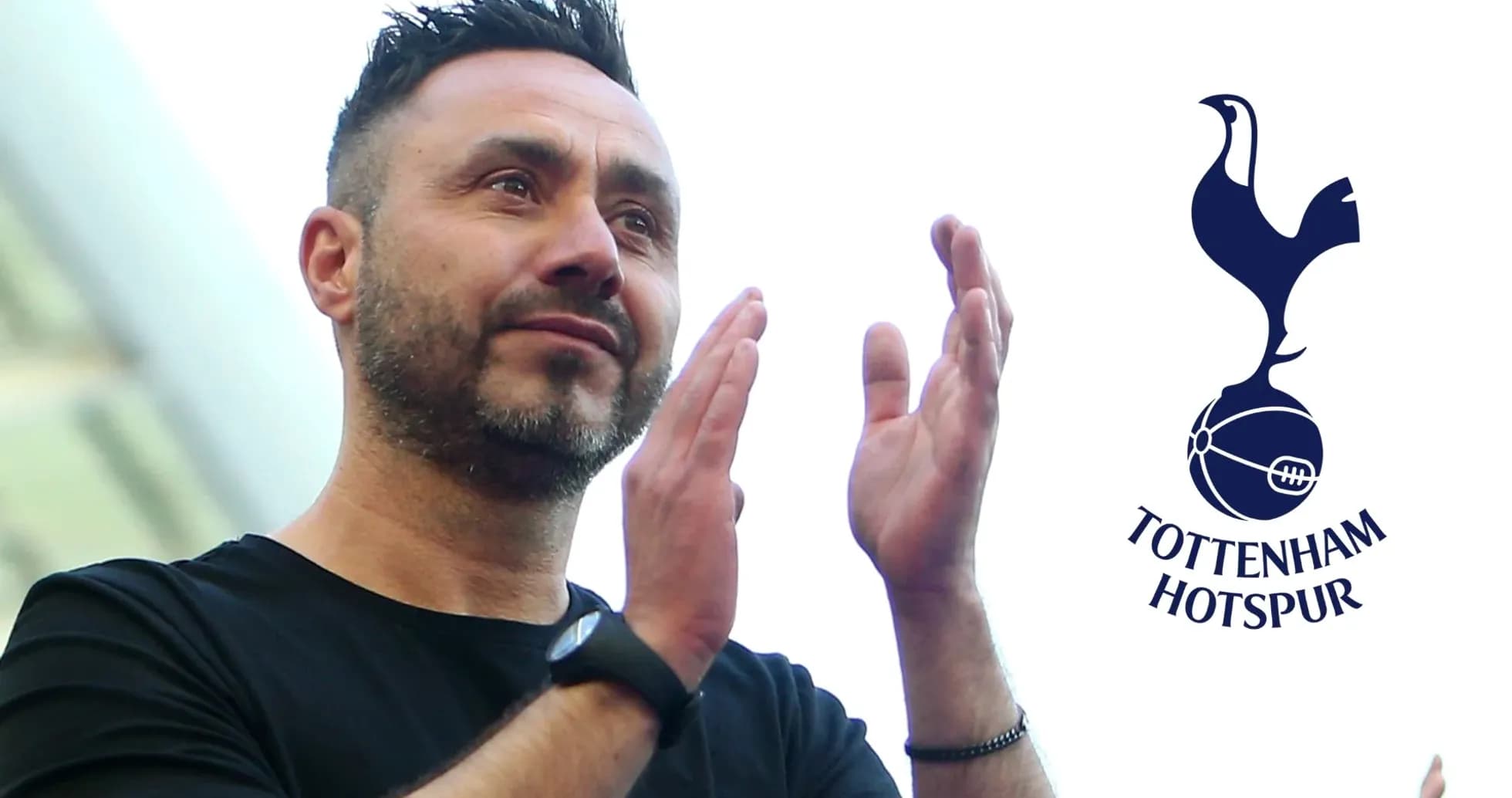
Roberto De Zerbi's Influence on Tottenham's Transfer Strategy
In modern football, the manager’s office is no longer the true transfer hub. Decisions drift upwards to sporting directors, analysts, and recruitment committees, with head coaches often reduced to nodding along as new signings are dropped at their door.
Tottenham may feel that tension again over the coming weeks. Another window is open, scouting networks are humming, and lists of “profile fits” are being compiled on screens across Europe. Data, metrics, algorithms. All of it feeds into who arrives and who leaves.
But it is the man on the touchline who has to live with those choices.
Roberto De Zerbi has never been the type to quietly accept someone else’s plan. The Italian is sharp-edged, demanding, and utterly convinced by his own ideas. He wants those around him to fall in line with his vision, not the other way round. Spurs have effectively handed him the keys and asked him to drag a listing giant away from successive 17th-place finishes and the suffocating anxiety of relegation fights.
That trust, though, has to extend beyond the dugout and into the recruitment room.
Brad Friedel, who knows the pressures of Tottenham from his own time in goal, is convinced they have the right man. The question, in his eyes, is whether the club will actually let De Zerbi build a squad in his own image.
“Nope, they’ll flip the script now. They have the right guy in De Zerbi,” he said, before cutting to the heart of the matter: “I just hope they let him get who he wants in the summer. I know they’re going to have to do it financially prudent. I know they bring in a great deal of revenue, but let De Zerbi get what he wants to a point, at least.”
This is not a call for reckless spending. It is a call for clarity. If Tottenham believe in De Zerbi, they have to let him shape the dressing room.
Friedel even put numbers on it. “Let’s say they’re going to go for six players. Let at least three of them be De Zerbi’s guys, like solely De Zerbi’s guys. He knows what he wants. He knows how he wants his teams to play.”
There is evidence to back that faith. De Zerbi walked into a squad scarred by injuries and drained of belief. By Friedel’s reckoning, it was one of the most battered groups in the Premier League: key players constantly sidelined, confidence on the floor. Yet they stayed up. Barely, but they stayed up.
He pointed to fine margins, too. A slice of fortune in the Aston Villa team selection on a crucial day, a result that went Tottenham’s way almost “by the skin of their teeth”. Survival came with fingernails dug into the cliff edge, not with any sense of comfort.
That is exactly why Friedel’s message is so blunt. Don’t make it harder than it has to be.
“Don’t overcomplicate things,” he said. “De Zerbi is a good coach, and he knows, in his system, how he wants to play. So I hope they recruit to his style, and then I think you could actually see a very quick resurrection in them into the top six.”
This is the crossroads. One path leads to another year of patchwork planning and uneasy compromises. The other gives De Zerbi real influence over who walks into the dressing room this summer.
If Tottenham choose the second, Friedel is adamant: the days of looking nervously over their shoulder could give way to a very different view of the table.