Scotland Defeats Haiti 1-0 in World Cup Clash
Gillette Stadium under the Boston lights hosted a meeting of contrasts: a debutant Haiti side feeling its way into the World Cup, and a Scotland team determined to act like it belongs at the sharp end of Group C. Following this result, the 1-0 Scottish win locks in an immediate hierarchy: Scotland top the group on 3 points with a goal difference of +1 (1 scored, 0 conceded), while Haiti sit fourth with 0 points and a goal difference of -1 (0 scored, 1 conceded). It is only one match each, but already the outlines of their tournament identities are visible.
I. The Big Picture – Two 4-4-2s, two very different moods
Both coaches mirrored each other on paper with a 4-4-2, but the executions were worlds apart.
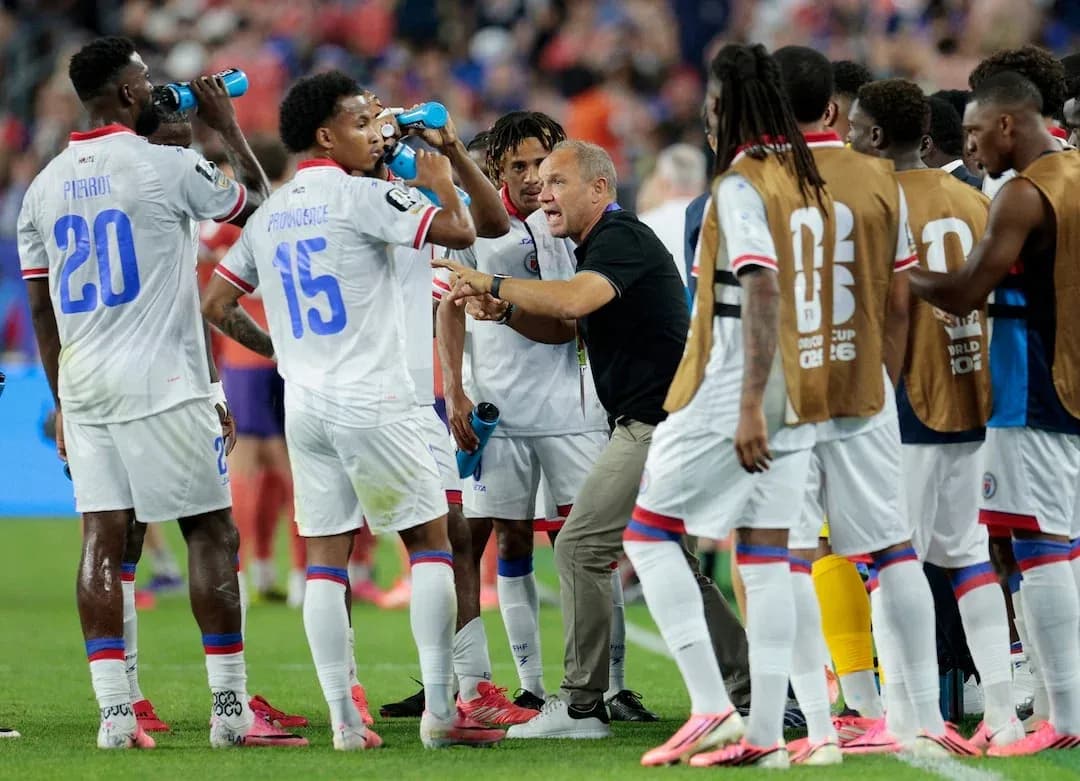
Sebastien Migne’s Haiti lined up with Johny Placide in goal behind a back four of Carlens Arcus, Ricardo Adé, Hannes Delcroix and Martin Expérience. Ahead of them, a flat but mobile midfield of Louicius Don Deedson, Danley Jean Jacques, Jean-Ricner Bellegarde and Ruben Providence was tasked with linking to the front two, Frantzdy Pierrot and Wilson Isidor. It was a selection that signalled ambition: two natural forwards and wide midfielders who prefer to attack.
Steve Clarke’s Scotland answered with Angus Gunn in goal, protected by Aaron Hickey, Grant Hanley, Jack Hendry and Andy Robertson. The midfield quartet of Ben Gannon-Doak, Scott McTominay, Lewis Ferguson and John McGinn sat behind the front pair of Lawrence Shankland and Che Adams. This was a familiar Scottish spine, with McTominay and McGinn as the emotional and tactical core, framed by full-backs Hickey and Robertson who are as much playmakers as defenders.
Heading into this game, Haiti had no World Cup goals and had failed to keep a clean sheet in their only fixture of the campaign, conceding 1.0 goal on average at home. Scotland arrived with a more solid profile: on their travels they had already banked a 1-0 win, averaging 1.0 away goal for and 0.0 away goals against. The match unfolded almost exactly along those statistical lines.
II. Tactical Voids – Where the game slipped away
Haiti’s main void was structural. The 4-4-2 often stretched into a 4-2-4 in possession, with Deedson and Providence pushing high and narrow to support Pierrot and Isidor. That left Jean Jacques and Bellegarde exposed in central zones against Scotland’s rotating triangle of McTominay, Ferguson and McGinn. Whenever Haiti lost the ball, the distances between their lines were too big; the midfield screen was thin, and the back four were forced to defend wide spaces.
Defensively, Haiti’s season numbers already hinted at fragility: overall they concede 1.0 goal per match while failing to score at all, with 0.0 goals for in total. The lack of a minute-by-minute goals-against profile makes it hard to pinpoint a particular time of weakness, but the card distribution is telling. Every yellow card Haiti have received so far has come in the 31-45 minute window, a concentrated 100.00% of their total. It suggests a side that loses emotional control as the first half closes – a period where structure and discipline must be at their highest.
Scotland’s void was different: less about shape, more about game management. Their card profile shows 1 yellow between 46-60 minutes (33.33% of their total) and 2 yellows between 91-105 minutes (66.67%). Late-game bookings for players like Findlay Curtis and Kenny McLean underline a pattern: Scotland can become ragged when protecting a lead. It did not cost them here, but in a longer tournament arc, that edge-of-control finish is a risk.
III. Key Matchups – Hunter vs Shield, and the Engine Room
Hunter vs Shield
For Haiti, Frantzdy Pierrot was the focal “hunter.” A classic penalty-box forward, he relied on service from Deedson and Providence. But he was largely starved, pinned between Hanley and Hendry, with McTominay often dropping to create a situational back three in the build-up and an extra body in defensive transitions.
The Scottish “shield” has been statistically watertight: on their travels they have yet to concede, with 0.0 away goals against and a total of 0.0 overall. Hanley and Hendry were protected by an aggressive front-foot full-back in Hickey, whose 7 duels contested and 5 won underline his role as an active defender. He also contributed 35 passes at 88% accuracy and 2 key passes, illustrating how Scotland’s right flank doubled as both barrier and launchpad.
On the other side, Robertson and McGinn hemmed in Haiti’s right, forcing Arcus and Deedson to defend deeper than they would have liked. The result: Haiti’s hunter pair, Pierrot and Isidor, were often isolated, receiving the ball with backs to goal and little support.
The Engine Room
In midfield, the duel was more nuanced. Jean Jacques and Bellegarde tried to carry Haiti forward, but they were outnumbered by Scotland’s rotating box of McTominay, Ferguson, McGinn and the drifting Gannon-Doak. McTominay’s role as enforcer was clear: break play, recycle quickly, and allow Ferguson and McGinn to find the forwards early.
Off the bench, Clarke turned to Kenny McLean and Findlay Curtis, both of whom left their mark in a different way. McLean’s 2 completed passes at 100% accuracy and 1 tackle plus 1 interception in just 15 minutes tell the story of a player brought in to close spaces and see out the game. Curtis, an attacker, committed 1 foul and took a yellow card, embodying Scotland’s willingness to defend from the front in the closing stages.
For Haiti, the bench was rich in attacking names – Duckens Nazon, Derrick Etienne, Lenny Joseph, Josué Casimir, Yassin Fortune – but the inability to alter the match’s rhythm meant those weapons were never fully brought to bear. The tactical void was not personnel; it was progression. Without a stable route from Placide’s back line through Jean Jacques and Bellegarde into Pierrot, the substitutions would always be chasing scraps.
IV. Statistical Prognosis – What this result really says
Following this result, the numbers are stark. Overall, Haiti have played 1 match, lost 1, scored 0, and conceded 1. They have failed to score in 1 out of 1 fixtures, and have yet to keep a clean sheet. Their goal difference of -1 is the mathematical reflection of a team that has not yet found a way to translate attacking intent into end product.
Scotland, by contrast, have played 1, won 1, scored 1, and conceded none. On their travels they average 1.0 goal for and 0.0 against, with a clean sheet in 100% of their matches. Their biggest away win so far is this 0-1, and it encapsulates their current identity: narrow margins, defensive solidity, and enough quality in wide and central areas to create the decisive moment.
Without explicit xG data, the expected goals narrative must be inferred from structure. Scotland’s territorial dominance, full-back involvement, and midfield overloads suggest a side that will regularly generate a higher xG than it concedes, especially against teams whose midfield can be stretched. Haiti’s inability to progress the ball centrally, combined with their 0.0 goals-for average, points toward low xG creation unless Migne rebalances his midfield and tightens the distances between lines.
The tactical verdict is clear: Scotland look built for grinding out group-stage football, while Haiti must quickly evolve from a brave but disjointed 4-4-2 into a side that can protect its centre and feed its forwards. If they cannot, the story that began under the Boston lights may be remembered less for its romance and more for its harsh arithmetic.