Real Madrid Edges Benfica 2–1 in Champions League First Leg
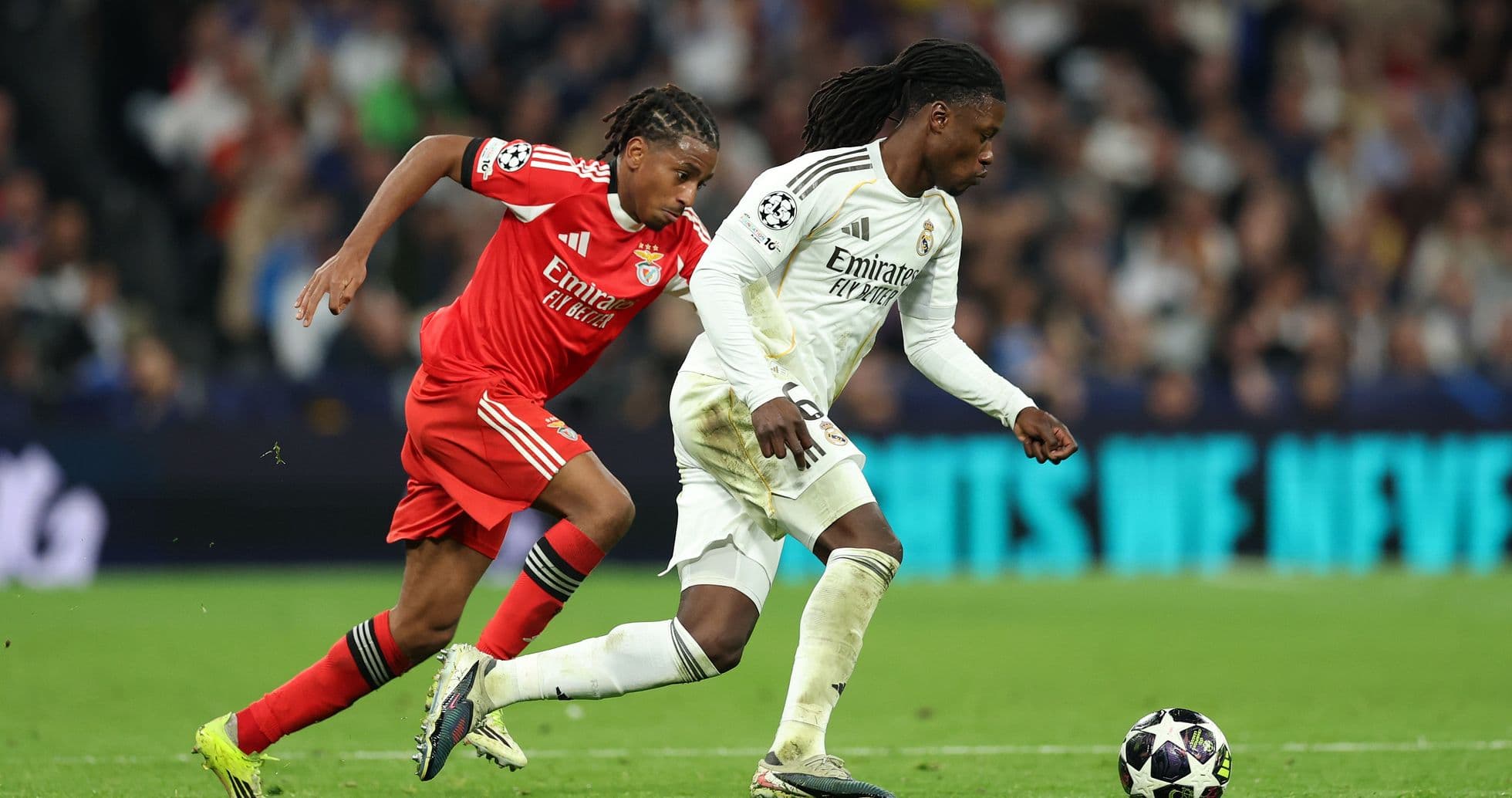
On a tense Champions League Round of 32 night at the Bernabéu, Real Madrid edged Benfica 2–1 to take a slender advantage into the second leg. Rafa Silva’s early strike briefly stunned the home crowd, but Aurélien Tchouaméni levelled within two minutes and Vinícius Júnior’s late winner completed the turnaround. In a match where neither side truly pulled away on the balance of chances, Real’s greater control of possession and precision in key moments proved decisive. The result consolidates Madrid’s status as a top-10 side in the competition’s overall table, while Benfica’s uphill campaign from 24th place becomes even steeper.
First-half analysis
The game opened with Benfica showing no fear in Madrid. On 14', Rafa Silva struck to give José Mourinho’s side a precious away lead, capitalising on Benfica’s early attacking intent. Real Madrid’s response under Alvaro Arbeloa was immediate: on 16', Tchouaméni equalised, assisted by Federico Valverde, restoring parity almost instantly and preventing any sense of panic from taking hold.
The half’s main flashpoint came on 34', when Arda Güler thought he had completed the comeback, only for VAR to intervene and cancel the goal. That decision kept the score at 1–1 and injected a sense of frustration into the hosts’ evening. Benfica’s Richard Ríos picked up a yellow card for a foul on 35', a sign of the Portuguese side’s willingness to break up Madrid’s rhythm. With no further goals before the interval and limited major incidents beyond the booking, the first half closed finely balanced at 1–1, each side having enjoyed its own spell of momentum.
Second half & tactical shifts
The second half retained its cagey tone, with discipline and small details increasingly important. Benfica’s veteran centre-back Nicolás Otamendi was booked for a foul on 51', underlining the pressure Madrid’s forwards were beginning to exert. Real defender Raúl Asencio followed him into the book on 57' as the contest grew more physical.
Arbeloa’s key tactical moves came on 77'. Asencio, a defender, made way for David Alaba, another defender, a like-for-like change suggesting a desire for composure and experience at the back rather than a radical reshuffle. Simultaneously, Eduardo Camavinga was withdrawn for forward Franco Mastantuono, an attacking tweak that hinted Madrid were prepared to take more risks in search of a winner.
The breakthrough arrived on 80'. Vinícius Júnior struck what proved to be the decisive goal, again with Valverde providing the assist. The Uruguayan’s second telling contribution of the night underlined his importance as Madrid’s creative engine from midfield.
Arbeloa doubled down on fresh legs in the attacking and midfield zones on 84', removing Güler for César Palacios and forward Gonzalo García for midfielder Thiago Pitarch. Those changes suggested a blend of game management and energy in the centre of the pitch to protect the narrow lead. Mourinho responded on 85' with his own adjustments: Fredrik Aursnes was replaced by Enzo Barrenechea in midfield, and Andreas Schjelderup went off for forward Franjo Ivanović, a clear attempt to inject more attacking thrust late on.
As stoppage time began, Real full-back Álvaro Carreras was replaced by Fran García on 90+1', a defensive refresh down the flank. Benfica simultaneously took off Leandro Barreiro for defender Sidny Lopes Cabral, a somewhat conservative switch given the scoreline, perhaps reflecting Mourinho’s concern about conceding a third rather than an all-out assault for an equaliser. The final card of the night went to Palacios on 90+6' for a foul, encapsulating Madrid’s gritty, no-nonsense approach to closing out the game.
Statistical deep dive
Real Madrid controlled 56% of the ball, with 568 total passes and an impressive 90% pass accuracy, compared to Benfica’s 44% possession and 440 passes at 86% accuracy. That extra control in midfield helped Madrid dictate tempo, particularly after taking the lead.
In attack, the numbers underline how finely poised the tie was. Madrid registered 14 total shots to Benfica’s 12, with both sides managing 4 shots on target. Yet the expected goals tell a different story: Benfica’s xG of 1.98 exceeded Madrid’s 1.11, suggesting Mourinho’s side fashioned slightly better-quality chances overall but failed to convert them. Both goalkeepers finished with negative “goals prevented” values (-1 each), indicating that each conceded more than the underlying shot quality might have predicted.
Discipline was another subplot. Madrid committed 16 fouls to Benfica’s 10, and both teams collected two yellow cards. The higher foul count for the hosts aligns with their need to disrupt Benfica’s transitions once ahead, while the visitors’ bookings for Ríos and Otamendi reflected the strain of containing Madrid’s forwards.
Standings & implications
In the broader Champions League landscape, Real Madrid, who came into the night 9th in the overall table with 15 points and a +9 goal difference (21 scored, 12 conceded), strengthen their case as genuine contenders in the knockout rounds. Their strong home record in this campaign (3 wins from 4, 10 goals scored, 4 conceded) remains a foundation. Benfica, ranked 24th with 9 points and a -2 goal difference before this tie, now face a demanding second leg. With only one away win from four in the competition and just 2 goals scored on their travels, Mourinho’s side must overturn both the deficit and their away-day trends to progress.