Arsenal Edges Atletico Madrid in Champions League Semi-Final
Arsenal edged a finely balanced Champions League semi-final first leg at Emirates Stadium, beating Atletico Madrid 1–0 and carrying a fragile but deserved advantage to Spain. Mikel Arteta’s 4-2-3-1 out-possessed Diego Simeone’s 4-4-2 (54% to 46%) and generated the better shot volume (13–9) and xG (1.58–0.53), but the margin on the night came down to a single first-half action: Bukayo Saka’s 44' strike. With both goalkeepers making exactly two and one saves respectively, the match was defined less by shot-stopping heroics and more by Arsenal’s territorial control against Atletico’s compact, counter-attacking block, and by how each coach used substitutions to reshape the final half-hour.
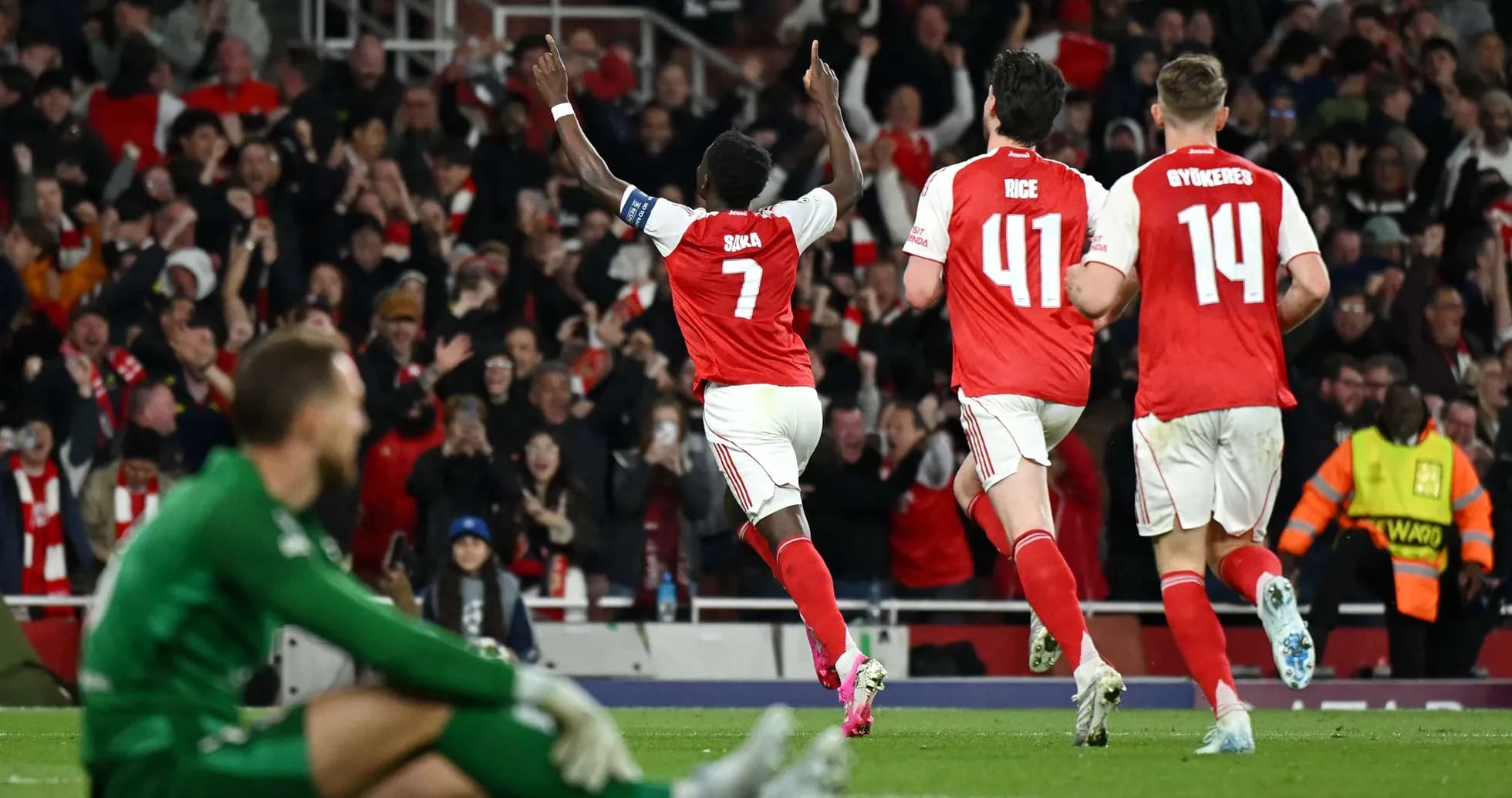
The scoring sequence was brutally simple. At 44', B. Saka found the decisive breakthrough for Arsenal with a normal goal, giving the hosts a 1–0 lead that accurately reflected their growing pressure before the interval. There were no further goals, and no VAR interventions listed; the halftime score stood at Arsenal 1–0 Atletico Madrid, which also became the full-time result.
Disciplinary and Event Log
The disciplinary and event log, in strict chronological order, framed the tactical story. Remarkably, the first card arrived before kickoff: at -5', Arsenal substitute goalkeeper Kepa Arrizabalaga received a yellow card for time wasting, an unusual pre-match sanction that did not affect on-pitch structures but underlined the referee’s low tolerance for delay. After Saka’s 44' goal, the second half became a chessboard of substitutions.
At 57', Atletico made a triple change to alter their attacking profile: A. Sorloth (IN) came on for R. Le Normand (OUT), N. Molina (IN) came on for A. Lookman (OUT), and J. Cardoso (IN) came on for G. Simeone (OUT). Simeone effectively moved from the starting 4-4-2 into a more aggressive, direct configuration, sacrificing a centre-back and a wide midfielder to add a classic target forward and fresh legs on the right.
Arsenal answered swiftly. At 58', N. Madueke (IN) came on for B. Saka (OUT), and P. Hincapie (IN) came on for R. Calafiori (OUT), signalling a desire to preserve Saka’s energy and shore up the left side against Atletico’s growing directness. At 59', M. Odegaard (IN) came on for E. Eze (OUT), adding more control and tempo management between the lines.
At 66', Atletico refreshed their front two entirely: A. Baena (IN) came on for A. Griezmann (OUT), and T. Almada (IN) came on for J. Alvarez (OUT), tilting the attack towards mobility and combination play rather than pure finishing. Arsenal’s response at 74' further locked down the centre: M. Zubimendi (IN) came on for M. Lewis-Skelly (OUT), reinforcing the double pivot for the closing phase.
Discipline then intersected with Atletico’s late push. At 81', Marc Pubill was booked for a foul, reflecting the increased urgency and risk in Atletico’s right-back channel as they chased the game. Arsenal’s final change at 83' was offensive in personnel but defensive in intent: G. Martinelli (IN) came on for L. Trossard (OUT), providing fresh running to stretch counters and relieve pressure. The last card arrived at 90+5', with Koke cautioned for a foul, emblematic of Atletico’s frustration as Arsenal closed out the match.
Tactical Overview
Tactically, Arsenal’s 4-2-3-1 was built on structured possession and wide overloads. With 444 total passes at 85% accuracy, they consistently progressed through D. Rice and M. Lewis-Skelly in the double pivot, using E. Eze centrally and the wide pairing of Saka and Trossard to attack the half-spaces. The shot profile – 13 total shots, 6 inside the box and 7 from range – shows a balanced approach: patient circulation to reach the area, but also a willingness to shoot from distance when Atletico’s block refused to yield.
Defensively, Arsenal’s line of B. White, W. Saliba, Gabriel, and R. Calafiori (later P. Hincapie) kept Atletico to 9 total shots and an xG of 0.53. The fact that Atletico managed 7 shots inside the box suggests that while Arsenal’s structure generally controlled territory, there were moments – especially after Simeone’s attacking substitutions – when the visitors penetrated into dangerous zones. However, D. Raya’s two saves, combined with a goals prevented figure of 0.02, indicate that most of these chances were either low-quality or well-contained in terms of shot angle and pressure.
Atletico’s 4-4-2 was classically Simeone: compact mid-block, looking to transition quickly through A. Lookman and M. Llorente, with A. Griezmann and J. Alvarez starting as the forward pair. Their 384 passes at 83% accuracy and 46% possession show a side comfortable without the ball but still able to string attacks together once possession was gained. The 2 shots on target from 9 total attempts and xG of 0.53 underline that they were selective rather than relentless in their shooting.
Substitution Wave
The substitution wave at 57' was a clear tactical inflection. Removing R. Le Normand for A. Sorloth reconfigured the back line and front line simultaneously, pushing Atletico into a more direct, aerially oriented mode. N. Molina’s introduction for A. Lookman added a more orthodox, up-and-down right-sided presence, while J. Cardoso for G. Simeone refreshed central energy. Later changes – A. Baena and T. Almada for the front two – shifted the focus to combination play between the lines, but Arsenal’s reinforced midfield, with M. Zubimendi alongside Rice, successfully absorbed this.
In goal, the numbers tell a story of controlled risk rather than emergency defending. D. Raya’s 2 saves matched Atletico’s 2 shots on target, aligning with the low goals prevented figure; he did what was required without being overworked. At the other end, J. Oblak faced only 2 shots on target, making 1 save. Arsenal’s xG of 1.58 against just 1 actual goal suggests that they created enough to have scored a second, but either finishing imprecision or Atletico’s last-ditch defending kept the tie within one goal.
Statistical Summary
Statistically, Arsenal’s edge is clear but not overwhelming. They led in possession (54%–46%), total shots (13–9), corners (5–2), and xG (1.58–0.53), while committing fewer fouls (10 to Atletico’s 13) and receiving fewer yellow cards (1 to 2). Their passing volume and accuracy underscore an Overall Form on the night of controlled, proactive football. Defensively, both teams’ goalkeepers posted the same goals prevented value (0.02), indicating that neither side conceded many high-probability chances; Arsenal’s Defensive Index in this match is therefore anchored more in chance suppression and territorial control than in shot-stopping heroics.
For Atletico, the numbers reflect a team still very much alive in the tie: limited but meaningful box entries, a disciplined but increasingly stretched defensive effort, and a card count that rose as they chased the game. The second leg will hinge on whether Simeone can turn that 0.53 xG platform into a more sustained attacking threat, and whether Arsenal can reproduce this blend of possession control and defensive stability away from home.