Rangers Fans' Warning: Loyalty Under Strain
The warning landed long before the final whistle.
At a Rangers shareholder meeting, one supporter rose to speak and cut straight through the corporate gloss. "Be very careful," he told the new US ownership group. "As much as we're loyal, if this rot continues, the atmosphere in the crowd will lead to people not turning up and buying what you're selling us."
He handed back the microphone. The room – around 800 shareholders – answered with loud, knowing applause.
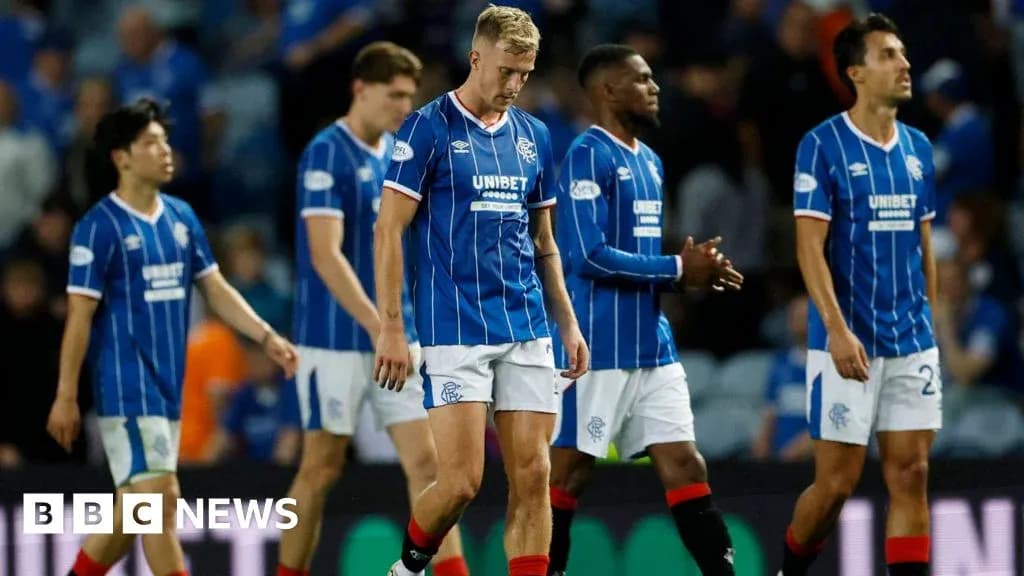
Four days later, those same fans watched Rangers fall out of the Europa League with a 1-1 draw against Jagiellonia Bialystok at Ibrox. A draw that felt like a defeat. A result that underlined a grim start to life under Derek McInnes.
Four games. Two draws. Two defeats. No momentum. No escape route.
McInnes, the former Hearts manager, now has to fix a team that looks brittle on the pitch. The board, though, has a different problem: that shareholder’s warning is starting to sound less like a plea and more like a prophecy.
Loyalty under strain
Rangers’ new consortium needs the fans. Not in a vague, emotional sense, but in a hard-nosed, financial one.
If supporters decide they are no longer “buying what they’re selling”, the model begins to creak. Season tickets, merchandise, matchday spend – all of it depends on belief. When that belief goes, so does the revenue.
Inside the boardroom, there will be no illusions about that. The team is struggling, the mood is souring, and the club’s financial plan leans heavily on a loyal, engaged support. The product on the pitch is failing. The customers are restless.
And at Rangers, history has shown how quickly that combination can turn toxic.
Winning fixes most of it. Winning brings money. Money, in theory, brings better players and more winning. But the Scottish game offers limited room to manoeuvre, and the numbers are unforgiving.
The European hit
Strip out matchday income and two main revenue pillars remain for Rangers: European football and player trading.
Over the last five years, Rangers have banked roughly £18m from European participation alone. In their most recent accounts, that was about 19% of total turnover. It is not a bonus. It is a core part of the business.
This season, to get close to that figure, they would need to win the Europa Conference League. Not just reach the groups. Win the thing.
Kieran Maguire of the Price of Football website laid out the gulf in earnings: “For every pound you make in the Europa Conference League, you can make £2 in the Europa League and £7 in the Champions League.
“And of course in the Conference League you're only playing three home games as opposed to four in the Europa League, so there will be a loss of matchday income as well.
“On the positive side, if you do qualify for the Europa Conference League stage, you should have a better chance of progressing further.”
The theory is sound. The reality is harsher. Rangers still have to get past Czech side Jablonec over two legs just to secure group-stage football and give themselves a shot at that deeper run.
Even if they do, the club is staring at an estimated £8m shortfall from European income compared with recent seasons. For an English Premier League side, that kind of drop can be absorbed. For Rangers, it bites.
Trading their way out?
One obvious way to fill the gap is the transfer market. The problem is that Rangers have not consistently operated as a selling club in the way many continental sides do.
Reports suggest they recently knocked back a bid of around £22m for striker Youssef Chermiti. Days later, Chermiti suffered a serious injury that could keep him out for the rest of the season. A fee of that size would have gone a long way towards easing the financial strain left by their Europa League exit. Now it exists only in the realm of what-ifs.
Behind Chermiti, Nico Raskin is widely viewed as the next major saleable asset. The Belgian midfielder carries a valuation of around £14.5m on Transfermarkt. Even if a club met that number, Rangers would be left scrambling for a replacement while trying to convince fans they are still building, not dismantling.
The board has already raised £16m through a recent share issue and continues to seek fresh investment. That money was sold to supporters and investors on the promise of strengthening the squad. Yet more than 20 players have arrived in the last 12 months, and serious questions are being asked about the quality and coherence of that recruitment.
At the same time, the club has unveiled plans to refurbish Ibrox and upgrade the training ground. Ambitious, necessary projects – but expensive ones.
The new consortium, much of which remains publicly unnamed, put in an initial £20m when they took control a year ago. The way things are going, they may need to reach for their wallets again before the year is out. Whether they are willing to do so, and on what terms, is unclear.
The cost of apathy
Before any new money arrives, one thing is non-negotiable: Rangers must convince their own fans that the club is heading somewhere worth following.
Inside Ibrox, the message is that a few bad results have not altered the long-term financial plan or the ambition to win regularly and sustainably. The rhetoric remains bullish.
But that shareholder’s warning still hangs in the air. The owners have already admitted to mistakes. Apologies, though, only carry weight if they are followed by visible change.
Chris Jack of the Rangers Review summed up the mood when he spoke to BBC Scotland News: “You cannot knock the loyalty and support the Rangers fans have given the club over many, many years, but every individual fan or fan base has a breaking point.
“They're going to have a point where they say 'actually, I don't fancy it this afternoon and it's time for the club, the players and the manager to give me something.'”
For years, the default reaction among Rangers fans has been anger – loud, public, unmissable. Now, in some corners, that anger is cooling into something far more dangerous for any football club: apathy.
Apathy doesn’t shout. It just stays at home.
And for a club so dependent on its crowd, its matchday, its sense of occasion, that is a price the people running Rangers can barely afford to contemplate.