Portland Thorns vs Washington Spirit: Tactical Insights and Match Analysis
Providence Park under floodlights is usually a fortress. Heading into this game, Portland Thorns W had turned home into their safest space in the NWSL Women: 7 wins, 3 draws and just 1 loss at home from 11 matches, with 20 goals scored and only 7 conceded. Their overall goal difference of 5 (37 scored, 32 conceded) had them sitting 6th on 38 points, firmly in the play-off picture. Washington Spirit W arrived as one of the league’s standard-bearers: 2nd in the table on 43 points, with a total goal difference of 13 (33 for, 20 against) and the best away record in the division, winning 7 of 12 on their travels and conceding just 10.
Over 90 minutes, that away steel told. The Spirit overturned a 1-0 half-time deficit to win 2-1, a result that underlined the fine margins between Portland’s attacking flair and Washington’s more balanced, ruthless profile.
I. The Big Picture – Styles Colliding
Robert Vilahamn’s Thorns lined up in their familiar 4-2-3-1, the shape that has underpinned 17 of their league outings. M. Arnold in goal sat behind a back four of M. Vignola, J. Perry, S. Hiatt and C. Calzada. Ahead of them, the double pivot of J. Fleming and N. Nijstad was tasked with connecting a fluid band of three – M. Weaver wide, P. Tordin central, R. Turner tucked in – supplying lone forward S. Wilson.
This structure mirrors Portland’s season-long DNA: high attacking output overall (1.6 goals per match in total) with particularly sharp cutting edge at home, where they average 1.8 goals. But it also carries a known risk: on their travels, Portland concede 2.1 goals per match, a sign that when the full-backs and No.10 push on, the rest defence can be exposed.
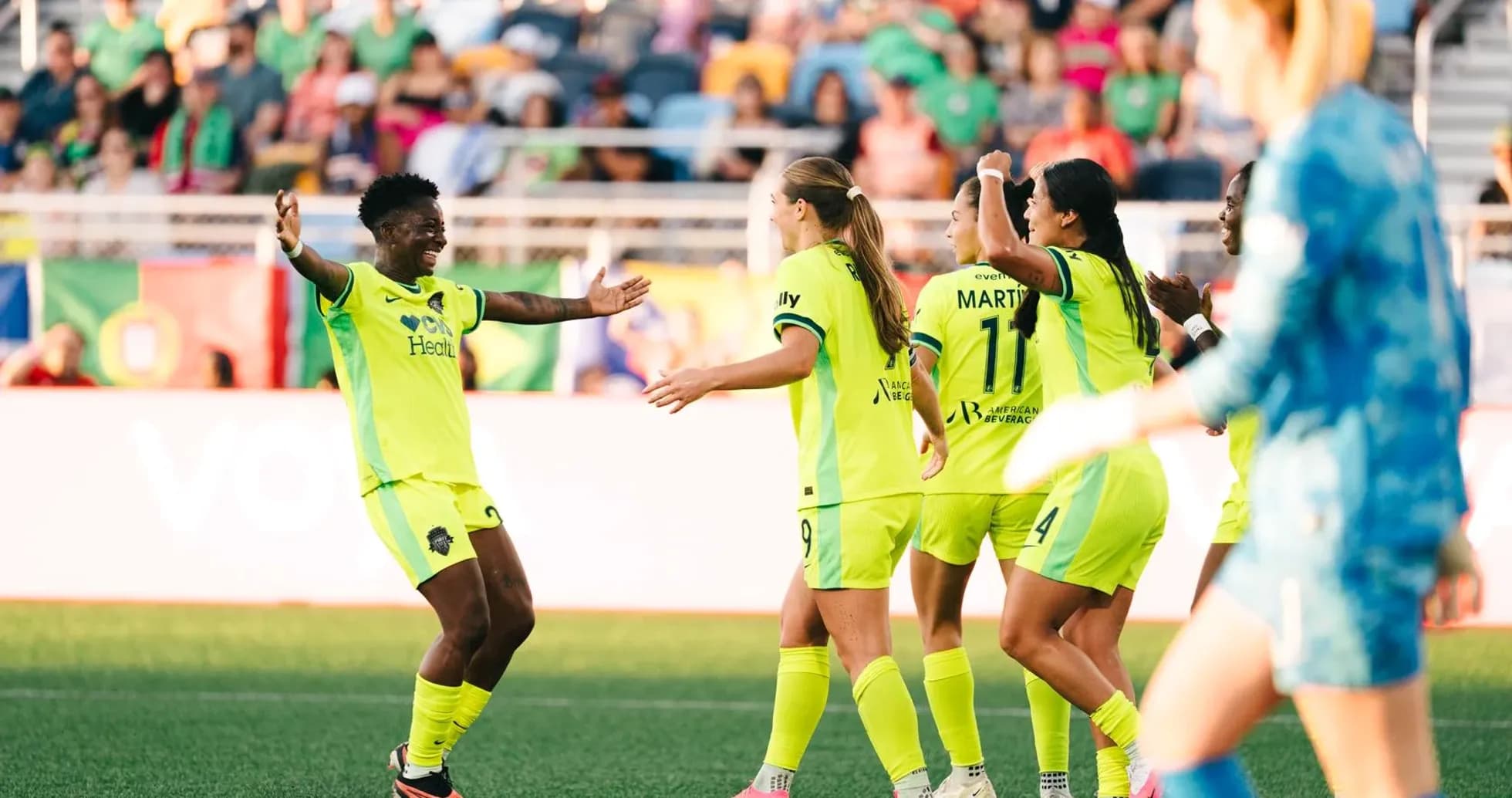
Adrian Gonzalez answered with a 4-3-3 for Washington, one of three shapes they have used but a natural fit for their wide quality. Sandy MacIver started in goal, shielded by a back four of G. Carle, E. Morgan, T. Rudd and P. Metayer. The midfield trio of H. Hershfelt, M. Ngock and M. Bethi was built for control and second-ball dominance, while the front three of T. Rodman, S. Cantore and R. Kouassi gave the Spirit verticality and constant pressing triggers.
Washington’s season profile is that of a complete unit: they average 1.4 goals per match in total while conceding just 0.9. On their travels, they are even tighter, allowing only 0.8 goals per away game. Clean sheets in 5 away fixtures underline how comfortable they are defending space and absorbing pressure.
II. Tactical Voids and Discipline
Neither side had declared major absences in the data, so both coaches effectively went with full decks. For Portland, that meant leaning into the creative burden of P. Tordin, one of the league’s top assist providers with 7 in total, and the scoring pedigree of S. Smith, who has 10 goals overall this season. Smith did not appear in this particular starting XI, a notable tactical choice: Vilahamn trusted Wilson’s movement and the three attacking midfielders to create enough chaos between the lines.
Defensively, though, there was a familiar tightrope. J. Perry, who has accumulated 5 yellow cards and 1 red this season, again anchored the back line. Her profile is clear: 12 tackles, 5 successful blocks and 11 interceptions in the campaign speak to her front-foot defending, but the disciplinary record shows the risk of late or desperate challenges when exposed.
Portland as a whole are no strangers to cards. Their yellow cards peak between 61-75 minutes and 76-90 minutes, each window accounting for 21.43% of their cautions – a late-game surge that hints at fatigue or emotional matches. Washington, by contrast, spread their bookings more evenly, with a late spike of 20.83% between 76-90 minutes but generally cooler heads.
On the penalty front, the Thorns came into the fixture flawless: 5 penalties taken, 5 scored, 0 missed. Washington’s story is more fragile from the spot – 2 penalties in total, 1 scored and 1 missed – a 50.00% conversion rate that can weigh on decision-making in big moments.
III. Key Matchups – Hunter vs Shield, and the Engine Room
The headline individual duel was always going to be Washington’s defensive unit versus Portland’s creative hub. Even without Smith starting, the Thorns could rely on Tordin, whose 6 goals and 7 assists in total make her one of the league’s most complete forwards. She has 36 key passes and 50 attempted dribbles, with 22 successful, underscoring her role as both creator and ball-progressor.
Her opposite number in influence was T. Rodman. Officially listed as a midfielder this season but deployed here in the front three, Rodman has 8 goals and 4 assists overall, with 55 shots (23 on target) and 63 dribble attempts. She is the Spirit’s chaos agent, combining direct running with work rate – 24 tackles and 17 interceptions show how much she contributes defensively as well.
The “Hunter vs Shield” dynamic was really Rodman and Kouassi attacking the channels around Portland’s full-backs, especially down Perry’s side, where her aggression can be baited. Washington’s away defensive record – just 10 goals conceded in 12 matches – gave them the confidence to leave their back four in more open situations, trusting Carle and Morgan to handle wide pressure from Weaver and Turner.
In midfield, the “Engine Room” battle pitted Fleming and Nijstad against Ngock and Hershfelt. Fleming’s role as tempo-setter was crucial: Portland’s overall pass-heavy, possession-based approach relies on her to connect the back four to the attacking three. But Washington’s central trio have been outstanding all season at compressing space; players like M. Bethi and Ngock are built to disrupt rhythm rather than simply sit in a low block.
That balance was decisive after the break. Trailing 1-0 at half-time, the Spirit pushed their midfield line higher, forcing more turnovers in the second phase and denying Tordin clean pockets between the lines. With Rodman drifting inside and Cantore pinning the full-backs, Washington began to tilt the field.
IV. Statistical Prognosis and What the Result Tells Us
Heading into the match, the numbers suggested a knife-edge contest: Portland’s home scoring rate of 1.8 goals per game against Washington’s away defensive average of 0.8 goals conceded, and the Spirit’s away scoring of 1.5 against a Thorns home defence allowing just 0.6. On paper, it was strength vs strength in both boxes.
The 2-1 away win fits Washington’s broader pattern. They are comfortable in tight xG games, leaning on a solid defensive structure and individual brilliance from Rodman and their attacking cast to edge margins. Their total clean-sheet count of 9, split almost evenly between home (4) and away (5), shows a repeatable defensive process rather than home-dependent form.
For Portland, the story is more complex. Overall, they score 1.6 and concede 1.4 per match, a profile of a team that lives on the edge. Their home dominance is real, but the underlying volatility – late cards, reliance on individual attackers like Smith and Tordin, and a back line with disciplinary risk – makes them vulnerable against the league’s elite.
From a tactical preview lens going forward, this fixture underlines two key trends:
- Against top sides with balanced xG profiles and strong away records like Washington, Portland may need to temper their full-back aggression and protect the double pivot more, especially after the 60-minute mark where their cards surge.
- For Washington, the 4-3-3 with Rodman wide and a compact midfield three looks like their optimal big-game blueprint. With only 20 goals conceded in total and a goal difference of 13, the Spirit have the platform to let their stars decide matches without overextending.
Following this result, the Spirit’s status as genuine title contenders is reinforced, while Portland remain a dangerous, playoff-calibre side whose ceiling will be defined by how much control they can add to their natural attacking chaos.