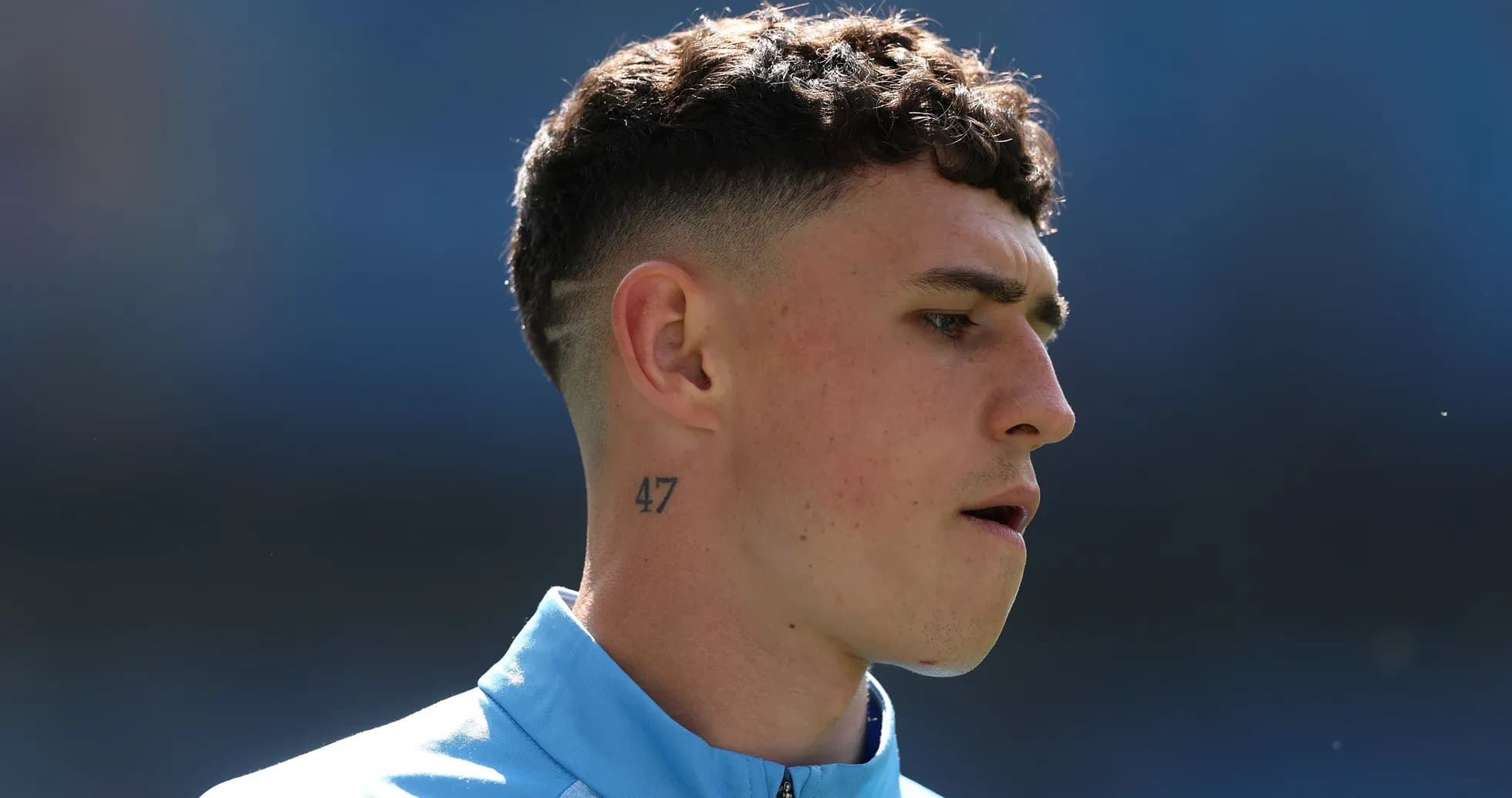
Phil Foden Excluded from Manchester City's Captaincy Group
Enzo Maresca has drawn his leadership lines at Manchester City – and Phil Foden is on the outside of the official circle.
The new City manager has confirmed a four-man captaincy group for the season, and it does not include the 26-year-old local hero. Instead, the armband will be shared between Ruben Dias, Erling Haaland, Marc Guehi and Gianluigi Donnarumma.
“The captain is Ruben, Erling, Marc Guehi and Gianluigi Donnarumma,” Maresca told reporters in his Friday press conference, laying out a hierarchy that blends old power with new influence. Dias and Haaland are the established core. Guehi and Donnarumma are the statement picks – new faces trusted with big responsibility.
For Foden, it is a snub on paper, if not in spirit.
Foden left out – but not overlooked
Maresca made a point of stressing Foden’s importance, calling him “one of the guys from the house” and tying him directly to the club’s identity and fanbase. But sentiment did not dictate the final list. Experience did.
“First of all, because Marc was already captain with Palace,” Maresca explained. “So he has the experience. Gigio is the captain of the Italy national team, so he has the experience. The reason why I decided for them is because I can see them helping the teammates and the dressing room to behave in the right way.”
That was the dividing line. Not talent. Not status. Track record.
“These are the four that are going to be the captains,” he continued. “But I was also thinking about Phil, because Phil is one of the guys from the house. He’s not in that group, but for me he’s also one of the captains, one of the players that belong to that group.”
So Foden will not wear the armband as part of the official quartet, yet Maresca clearly sees him as a leader in all but title. A homegrown standard-bearer rather than a named skipper.
A star out wide, a brain in the middle
The debate around Foden at City rarely stops at leadership. It always comes back to where he plays.
So far this Premier League campaign, injuries have dragged him away from his favoured zone. With Jeremy Doku sidelined, Foden has been pushed out to the right wing, sacrificing his preferred central role to plug a gap.
Maresca is under no illusions about where his playmaker shines brightest.
“I think Phil’s best position is in the middle,” the Italian said. “But he’s doing an effort to help the team. Because for the first two games we didn’t have options in the wide area, because Jeremy was injured.
“No doubt that Phil’s position in the middle is much better. But I’m very, very happy with Phil since day one. He’s working very good, even when he has played wide in the last two games, he was good.”
The message is clear: Foden is sacrificing for the system, and his manager sees it.
Maresca’s demand: elite players must adapt
Maresca’s use of Foden across the front line underlines how highly he rates the England international’s football intelligence. This is not a coach wed to rigid roles. He expects his best players to solve problems all over the pitch, especially when injuries bite.
His view is blunt: if you are truly top level, you can move. You can adapt. You can carry the team from wherever you’re asked to stand.
The Italian praised Foden’s attitude to those tweaks, highlighting the professionalism of a player who has not sulked about being shifted away from the No.10 pocket.
“You can see that inside the pitch he’s much better,” Maresca admitted. “But at the end, Phil is going to play in a different position. Because he’s a good and good players, they can play in different positions.”
Foden might not have the armband. He might not always get his favourite role. But in Maresca’s City, his influence will be measured less by what sits on his sleeve and more by how often he bends games to his will from wherever he’s told to stand.