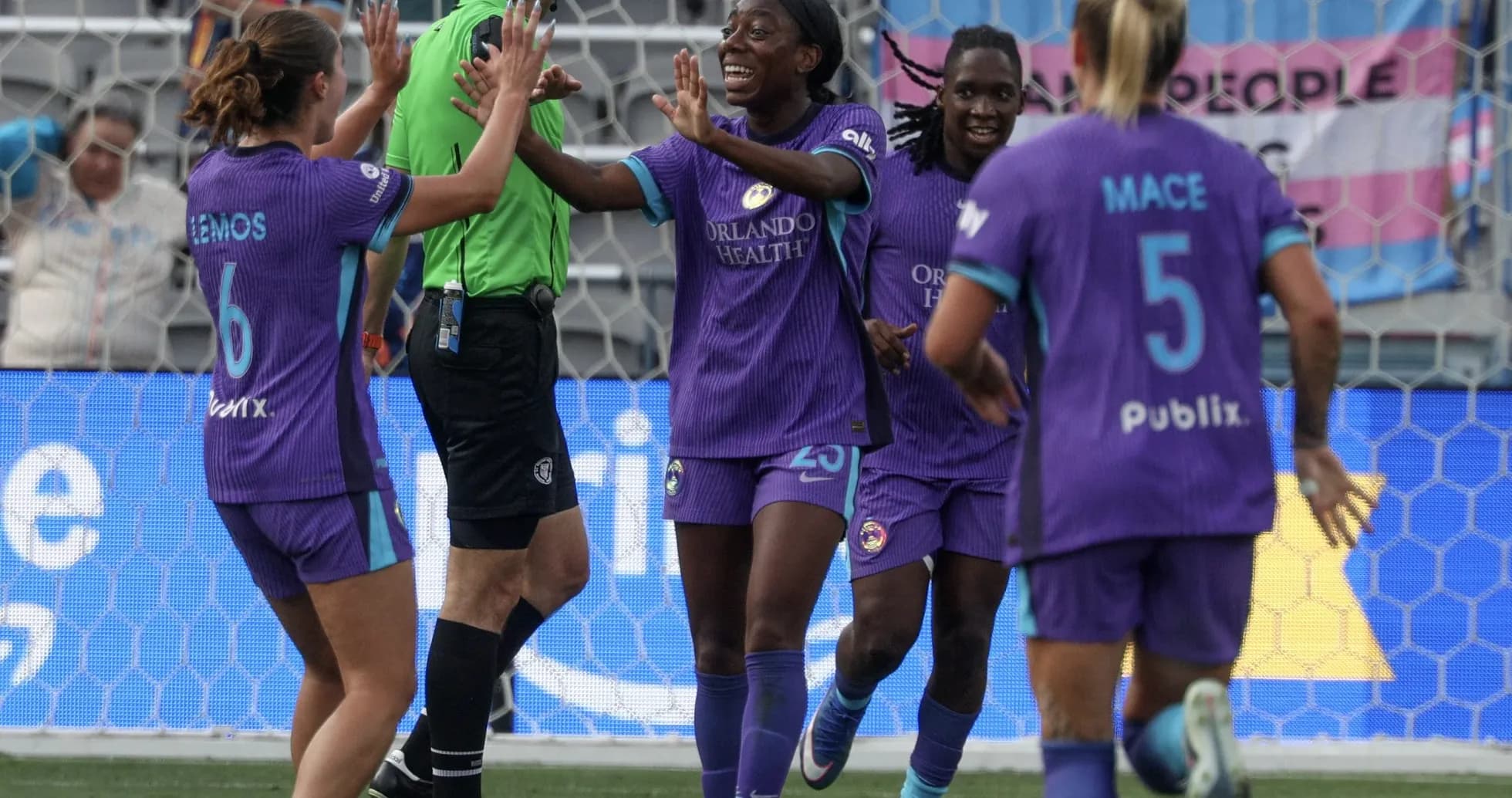
Orlando Pride W Claims Tactical Victory Over San Diego Wave W
Snapdragon Stadium closed its lights on a narrow 1–0 win for Orlando Pride W, a result that felt less like a smash-and-grab and more like a tactical statement. Following this result, the contours of the NWSL Women season sharpen for both clubs: San Diego Wave W, third in the standings with 22 points and a goal difference of 4 (17 scored, 13 conceded in total), are reminded of their fragility at home, while Orlando, eighth with 14 points and a goal difference of -1 (15 scored, 16 conceded overall), prove they can grind out results on their travels.
Both sides lined up in a mirrored 4-2-3-1, but the personalities of those systems could not have been more different. Jonas Eidevall’s San Diego used D. Haracic behind a back four of A. D. Van Zanten, K. Wesley, K. McNabb and K. Pickett, with a double pivot of K. Ascanio and K. Dali. Ahead of them, the creative triangle of G. Corley, L. E. Godfrey and Dudinha supported Ludmila as the lone forward.
Seb Hines matched the shape but not the intent. A. Moorhouse anchored a disciplined Orlando back line of H. Mace, C. Dyke, Rafaelle Souza and O. Hernandez, screened by H. McCutcheon and A. Lemos. The attacking band of N. Payne, Luana Bertolucci and J. Doyle buzzed around the league’s standout finisher, B. Banda, whose eight total goals in 11 appearances this season already define Orlando’s attacking identity.
Heading into this game, San Diego’s season-long numbers already hinted at a split personality. Overall they averaged 1.4 goals for and 1.1 against per match, but at home they managed only 1.2 goals for and 0.8 against. The defensive solidity at Snapdragon Stadium is real; the attacking edge is not. They had failed to score in 3 of 6 home games, and this match became the fourth such blank, reinforcing a pattern rather than creating a surprise.
Orlando arrived with a different problem set. Overall they scored 1.4 goals per game and conceded 1.5, but on their travels they averaged 1.3 goals for and 1.3 against. The clean-sheet record away from home (3 in 6) suggested that, when they commit to a compact block, they can suffocate games. That is precisely what unfolded in San Diego: a disciplined, low-margin performance built around their defensive line and Banda’s ability to stretch the pitch.
The tactical voids in this contest were more structural than personnel-based. With no confirmed absences listed, both coaches had close to full decks, yet Eidevall’s biggest absentee was a natural penalty-box presence. Ludmila’s movement dragged Orlando’s centre-backs around, but San Diego often lacked a second runner to attack the space she created. With Dudinha and Godfrey both natural carriers and creators, the box frequently felt under-occupied when crosses came in from Pickett or Van Zanten.
On the other side, Orlando’s main gamble lay in midfield balance. A. Lemos, who already carried 2 yellow cards this season and has missed a penalty in league play, had to walk the disciplinary tightrope while acting as the primary tempo-setter. She did so with restraint, avoiding the kind of rash challenge that has cost Orlando in other fixtures. Hines’ decision to keep her alongside McCutcheon gave the visitors a double pivot capable of both screening Dudinha and launching quick transitions to Banda.
The “Hunter vs Shield” duel was always going to revolve around Banda against San Diego’s defensive record. Heading into this game, the Wave had conceded only 5 goals at home across 6 matches, an average of 0.8 per game. Orlando’s spearhead arrived with 8 total goals from 41 shots, 23 of them on target, and a physical presence that thrives on duels (102 contested, 44 won). Over 90 minutes, San Diego’s back four managed to limit her touches in the box but not her influence on the defensive line: her constant runs forced Wesley and McNabb to drop a step deeper, compressing the space that San Diego’s own No. 10s needed to create.
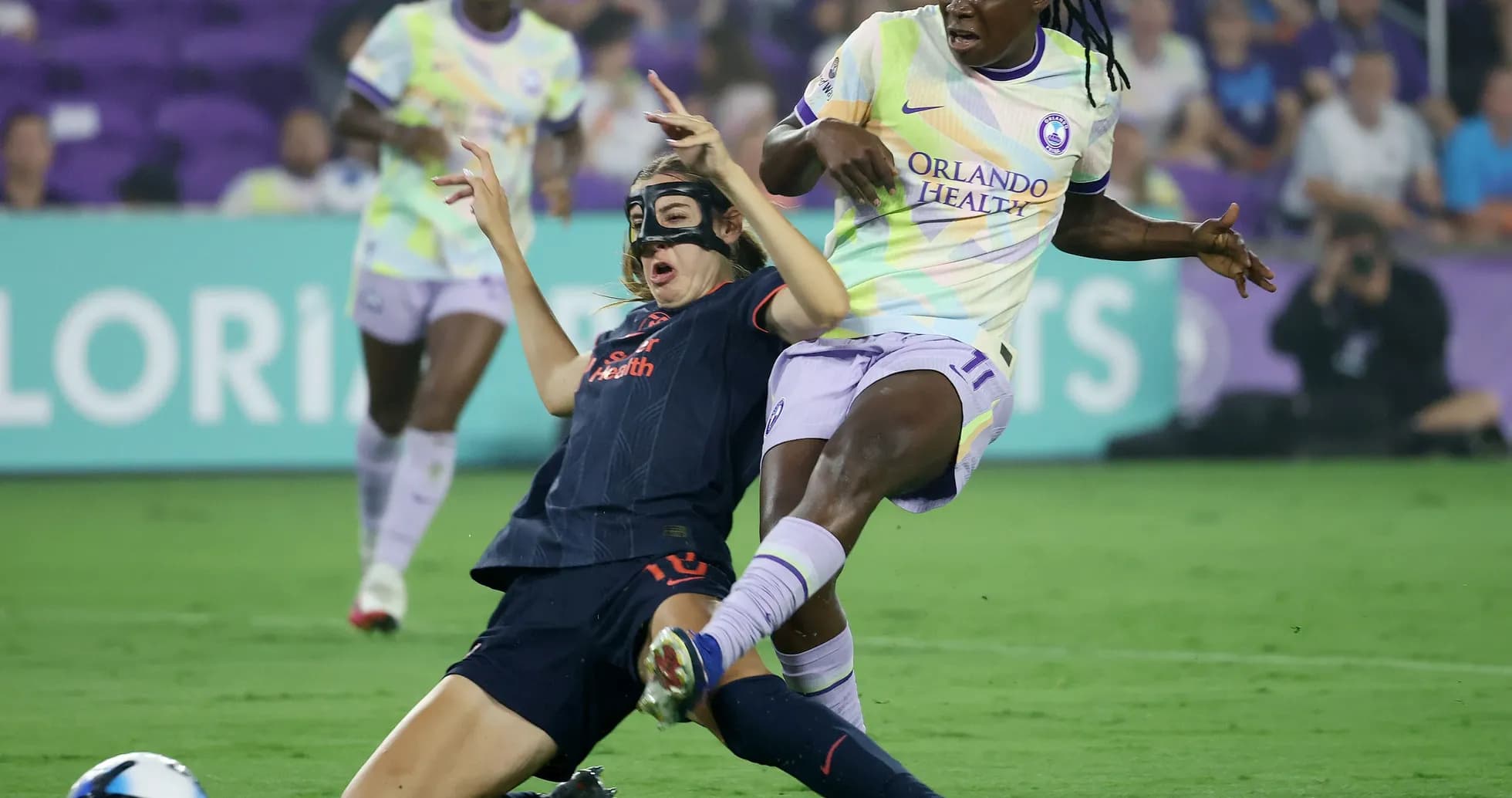
If Banda was the hunter, the shield for Orlando was a collective effort. On their travels this season they had conceded 8 goals in 6 games, but the three away clean sheets were a clue to their ceiling. With Dyke and Rafaelle Souza commanding the central channel and Hernandez and Mace aggressive in wide duels, Orlando were able to keep San Diego’s most dangerous creators in front of them. Every time Dudinha turned to drive, she met a purple wall rather than open grass.
In the “Engine Room” battle, the contrast was stark. For San Diego, Dudinha and Godfrey are the league’s quiet stars. Across the season, Dudinha has 4 total goals and 4 total assists, supported by 42 dribble attempts with 26 successes and 104 duels with 54 won. Godfrey adds 4 total goals and 2 total assists, with 216 completed passes at 80% accuracy and 17 key passes. Together they form a dual playmaking axis: Dudinha between the lines, Godfrey knitting play and arriving late.
Orlando’s response was more pragmatic. Lemos, with 367 total passes and 19 key passes at 71% accuracy, acted as the metronome, while Luana Bertolucci and Doyle provided the legs to disrupt San Diego’s rhythm. The plan was clear: concede some territory to San Diego’s midfield, but deny them clean access to the half-spaces where Dudinha usually turns matches.
Disciplinary trends shaped the tone as the game wore on. San Diego’s yellow cards this season are spread relatively evenly, with 18.18% of bookings coming in each of the 31–45, 46–60, 61–75, 76–90 and 91–105 minute ranges. They are a side that tends to simmer rather than boil over. Orlando, by contrast, carry a genuine late-game edge: 28.57% of their yellow cards arrive between 61–75 minutes, 21.43% between 76–90, and their only red card this season has come in the 61–75 window. That profile speaks of a team that is willing to push the line in the closing phases.
Yet in San Diego, Orlando managed to stay just the right side of that aggression. Banda, who has 2 yellow cards and draws 25 fouls across the season, used her physicality intelligently, pinning defenders without inviting excessive whistles. Lemos, despite her previous penalty miss and disciplinary risk profile, navigated the match without the kind of lunge that might have tipped the balance back toward San Diego.
From a statistical prognosis standpoint, the result fits the underlying patterns more than it contradicts them. San Diego’s overall goal difference of 4, built on a solid defence but only 17 total goals in 12 matches, always left them vulnerable to a night when the final ball would not arrive. Their reliance on Dudinha and Godfrey as dual creators is a strength, but also a point of predictability when opponents can match their 4-2-3-1 and compress the same zones.
Orlando’s season-long defensive averages suggested they were more porous than they appeared here, yet the three away clean sheets heading into this fixture hinted at an upper limit of control that Hines’ side reached at Snapdragon. With a 1.3 goals-for and 1.3 goals-against average away from home, they are built for tight margins rather than shootouts, and a 1–0 away win is almost a textbook expression of their statistical identity.
Following this result, the narratives diverge. For San Diego, the question is whether Eidevall can evolve the 4-2-3-1 into something more ruthless at home, perhaps by adding another penalty-area threat to complement Ludmila and better exploit the creative work of Dudinha and Godfrey. For Orlando, the path is clearer: continue to build a hardened, travelling unit around Banda’s cutting edge, Lemos’ passing range and a back four that, when fully locked in, can suffocate even one of the league’s most inventive midfields.
In the end, this was less an upset than a crystallisation. San Diego remain a top-three side with a home attack that does not yet match their ambition. Orlando remain a mid-table team whose best version, as shown here, is tough, disciplined and devastatingly efficient when the one real chance falls to the right player.