Olympiakos Piraeus vs Bayer Leverkusen: Tactical Stalemate in Champions League
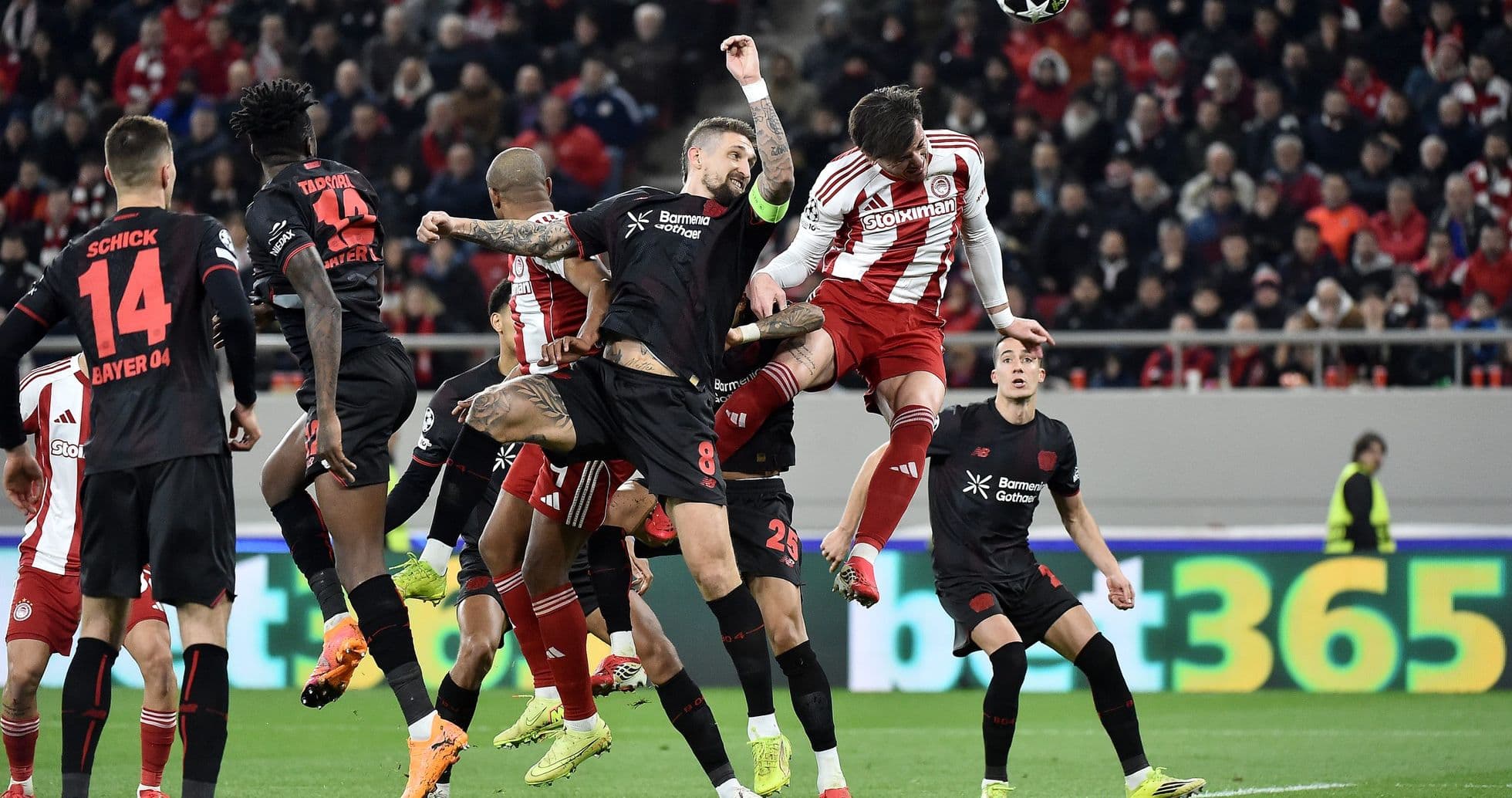
This was a cautious tactical chess match where Olympiakos Piraeus controlled more of the ball but not the game. With 53% possession and 528 total passes at 83% accuracy, the visitors had a slight edge in circulation over Bayer Leverkusen’s 47% and 475 passes at 81%. However, neither side translated this into sustained territorial dominance. Leverkusen’s 3-4-2-1 aimed to control central spaces and half-spaces, while Olympiakos’ 4-2-3-1 focused on stable buildup and avoiding risky turnovers. The result was a balanced, low-tempo encounter where space was protected more than it was exploited, leading logically to a 0–0 stalemate.
Offensive Efficiency
The attacking numbers underline how risk-averse and conservative both game plans were. Leverkusen finished with 7 total shots to Olympiakos’ 6, an extremely low combined volume for a Champions League knockout tie. Leverkusen’s shot profile (5 of 7 from inside the box) suggests they refused speculative efforts, instead waiting for high-quality situations, reflected in a modest but superior xG of 0.69. Yet only 1 shot on goal indicates a lack of final incision and a “lack of cutting edge” in the final third.
Olympiakos were even more cautious in chance creation: 6 shots total, with 4 from outside the box and just 2 inside, aligning with a very low xG of 0.17. This points to a strategy prioritizing control and avoiding transitions over committing numbers forward. The corner count (5 for Olympiakos, 4 for Leverkusen) shows parity in territorial phases, but the absence of blocked shots for Leverkusen (0) versus 2 for Olympiakos hints that Leverkusen’s efforts were often rushed or off-target rather than forcing last-ditch defending. Substitutions around the 66–79 minute mark on both sides appear more about refreshing legs than radically changing attacking structure, as the shot volume never meaningfully spiked.
Defensive Discipline & Intensity
Defensively, both teams were disciplined and relatively clean. Olympiakos committed 8 fouls to Leverkusen’s 6, with only one yellow card shown all match, to Lorenzo Pirola in stoppage time. This foul profile suggests neither an aggressive pressing game nor a disruptive tactical fouling approach; instead, both sides relied on compact shapes and positional defending. Goalkeeper involvement was minimal: just 1 save each, consistent with the very low shots-on-target tally (1–1). That indicates the defensive lines and midfield screens were effective at preventing clear sights of goal rather than relying on heroics from the keepers.
Conclusion
Ultimately, both teams’ emphasis on structure, ball security, and space control produced a sterile, low-risk contest. Olympiakos’ slight possession edge and Leverkusen’s better xG cancelled each other out, and with only 2 shots on target in total, defensive organization comfortably trumped attacking ambition.