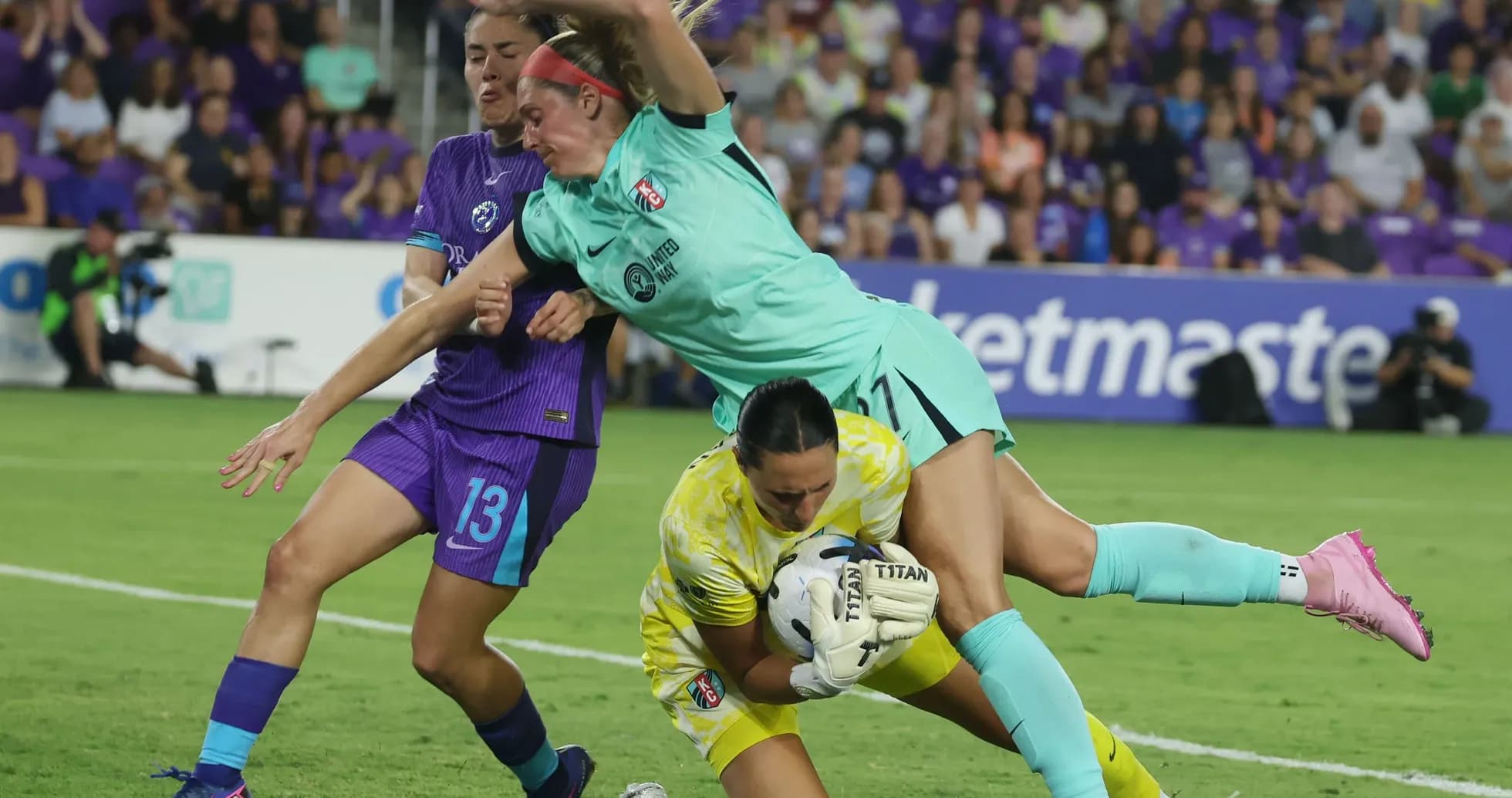
NWSL Women: Kansas City and Orlando Draw in Tactical Showdown
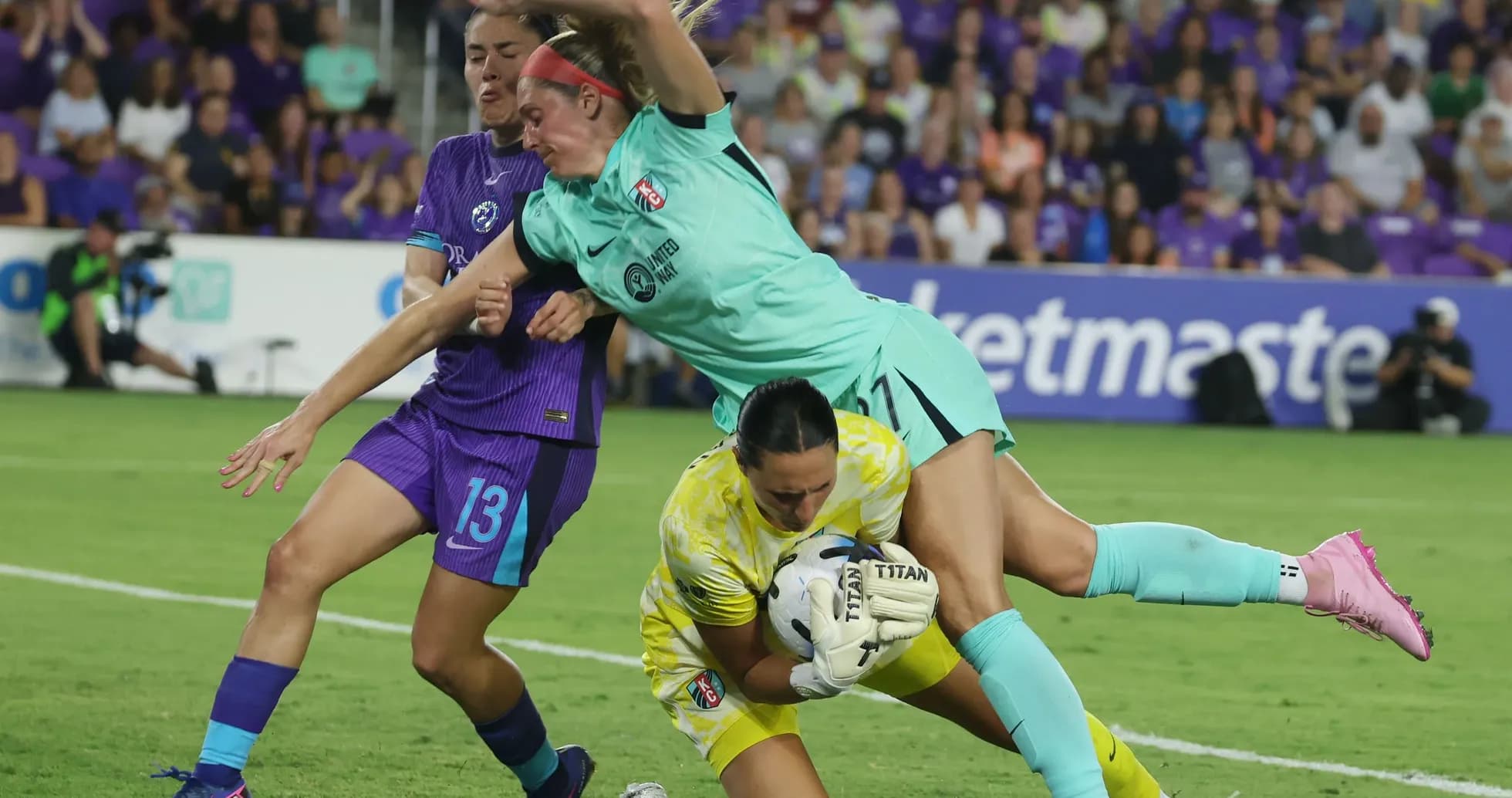
Under the lights at CPKC Stadium, this Group Stage meeting in the NWSL Women felt less like a routine league fixture and more like a tactical referendum on two clubs moving in different directions. Kansas City W, sitting 6th with 38 points and a goal difference of 5 (39 scored, 34 conceded overall), have built a fortress at home. Orlando Pride W arrived 11th on 30 points, their own goal difference at -5 (31 scored, 36 conceded overall), a side capable of explosive moments but weighed down by inconsistency.
The 2–2 final scoreline told only part of the story. Both teams mirrored each other structurally in a 4-2-3-1, but the systems expressed very different identities.
Kansas City W
For Kansas City, the shape is now their signature: 4-2-3-1 has been used 18 times this season, and it showed in the fluency of their lines. Lorena started in goal, shielded by a back four of I. Rodriguez, K. Sharples, E. Ball, and L. Rouse. In front of them, the double pivot of L. LaBonta and V. DiBernardo formed the hinge between a disciplined base and a dynamic attacking trio of M. Cooper, Debinha, and T. Chawinga, all servicing the lone striker H. Hopkins.
This is a side that at home averages 2.3 goals for and only 1.0 against, with 8 wins and 4 draws in 12 matches on their own turf. They have not lost at CPKC Stadium in the league, and you could see why: their pressing triggers and rotations in the attacking midfield line are well-rehearsed. Chawinga, who has 10 goals and 2 assists in the league, again operated as the chaos agent between the lines, nominally a midfielder but constantly stretching Orlando’s back four with diagonal runs and direct dribbles. Cooper, with 5 goals and 4 assists overall, played narrower than a traditional winger, often tucking inside to combine and then bursting beyond the full-back.
Behind them, LaBonta and DiBernardo provided contrasting profiles in the “engine room.” LaBonta, more progressive and risk-tolerant, stepped into the half-spaces to link play, while DiBernardo anchored transitions, screening and recycling. Their partnership is a key reason Kansas City have only failed to score at home in 0 matches this season and have kept 3 clean sheets at CPKC.
Orlando Pride W
Orlando, though, did not come to sit back. Seb Hines also set his side in a 4-2-3-1, a shape he has leaned on 15 times this campaign. C. Morché started in goal, with a back line of H. Mace, H. Anderson, C. Dyke, and Oihane Hernández. In midfield, H. McCutcheon and A. Lemos formed the double pivot, with S. Yates and Angelina flanking the central playmaker L. Ovalle behind the fearsome spearhead of B. Banda.
If Kansas City’s system is about collective patterns, Orlando’s is built around a singular, devastating focal point. Banda, with 14 goals and 1 assist in 20 appearances, is the league’s most ruthless hunter. Her movement across the front line constantly tested the Kansas City centre-backs, dragging Sharples and Ball into uncomfortable channels. Her 56 total shots and 32 on target this season underline how frequently Orlando’s attacking schemes end at her feet.
Behind Banda, Ovalle and Angelina form the creative and combative core. Ovalle, operating between the lines, looks to feed Banda early, while Angelina brings bite and vertical passing from the left interior channel. Yet Angelina’s season also carries a disciplinary edge: she has already seen red once in the league. That aggression is echoed in Orlando’s broader card profile: 24.14% of their yellow cards arrive between 61–75 minutes and another 24.14% between 76–90, a clear late-game spike when fatigue and frustration rise. They have also seen a red card in the 61–75 minute window, underlining the risk of their combative style as matches stretch.
Kansas City’s own disciplinary pattern is more evenly spread but still telling. A full 25.00% of their yellows come between 31–45 minutes, and another 25.00% in the 76–90 range. Both sides, then, have a tendency to see games become more ragged just before and just after the interval and in the closing quarter-hour—precisely when this match swung.
Match Analysis
In attack, the “Hunter vs Shield” matchup was stark. Banda’s goal threat met a Kansas City defence that, at home, has conceded only 12 times in 12 matches. Sharples and Ball were tasked with holding a high line behind an aggressive midfield press. Their ability to win first contact and delay Banda’s runs was critical, especially with Kansas City’s full-backs, Rodriguez and Rouse, encouraged to push high to pin Orlando’s wingers.
At the other end, Orlando’s back line, which on their travels concedes 1.7 goals per game (20 against in 12 away matches), had to live with the constant risk of being overloaded. Yates and Angelina were repeatedly forced into deep defensive positions to track Cooper and Chawinga, leaving McCutcheon and Lemos exposed against LaBonta’s late runs and Debinha’s pockets of space.
The “engine room” duel between LaBonta–DiBernardo and McCutcheon–Lemos shaped the rhythm. Kansas City’s pair sought to keep the game in Orlando’s half, compressing space and sustaining waves of pressure. Orlando’s duo, by contrast, were often playing on the half-turn, looking to break lines quickly into Banda’s path. When they succeeded, Kansas City’s open full-backs left room for Banda to sprint into; when they failed, the ball came back at them in relentless cycles.
Set against the season-long statistical backdrop, the 2–2 feels like an almost mathematical midpoint between Kansas City’s home dominance and Orlando’s volatility. Overall, Kansas City average 1.6 goals for and 1.4 against per match, while Orlando sit at 1.3 for and 1.5 against. Both sides have also shown vulnerability from the spot: Kansas City have taken 3 penalties and missed 2 of them, converting only 1 (33.33%), while Orlando have taken 4, scoring 2 and missing 2 (50.00%). Neither side can claim clinical perfection in high-pressure moments.
From a tactical prognosis standpoint, this draw underlines what the numbers have been hinting at all season. Kansas City’s 4-2-3-1, powered by the creativity of Debinha, the verticality of Chawinga and Cooper, and the work rate of Hopkins, is a system with a high attacking ceiling, especially at home. But their reliance on assertive full-backs and a relatively small defensive core can leave them open to elite individual threats like Banda.
Orlando, meanwhile, remain a team of sharp edges and soft underbelly. Banda’s presence means they can hurt anyone, anywhere, and the technical quality of Ovalle and Angelina ensures they can play through pressure. Yet their away record—3 wins, 2 draws, and 7 losses on their travels, with 12 scored and 20 conceded—shows a side that struggles to control matches defensively, especially in the final third of games where their card profile spikes.
Following this result, the narrative for both clubs is clear. Kansas City look like a playoff-calibre side whose structure and home form can carry them deep into the NWSL Women knockout picture, provided they tighten their late-game discipline and maintain defensive concentration against elite forwards. Orlando, for all their flaws, will remain the team no one wants to face in a one-off match: a side that, with Banda at the tip and a combative midfield behind her, can turn any game into a shootout where structure bends to the will of individual brilliance.