Newcastle Dominates Qarabag with Strategic Control
Newcastle imposed both territorial and scoreboard control from the outset. With 58% possession and 485 total passes at 89% accuracy, they dictated the rhythm and pinned Qarabag back for long stretches. Qarabag’s 42% possession and 349 passes at 84% accuracy suggest a side trying to build from deep but constantly under pressure rather than choosing a low block by design. The 5–0 half-time scoreline aligned with the flow: Newcastle’s higher volume of attacks and sustained pressure translated directly into dominance of space, forcing Qarabag’s 4-2-3-1 to collapse closer to its own box and defend for long periods.
Offensive Efficiency
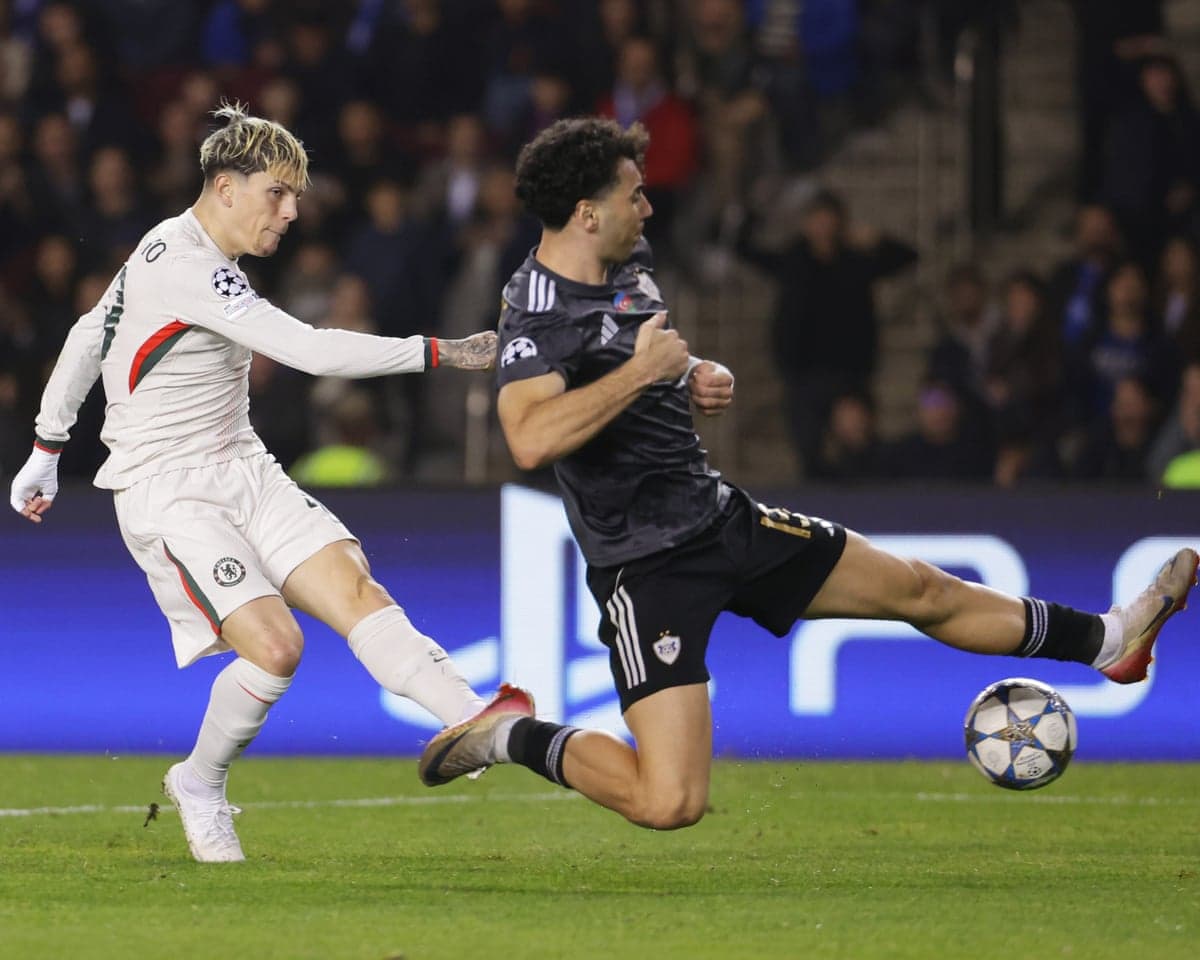
Newcastle’s game plan was aggressively vertical and relentlessly focused on the penalty area. They produced 22 total shots, with a remarkable 18 from inside the box and 14 on target. That volume, combined with an xG of 5.69, shows they repeatedly created high-quality chances rather than speculative efforts. Six goals from that xG reflects strong but not freakish finishing; the attack was structurally superior rather than just opportunistic. The 6 corners further underline their territorial pressure and ability to sustain attacks.
Qarabag, by contrast, were largely reactive. They managed only 8 total shots, split evenly between inside and outside the box (4 each), and just 2 on target. An xG of 0.46 confirms that even their few efforts carried low probability, consistent with a side forced into rushed shots at the end of rare transitions or second balls. Their 8 corners hint at some attacking phases, especially after the break, but these did not translate into sustained danger against a Newcastle side that limited clear looks at goal and conceded very little centrally.
Defensive Discipline & Intensity
The match was not especially chaotic or foul-heavy: both teams committed 10 fouls, and there was only one yellow card, for Newcastle. That suggests Newcastle’s pressing and counter-pressing were assertive but controlled rather than reckless. Defensively, Newcastle’s back line and midfield shield were effective at preventing shots rather than relying on last-ditch interventions; Qarabag had only 8 attempts and Newcastle’s keeper was forced into just 1 save.
For Qarabag, the defensive workload was extreme. Their goalkeeper made 8 saves and the team registered 3 blocked shots, illustrating constant siege in and around their box. Despite that, the “goals_prevented” metric of 0 indicates the keeper performed roughly to expectation rather than overperforming; the sheer quality and frequency of Newcastle’s chances overwhelmed the structure in front of him.
Newcastle’s high-possession, box-focused attacking plan – 58% of the ball, 22 shots, 18 in the area, xG 5.69 – simply overpowered Qarabag’s more modest, reactive approach. Efficiency, volume, and control of territory combined to turn technical superiority into a comprehensive 6–1 away win.