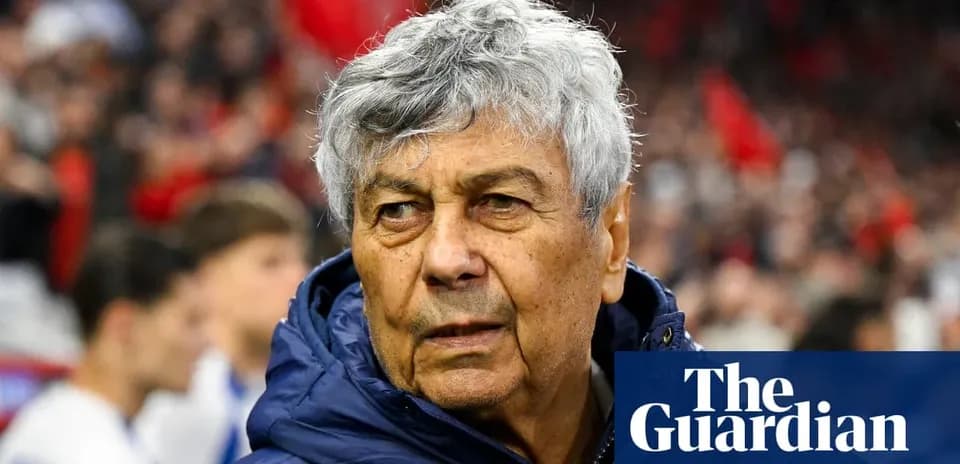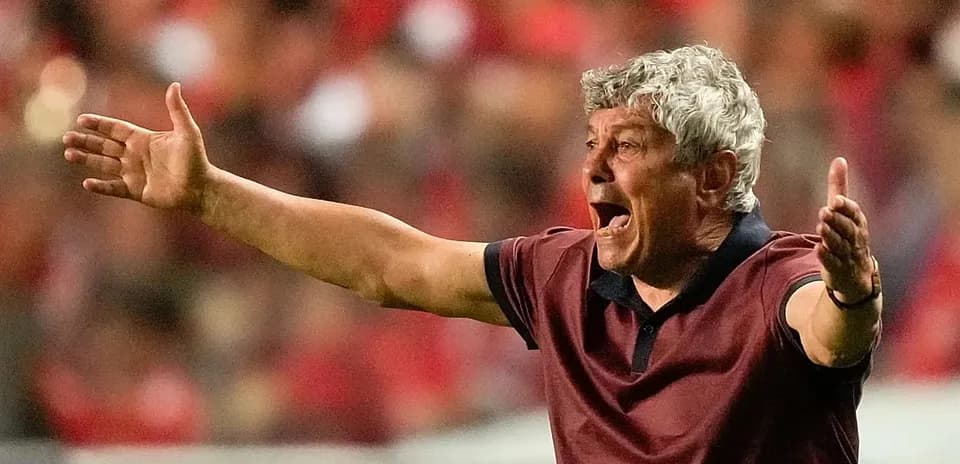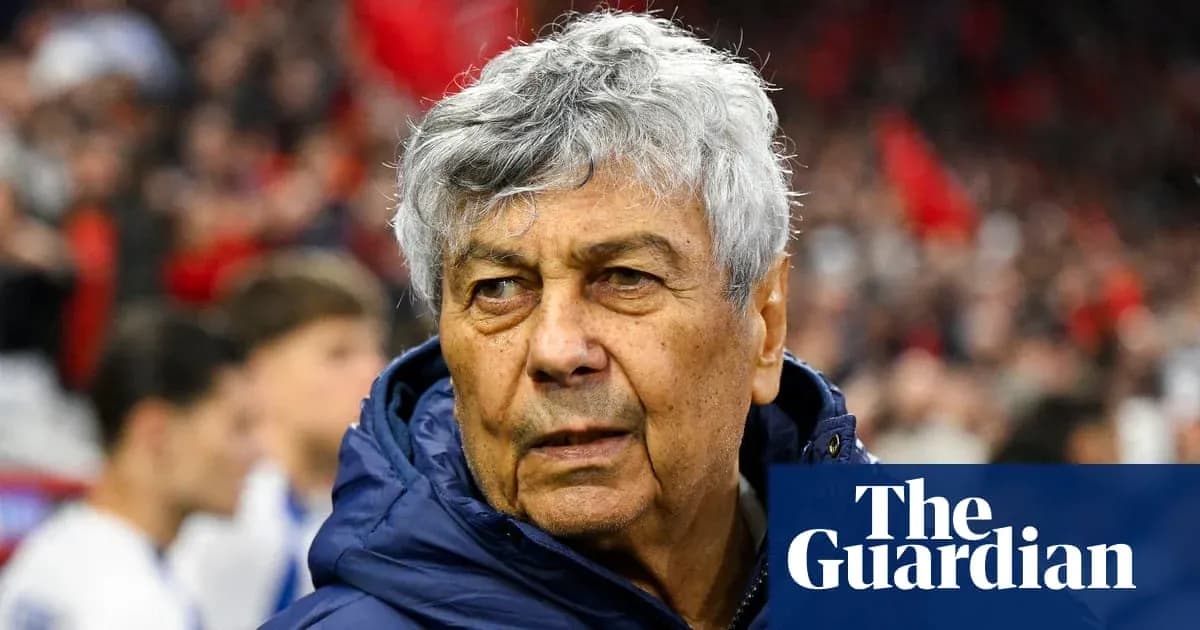
Mircea Lucescu, the restless architect of teams and eras, has died at 80, closing the book on one of European football’s most enduring lives in the game.
The Bucharest university emergency hospital confirmed his death on Tuesday. Lucescu had been admitted after reportedly suffering a heart attack on Friday morning. Romania lost more than a coach; it lost a symbol it had carried for generations.
“Mr Mircea Lucescu was one of the most successful Romanian football coaches and players, the first to qualify the national team for a European Championship, in 1984,” the hospital said in a statement. “Entire generations of Romanians grew up with his image in their hearts, as a national symbol.” In a country that often measured its footballing self‑worth through him, that was no exaggeration.
A captain, a pioneer, a standard-bearer
Before he became the patriarch on the touchline, Lucescu was the leader on the pitch. He won 64 caps for Romania and captained his country at the 1970 World Cup, a time when Romanian football still fought for recognition beyond its borders. He carried that responsibility with a seriousness that never left him.
His first spell in charge of the national team began in 1981. Three years later, he delivered a breakthrough that would define him at home: qualification for Euro 1984. Romania topped a qualifying group that contained Italy, Sweden and Czechoslovakia, outlasting European heavyweights to reach a stage the country had never seen before. For many Romanians, that side was their first taste of belonging in the continental elite.
Decades later, he returned to the same job, still chasing one more tournament, one more story. His second spell with the national team ended only last Thursday, when he stepped down after falling ill during training. Three days earlier, Romania had fallen 1-0 to Turkey in a playoff, missing out on the 2026 World Cup. Even at 80, he had been fighting to drag his country back to the big stage.
A career that spanned a continent
Lucescu’s club career reads like a map of European football’s changing power centres. He coached in Italy, Turkey, Ukraine and Russia, leaving fingerprints and trophies almost everywhere he went.
In Turkey, he carved out a reputation as a serial winner. With Galatasaray, he lifted the Uefa Super Cup in 2000, a statement victory for a club eager to prove itself beyond domestic borders. He followed it with the Turkish league title in 2001-02. Then he crossed the divide. With Besiktas, he won the league again the very next season, a rare feat that underlined his ability to adapt to new dressing rooms, new cultures, and still impose his ideas.
The defining chapter, though, came in Ukraine. When Lucescu took charge of Shakhtar Donetsk in May 2004, the club was ambitious but still in the shadow of Dynamo Kyiv. He left 12 years later as the architect of a dynasty. Eight league titles, a reshaped identity, and the Uefa Cup in 2009 – a landmark European triumph that announced Shakhtar as a force, not just a project.
Shakhtar’s tribute on X captured the depth of that bond: “Thank you for everything, Mister. Your name is forever written into the history of world football.” It was not just a polite farewell; it was recognition of a man who had built a club’s modern era almost from the ground up.
Galatasaray, another club that saw him lift silverware, wrote: “We extend our deepest condolences to Mircea Lucescu’s family, loved ones, and the football community. We will never forget you.” Between Istanbul and Donetsk, his legacy stretches across borders and languages.
After Shakhtar, Lucescu moved on to Zenit Saint Petersburg and then to Dynamo Kyiv, managing both sides of one of eastern Europe’s fiercest rivalries over the course of his career. He also took charge of the Turkish national team, adding another chapter to a résumé that rarely paused.
Italian interlude and “Brescia Romeno”
Long before he became synonymous with Shakhtar’s Brazilian‑infused, attacking football, Lucescu had already left a mark in Italy. He coached Pisa, Brescia, Reggiana and Inter, learning a league that demanded tactical precision and emotional steel.
At Brescia, he won Serie B in 1991-92, but the numbers barely touch the affection with which he is remembered there. His “Brescia Romeno” side, built around four Romanian players, including the mercurial Gheorghe Hagi, became a cult team. It was a fusion of Romanian flair and Italian structure that still lives in the memories of those who watched it.
That ability to blend cultures, to take players out of their comfort zones and make them feel at home, became a Lucescu hallmark. He did it in Italy, repeated it in Turkey, refined it in Ukraine.
Duty until the end
Even as his health faltered, Lucescu’s sense of responsibility never softened. Speaking in March this year, before Romania’s playoff semi-final against Turkey, he knew his body was failing him. He also knew he would not walk away.
“I’m not in my best shape so I would have stepped away if there was another option available,” he said then. “But I insist: I can’t leave like a coward. We must believe in our chance to qualify.”
There was no nostalgia in his words, only duty. “I felt it was my duty to take charge of the team,” he added. “It was my duty for everything that Romanian football has ever given to me. I was indebted. It was never about money, never about another medal. I have enough trophies.”
He did. League titles in multiple countries, European cups, promotions, historic qualifications. Yet when he spoke of debt, he meant something deeper: a lifetime given to the game, and a belief that he owed it one more effort.
Mircea Lucescu leaves behind numbers, yes, but more than that, he leaves behind institutions he helped build and generations he helped inspire. The trophies will gather dust. The teams he shaped, and the standard he set for Romanian football, will not.