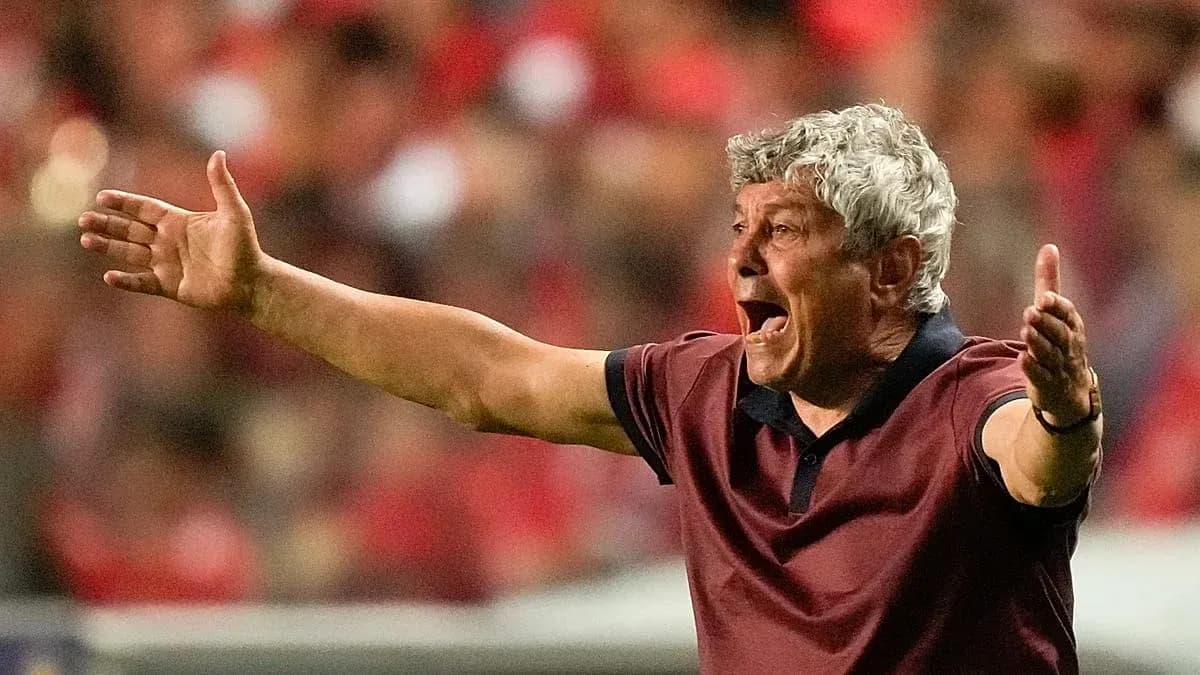
Mircea Lucescu, the towering figure who shaped Romanian football across generations, has died at the age of 80.
The Bucharest University Emergency Hospital confirmed his death on Tuesday. Lucescu had been admitted after reportedly suffering a heart attack on Friday morning, just days after stepping down from his latest spell in charge of the national team.
“Mr. Mircea Lucescu was one of the most successful Romanian football coaches and players, the first to qualify the Romanian national team for a European Championship, in 1984,” the hospital said in a statement, noting that “entire generations of Romanians grew up with his image in their hearts, as a national symbol.”
For Romania, Lucescu was never just another coach. He was the man on the touchline and the captain on the pitch, the bridge between eras.
As a player, he led his country at the 1970 World Cup, wearing the armband on football’s biggest stage. That tournament showcased his authority and intelligence long before he swapped boots for a clipboard.
His coaching journey stretched across decades and borders. He guided Romania to the European Championship and went on to manage clubs across Europe, collecting titles and respect in equal measure. Wherever he went, trophies tended to follow.
The story came full circle when he returned to the Romanian national team after a 38-year absence, lured back by the same challenge that had defined so much of his career: qualification. This time, the target was the World Cup.
It ended in heartbreak. Three days before his hospitalisation, Romania fell to Turkey in a playoff, a defeat that closed the door on their World Cup hopes. Lucescu, who had pushed his players through that campaign, fell ill during training soon after and resigned last Thursday.
His second spell in charge may have been brief, but the symbolism was powerful. A coach in his eighties, still driven by the same competitive fire, still willing to carry the weight of a nation’s expectations.
From captain in 1970 to the architect of Euro qualification in 1984 and beyond, Lucescu’s career traced the modern history of Romanian football. His passing leaves a void not only on the touchline, but in the identity of a footballing nation that grew up with him as its reference point.
The question now is not how Romania will replace him. It is whether anyone truly can.