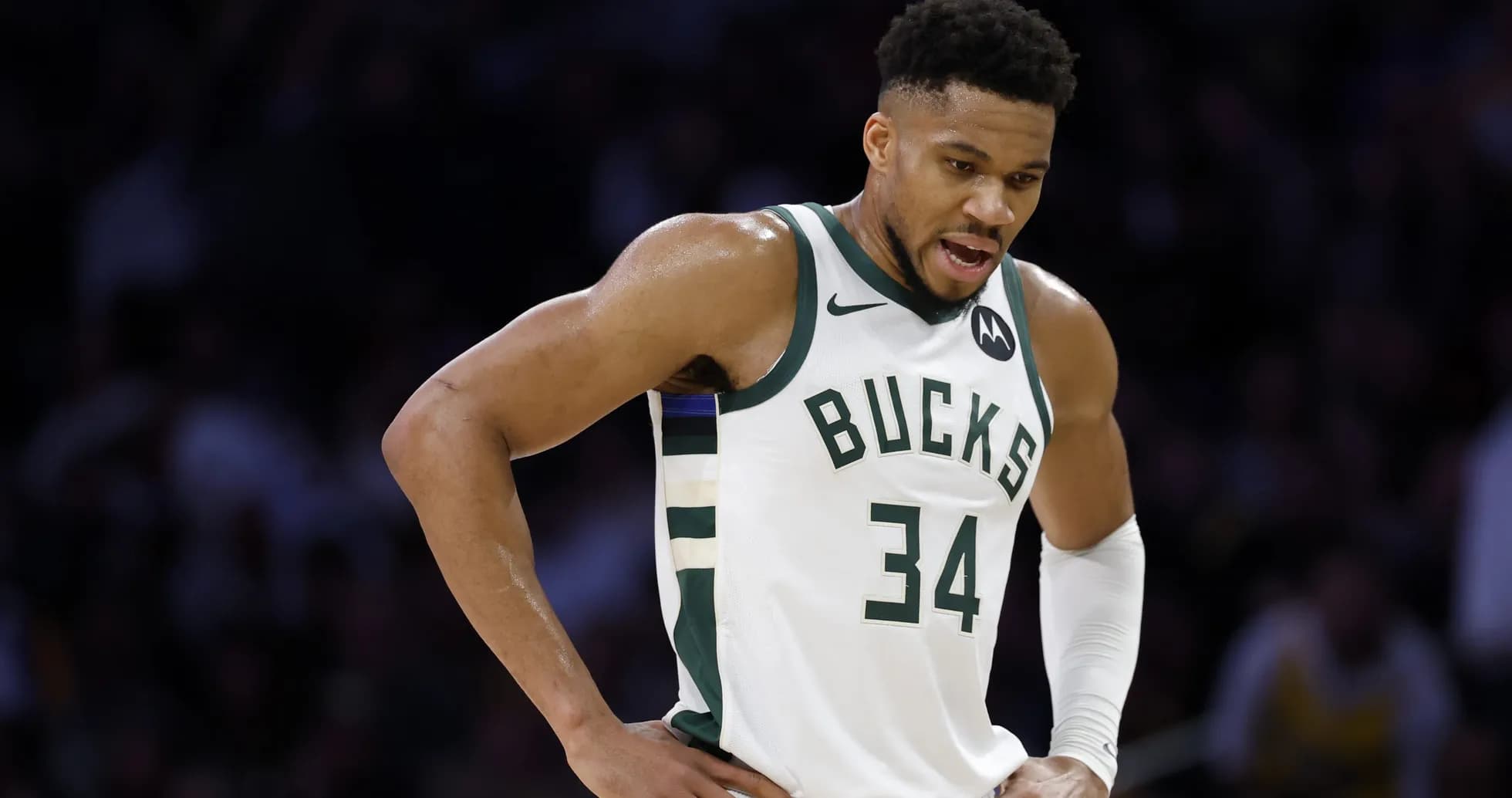
Milwaukee Bucks Face Uncertain Future with Giannis Antetokounmpo
The Milwaukee Bucks didn’t just open the 2025-26 season. They walked straight into a standoff.
At the center of it all: Giannis Antetokounmpo, the two-time MVP who has come to define the franchise, now openly wrestling with “serious doubts and concerns” about how the roster around him has been built, according to reporting from Shams Charania on ESPN. Months before the February trade deadline, the organization already knew the clock was ticking.
This wasn’t a sudden rupture. Milwaukee has spent years cashing in its future to keep its superstar in contention, swinging for Jrue Holiday, then Damian Lillard, and paying for those bets with a stack of first-round picks and much of its flexibility. The bill arrived in the form of three straight first-round exits. The aura of a perennial contender faded; the weight of stagnation did not.
Behind closed doors, Antetokounmpo made it clear: maybe both sides needed to think about life apart.
One source told ESPN, “Giannis has wanted to handle this professionally by being very up front with the team… This could have been a happy resolution but instead might end up being a nasty breakup.” The message was blunt. The tone inside the building shifted.
A Blockbuster That Nearly Happened
The pressure nearly cracked the league open.
According to Charania, the Bucks “seriously considered” trading Antetokounmpo to the Miami Heat in the days before the February 5 deadline. Not rumors. Not idle chatter. Real conversations, real packages, real decisions.
In late January, Antetokounmpo and his representatives sat down with ownership, including Jimmy Haslam and Wes Edens, to talk through a path forward. That meeting leaned on a previous understanding: if it ever came to it, the franchise and its star would work together on a trade rather than let the relationship rot.
Once that door opened, the league poured in.
The Minnesota Timberwolves checked in. So did the Golden State Warriors. Teams circled, sensing even the slightest chance to pry away a generational talent. But it was Miami that pushed hardest and furthest.
The Heat’s offer, per ESPN, revolved around Tyler Herro, rookie big man Kel’el Ware, additional players, and a haul of draft picks and swaps. It was the kind of proposal that forces a franchise to stare in the mirror. The Bucks did exactly that. Team sources say they weighed the deal seriously and, on February 4, even contemplated pulling the trigger.
General manager Jon Horst had set a steep price from the start: elite young talent and heavy draft capital. Across the league, Milwaukee floated names like Evan Mobley and VJ Edgecombe in separate talks, signaling they weren’t interested in a soft reset. If Antetokounmpo moved, the return had to be seismic.
The stance created friction. Some rival teams felt the Bucks dragged their feet. Others walked away convinced the asking price bordered on unrealistic. Yet the Heat stayed in, believing they were close.
Then came the call.
On the morning of February 5, Milwaukee informed Miami it would not proceed. The league-altering trade that once felt within reach vanished, at least for now. The Bucks chose to hold their star and ride out the storm.
Tension Without Resolution
Keeping Antetokounmpo did not fix the core problem. It only prolonged it.
According to ESPN, the mood inside the organization remained uneasy. One team source distilled it into a single line: “The crux of the issue is feeling Giannis doesn’t want to be here on any given day.” For a franchise that has built everything around him, that uncertainty cuts deep.
A calf injury sidelined Antetokounmpo for 15 games around the deadline, but his stance on the floor was different from the noise off it. Once healthy, he aligned with Horst and head coach Doc Rivers on pushing to win, not shutting things down for the sake of lottery odds or long-term planning. The star still wanted to compete. The results didn’t follow.
Milwaukee struggled to find a coherent identity, never fully convincing anyone—perhaps not even themselves—that the current iteration could climb back into the league’s elite. The questions grew louder: about the roster, about the direction, about who would be leading them.
Those questions reached the sideline.
Marc Stein reported an “anticipation” that Rivers and the franchise could move toward either a separation or some form of restructuring after a disappointing campaign. Rivers, recently named to the 2026 Basketball Hall of Fame class, arrived as the steady veteran voice meant to guide a contender through turbulence. Instead, he has been steering a team stuck between eras, with his long-term role now under the microscope.
A Franchise on the Clock
Above all of it sits a simple, unforgiving reality: the Bucks cannot drift forever.
Governor Wes Edens has drawn the line clearly. Antetokounmpo will either sign an extension or be traded. No half-measures, no endless limbo. In October, the 30-year-old will be eligible for a four-year, $275 million extension, a number that underscores his value and the stakes of the decision.
So far, there is no firm indication he will commit. The doubts that surfaced before the deadline have not disappeared. They’ve hardened into the central storyline of Milwaukee’s future.
By passing on Miami’s offer, the Bucks bought time, not clarity. They kept their superstar, their relevance, and their chance—however narrow—to repair the relationship and retool around him. They also kept the risk that the breakup, when it comes, looks more “nasty” than “happy resolution.”
Around the league, front offices are already preparing for the offseason, expecting trade interest in Antetokounmpo to ignite again. The packages will be massive. The pressure will be relentless. The margin for error will be thin.
Milwaukee and its franchise cornerstone now walk toward a pivotal summer with no guarantees. One signature could secure an era. One phone call could end it.