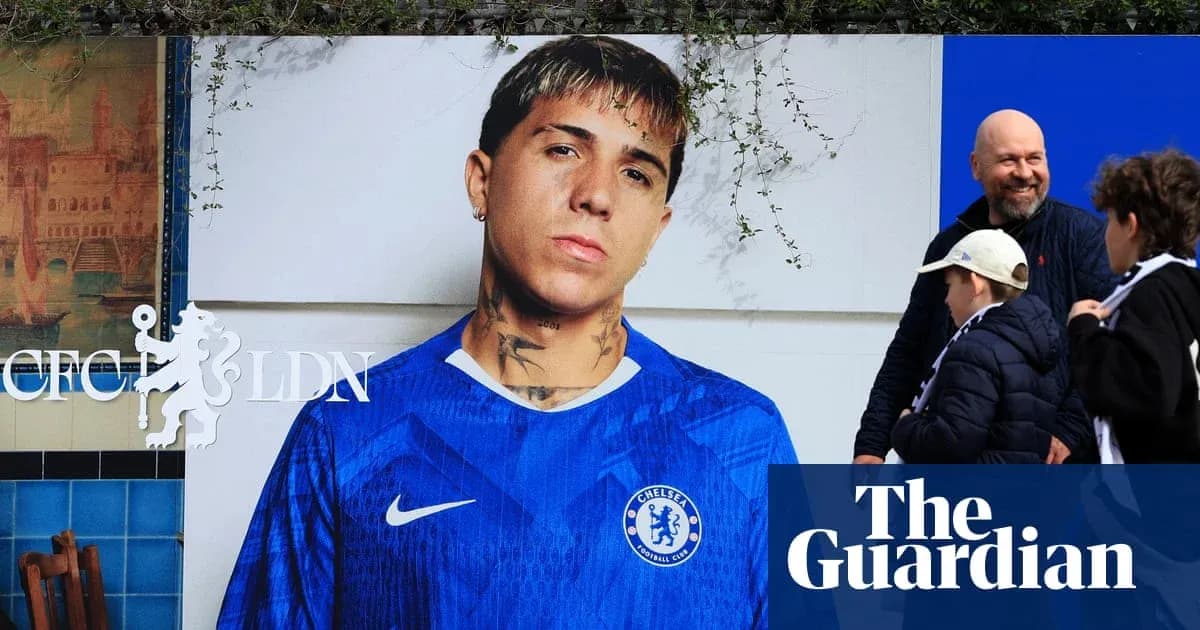
Enzo Fernández's Future at Chelsea: Leadership and Contract Tensions
Chelsea are prepared to hand the armband back to Enzo Fernández before this season is out – but only if their £106.7m midfielder proves he has learned from a bruising few weeks that have exposed the fault lines in his relationship with the club.
The World Cup winner has been at the centre of a storm since the last international break, when he spoke with striking candour about his future. He namechecked Real Madrid as the European city in which he would most like to live and openly admired Luka Modric and Toni Kroos, both former pillars of the Bernabéu midfield. He also questioned the departure of Enzo Maresca, replaced in January by Liam Rosenior.
Those comments did not go unnoticed in west London. They stung.
Rosenior draws a line
Rosenior, still stamping his authority on a young and volatile squad, decided enough was enough. He declared that Fernández’s remarks had “crossed a line” and, backed firmly by the hierarchy, moved from words to action.
The punishment was stark. Fernández was suspended for the FA Cup tie against Port Vale and for Sunday’s Premier League meeting with Manchester City – two games that matter in a season where Chelsea are scrambling to reattach themselves to the Champions League places.
Dropping one of the most expensive players in the club’s history, and one of its most influential, sent a message that travelled quickly through the dressing room. It also raised an obvious question: what now for a player widely perceived outside the club as Chelsea’s vice-captain?
The reality of the armband
Inside Stamford Bridge, the picture is less simple than the outside narrative. Fernández has never been formally designated vice-captain. The club see him instead as one of several “co-captains” in a leadership group rather than a clear second-in-command behind Reece James.
He has worn the armband when James has been absent, but so have others. He is not considered to hold greater seniority than Moisés Caicedo, his midfield partner, and when Port Vale came to town last weekend it was Cole Palmer who led the side out. With James sidelined by a hamstring injury, Caicedo is expected to captain against City.
The nuance matters. It means Chelsea have not had to rip up any official hierarchy or reassign a formal vice-captaincy. They see Fernández as an “alpha” personality, someone who naturally steps forward when a leader is needed, but they have deliberately left the structure flexible.
What has not changed, club sources insist, is his place in that leadership group. The door has not been slammed. Chelsea are monitoring how he responds to the sanction and, crucially, whether he does enough on and off the pitch to justify wearing the armband again. Rosenior took encouragement from the fact Fernández was at Stamford Bridge for the Port Vale tie, present even when he could not play.
Contract tension and Madrid’s shadow
Beneath the disciplinary issue lies a deeper tension. Those close to Fernández point to frustration over a lack of movement on an improved contract. He is tied to Chelsea until 2032, a mammoth commitment on paper, but his camp believe his status and contribution merit better terms.
That disquiet has fed into the noise around his future. Real Madrid have placed him on a shortlist as they consider the next evolution of their midfield, but there is a hard financial reality: Chelsea value him at around £100m and the European champions are unlikely to stretch that far. There are few obvious alternative buyers at that price for a player still settling into English football after leaving Benfica.
Javier Pastore, Fernández’s agent, underlined the tension last week, saying his client would explore his options if a new deal is not agreed after the World Cup. He also branded the two‑game ban unfair, a stance that sits in direct opposition to Chelsea’s view.
From the club’s perspective, the suspension was non‑negotiable. They believe a line had to be drawn after what they considered public disrespect. Feedback, they say, is welcome – but only behind closed doors. Airing grievances in public, especially when the club are fighting to re-establish themselves among Europe’s elite, is seen as damaging.
Leadership, loyalty and the run-in
So Chelsea move into a pivotal phase of the season without one of their most gifted players, by choice. The gamble is clear: short-term pain, potentially against the champions, for what they hope will be long-term control of the dressing room and a recalibrated relationship with a marquee signing.
The club still see a version of the future in which Fernández is central, driving games and, at times, leading the team out. They are not rushing to push him towards the exit, nor are they ready to rewrite their leadership map around him.
The next move belongs to the midfielder. Does he lean back into the project, accept the internal rules and reclaim the armband on merit? Or do these two games, and the words that caused them, become the first real crack in a partnership that was supposed to run until 2032?