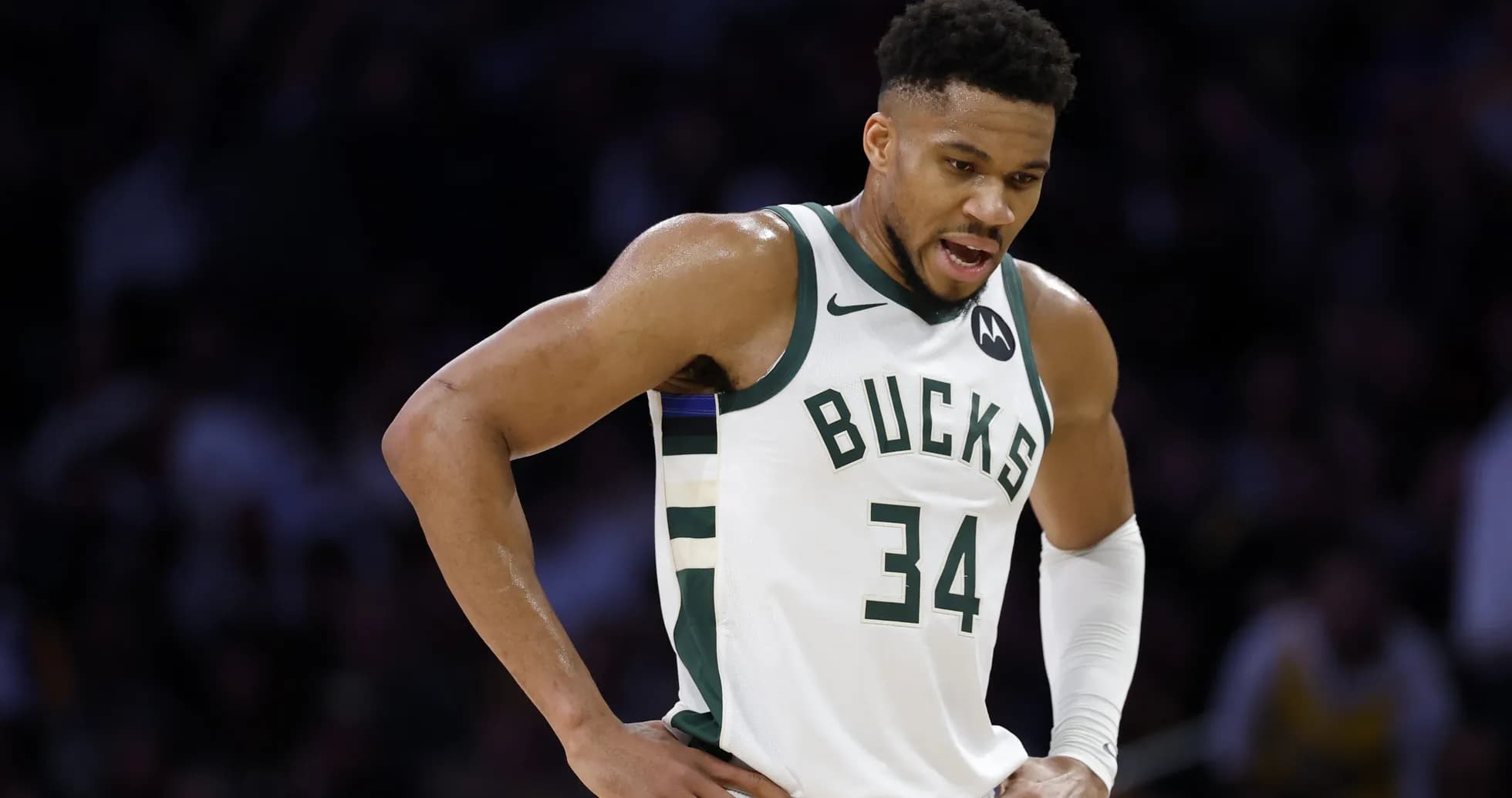
Milwaukee Bucks Face Dilemma with Giannis Antetokounmpo
The Milwaukee Bucks didn’t just open the 2025-26 season with questions. They walked straight into a storm.
At the center of it all: Giannis Antetokounmpo, the two-time MVP who has defined the franchise for a decade and now stands at the heart of its biggest dilemma. Months before the February trade deadline, he had already voiced “serious doubts and concerns” about the roster, according to Shams Charania on ESPN. For a player who has built his reputation on loyalty and blunt honesty, that phrasing landed like an alarm siren.
This wasn’t a sudden flare-up. Milwaukee has spent years cashing in its future to keep the window open, swinging for Jrue Holiday and then Damian Lillard. Those trades brought star power and a championship pedigree, but the cost was enormous: multiple first-round picks, young assets, and the flexibility to pivot. When the bill finally came due, it was brutal. Three straight first-round exits. A veteran-heavy roster with little room to maneuver. And a superstar looking around and wondering if this was still the place to chase titles.
Behind closed doors, Antetokounmpo made it clear he saw an endgame coming. One source told ESPN, “Giannis has wanted to handle this professionally by being very up front with the team… This could have been a happy resolution but instead might end up being a nasty breakup.” That’s not the language of a minor disagreement. That’s the language of a relationship on the brink.
A Blockbuster That Nearly Broke the League
The tension didn’t just simmer. It almost detonated.
According to Charania, the Bucks “seriously considered” trading Antetokounmpo to the Miami Heat in the days leading up to the February 5 deadline. Giannis in Miami, in Heat colors, in that organization’s ruthless, win-now culture — it would have been one of the most seismic moves of the decade.
The groundwork had been laid weeks earlier. In late January, Antetokounmpo and his representatives sat down with ownership, including Jimmy Haslam and Wes Edens, to talk about what came next. The meeting leaned on a prior understanding: if the time ever came, the franchise and its star would work together on a trade. This wasn’t a hostage situation. It was supposed to be a collaboration.
Once word spread that Milwaukee was at least listening, the league lined up. The Minnesota Timberwolves checked in. So did the Golden State Warriors. But the most serious, tangible offer came from South Beach.
Miami’s proposal, team sources told ESPN, revolved around Tyler Herro, rookie big man Kel’el Ware, additional players, and a stack of draft picks and swaps. It was the kind of package that signaled real intent, not a courtesy call. Inside the Bucks’ front office, led by general manager Jon Horst, the offer didn’t get brushed aside. It got weighed. Hard. There were internal conversations about actually pulling the trigger on February 4.
Milwaukee had set a steep asking price from the start. They wanted elite young talent and significant draft capital — the kind of haul that resets a franchise, not just softens the blow. Around the league, other reported frameworks showed how high the bar sat: names like Evan Mobley and VJ Edgecombe surfaced in separate discussions. The message was blunt. If you wanted Giannis, you were paying for the privilege.
The deeper the talks went, the more friction surfaced. Some teams felt Milwaukee dragged its feet and struggled to give clear answers. Others walked away believing the Bucks’ demands were simply too high. In the end, ownership stepped in. On the morning of February 5, Milwaukee informed the Heat the deal was dead. Antetokounmpo was staying — at least for now.
Staying Put, But Not Settled
Keeping Giannis should have calmed the waters. It didn’t.
The underlying issues never left the room. ESPN reported that the situation created fresh strain within the organization, with one team source boiling it down starkly: “The crux of the issue is feeling Giannis doesn’t want to be here on any given day.” That’s the kind of sentiment that can hang over a locker room, a front office, an entire season.
Around the deadline, Antetokounmpo missed 15 games with a calf injury. That absence only amplified the noise. Still, once he got healthy, he didn’t retreat or ask out mid-season. He aligned with Horst and head coach Doc Rivers on pushing to win games rather than shutting things down. No soft tanking, no quiet fade. They were going to compete.
The results, though, didn’t match the intent. Milwaukee struggled to find a consistent identity, caught between the urgency of an aging core and the looming possibility of a teardown. Every loss felt heavier. Every off night from a veteran felt like a data point in a bigger argument about where this team is going.
Doc Rivers on Shaky Ground
The uncertainty isn’t confined to the roster.
Marc Stein has reported “an anticipation” that Rivers and the franchise could move toward a separation or some form of restructuring after a disappointing campaign. Rivers, recently named to the 2026 Basketball Hall of Fame class, arrived as a stabilizing figure, someone who had seen every version of NBA chaos. Instead, he’s been steering through one of the most turbulent stretches of his career.
He walked into a pressure cooker: a win-now mandate, a star questioning the project, a front office light on assets, and a fan base still clinging to championship expectations. The questions now are less about his résumé and more about his fit for whatever comes next in Milwaukee — whether that’s one last push with Antetokounmpo or the start of a long rebuild without him.
A Franchise-Defining Ultimatum
The stakes are as clear as they are unforgiving.
Bucks governor Wes Edens has drawn the line: Giannis Antetokounmpo will either sign an extension or be traded. No half measures, no year-to-year limbo. In October, the two-time MVP becomes eligible for a four-year, $275 million extension. That number reflects his value and his leverage. What it doesn’t guarantee is his signature.
If he commits, Milwaukee gets a lifeline — a chance to retool on the fly, to find creative ways to rebuild around a generational force despite limited draft capital. If he balks, the calculus changes instantly. The decision the Bucks dodged at the deadline returns with even greater weight in the offseason.
For now, their choice to walk away from Miami’s offer has only postponed the inevitable. Trade interest will surge again once the league calendar flips to summer. Front offices will revisit old proposals, sweeten them, or dream up new ones built around their best young players and future picks.
Milwaukee and Antetokounmpo are no longer just managing a season. They’re staring at a crossroads that will define the next decade — for the player, for the franchise, and for a league that knows one move could shift the balance of power overnight.