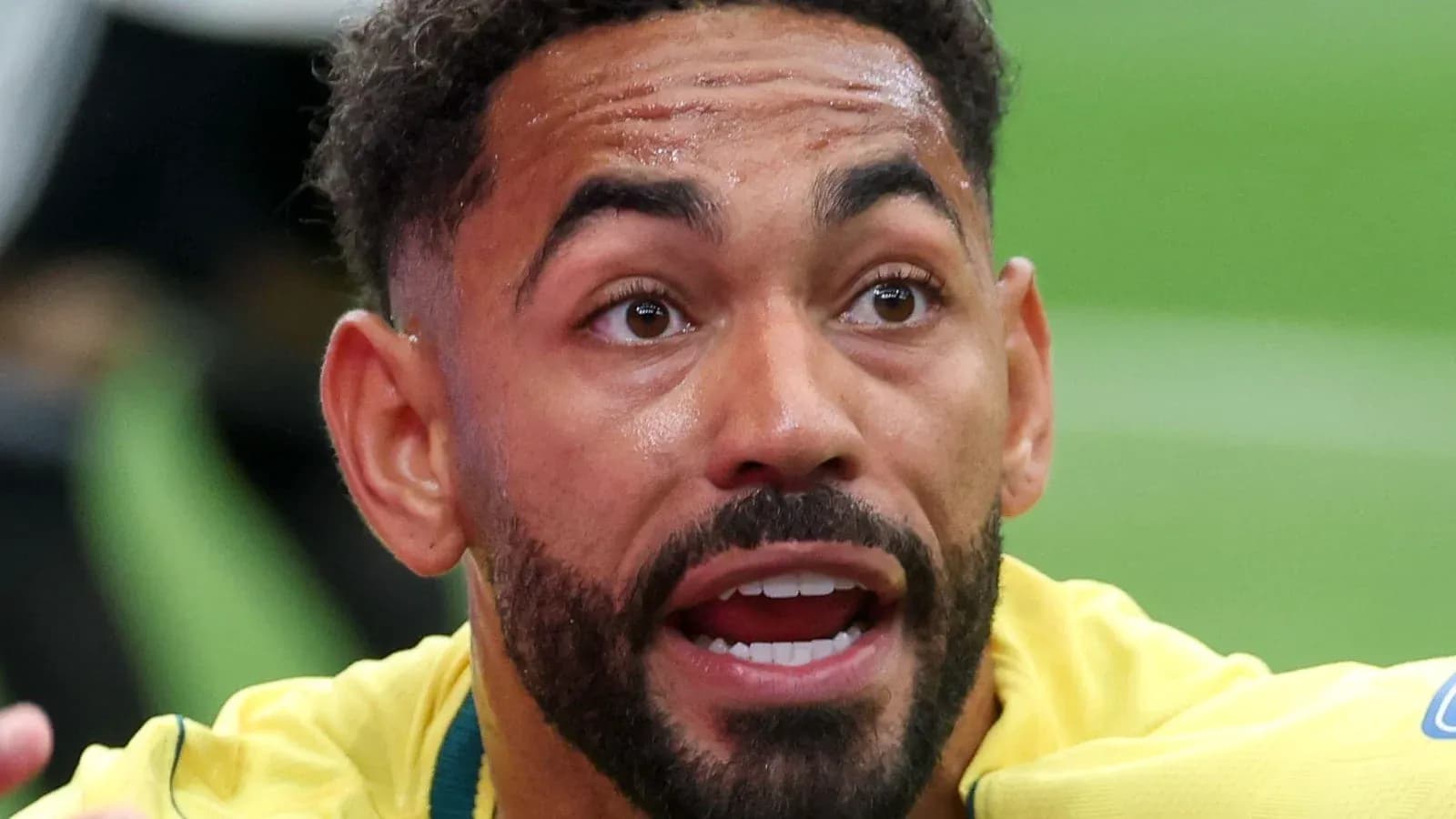
Matheus Cunha: Too Nice for Brazil and Manchester United?
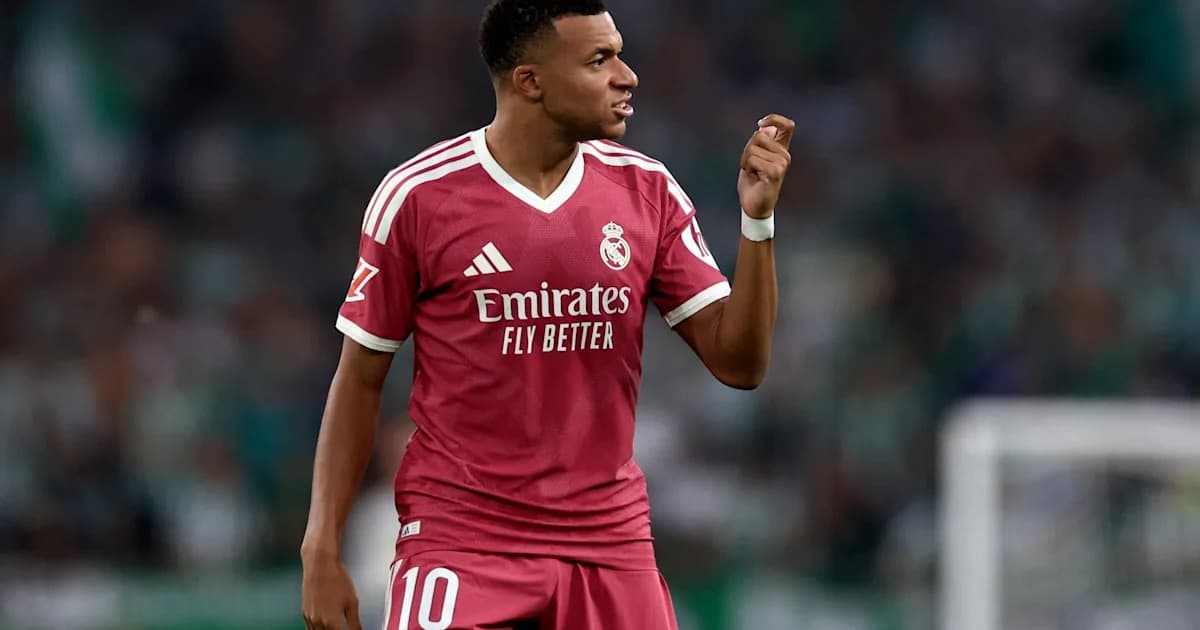
Matheus Cunha, “too nice” for Brazil. Apparently also doomed at Manchester United for the same crime.
That, at least, is the curious thesis emerging from sections of the English press after Brazil’s win over Japan at the World Cup. One moment in particular has been seized upon: Cunha pausing to console Japan’s Ao Tanaka, a beaten opponent, before rejoining his team-mates to celebrate.
From that, we are told, grows an “awkward narrative” that the forward “lacks the grit to go with the guile needed to become a great footballer, instead of a good one.” A player who has operated at the sharp end of elite football, who once earned a ban for removing an Ipswich security guard’s glasses during a fracas, is suddenly painted as too gentle for the top.
Too much empathy. Not enough edge. That’s the charge sheet.
It is a strange leap. A brief, human moment after a high-stakes knockout tie somehow becomes a window into Brazil’s “uncomfortable truth” and a warning sign for his prospects at Old Trafford. The conclusion is just as stark: when Neymar eventually hands over the baton, it will go to Vinicius Junior, not Cunha.
Of course it will. Vinicius is already one of the defining forwards of his generation, the face of Real Madrid and a cornerstone of this Brazil side. That hierarchy exists because of output, status and talent, not because Cunha took 30 seconds to put an arm around a devastated rival.
The idea that kindness disqualifies you from greatness, or that consoling an opponent is evidence of some fatal lack of steel, jars with the reality of modern elite football. The best in the world – from Lionel Messi to Luka Modric – have long combined ruthlessness on the pitch with decency off it. Cunha’s gesture looked like what it was: a professional recognising the pain he has felt himself.
The attempt to fold that into a grand theory about why he will never be Brazil’s leading man, or why his United spell is destined to fail, says more about the hunger for narratives than it does about the player.
Kane, ego and the selective language of stars
The week’s coverage has not just been about Cunha. Harry Kane’s move to Bayern Munich and the prospect of Barcelona have also been filtered through some revealing turns of phrase.
Kane, we are told, “does not have an ego in a traditional sense – he is the humblest of superstars – but he does not score the goals he does without a stubborn streak of high self-regard.” It is an elegant sentence, but it pulls in two directions at once.
Can you truly be “the humblest of superstars” while also being defined by “a stubborn streak of high self-regard”? And how different is that, in substance, from the traits that see Jude Bellingham labelled a “divisive soloist”, “poster boy for moodiness”, “brand ambassador for petulance” and “an angry young man”?
The behaviours often look similar. The vocabulary does not.
The same piece draws a sharp line between Bayern and Barcelona. “Bayern is not Barca and the Bundesliga is not LaLiga. Der Klassiker is not El Clasico. Der Klassiker is Bayern versus Dortmund, by the way.” The explanation reads like a primer for the uninitiated, yet the framing drifts towards the condescending.
Barcelona are “irresistible”. Bayern, by contrast, are “stable”, “familiar” and “logical”. This, despite the German club going further in last season’s Champions League and winning more trophies. The implication is clear: one club sells romance, the other reliability.
It is a neat story. It is not the whole story.
England, Japan and the “major boost” that isn’t
The narrative leaps continue with Brazil’s group-stage clash against Japan. One report framed Japan’s early goal as a potential “major boost” for England, with the Canarinho at risk of exiting the competition.
On paper, perhaps. In reality, England lost to Japan only three months ago. Calling them a “major boost” for anyone feels badly out of step with recent evidence.
England have beaten Brazil more recently than they have Japan. The Asian side are organised, technically sharp and increasingly comfortable bloodying the noses of traditional powers. Treating them as a soft touch for England’s hopes does not survive even the most basic historical check.
Nagelsmann, a “snap” and the weight of a single word
In Germany’s case, the drama arrived via the exit door. Knocked out of the World Cup by Paraguay on penalties, Julian Nagelsmann walked straight from the touchline into the glare of the cameras. One headline screamed that the Germany manager “snaps at female reporter’s questioning” as Jürgen Klopp “eyes up his job”.
Two things stand out. First, the decision to flag Lili Engels as a “female reporter” in the headline, when she is referred to simply as a reporter in the body of the piece. The label shifts the tone. It invites the reader to see the exchange differently, to imagine a line crossed that might not be there.
Second, the supposed “snap” itself. Watch the clip and you see a slightly tense conversation between a coach under immense pressure and a journalist pressing him on a painful defeat. Voices do not rise. Tempers do not flare. No one storms off.
It is the sort of edge that has existed between managers and reporters for decades. To inflate it into a moment of fury, and to frame it around the gender of the interviewer, is to turn routine post-match friction into something it was not.
Fixing the story
Even away from the pitch, the hunger for drama remains relentless. Allegations of match fixing around Algeria’s clash with Austria have prompted FIFA to consider whether to investigate, prompting another round of breathless headlines.
The governing body’s stance will be watched closely, of course. But the pattern is familiar: the faintest whiff of scandal becomes a storyline in itself, long before any formal conclusion is reached.
Across all of this – Cunha’s kindness, Kane’s supposed ego, Nagelsmann’s composure, Japan’s status, FIFA’s deliberations – one thing is clear. The modern game is played not just on grass, but in the gaps between words, in the labels attached to players and coaches, in the stories built from moments that last only seconds.
For Cunha, the question is simple and unforgiving. When the noise fades and the narratives move on, will his football, rather than his manners, be loud enough to decide his future at the very top?