Germany's World Cup Collapse: A Shocking Exit in Boston
Germany’s World Cup collapse in Boston will live long in the country’s footballing nightmares. Not just because Paraguay, ranked 41st in the world, sent them home on penalties. Not just because it was their first ever World Cup shootout defeat. But because one of the supposed standard-bearers of a new era, Florian Wirtz, walked off the pitch as a symbol of everything that went wrong.
A shock that cut deep
Julio Enciso’s first-half strike had already rattled Germany’s composure. Paraguay, organised and fearless, sensed vulnerability and went after it. For a while, the script looked familiar: the underdog runs, harasses, scores – and then the heavyweight wakes up.
Germany’s response came from a familiar Premier League axis. Wirtz, now of Liverpool and burdened with a £116million price tag, finally found space and delivered the kind of teasing cross that has made his reputation. Kai Havertz met it with a deft glance, and suddenly the panic eased. Briefly.
Jonathan Tah then thought he had written the escape act. His late finish looked to have spared Germany, only for VAR to drag everyone back. Officials ruled that goalkeeper Orlando Gill had been fouled in the build-up. Goal chalked off. Momentum ripped away.
From there, the tension suffocated Germany’s play. Passes grew safe, angles vanished, and Wirtz – the man meant to bend games to his will – drifted to the fringes again.
Penalties, history, and a broken aura
When it went to a shootout, German history walked up to the spot with them. This is the nation that does not lose from 12 yards. Not at World Cups. Not ever.
Gill tore that myth up.
Havertz stepped up and saw his penalty saved. Nick Woltemade followed and suffered the same fate. Paraguay twice had the chance to finish it, but Antonio Sanabria and Fabian Balbuena both squandered their moments, dragging the drama out and handing Germany lifeline after lifeline.
They couldn’t take it. Tah, already denied once by VAR, ballooned his kick over the bar. Jose Canale then strode forward and buried his. Paraguay 4-3 Germany on penalties. A result that felt less like an upset and more like a verdict.
For the first time at a World Cup, Germany lost a penalty shootout. Their first defeat from the spot at international level since 1976. The aura is gone.
Wirtz in the firing line
The inquest started almost immediately, and Wirtz found himself at the centre of it. An assist on the stat sheet, but not nearly enough on the pitch.
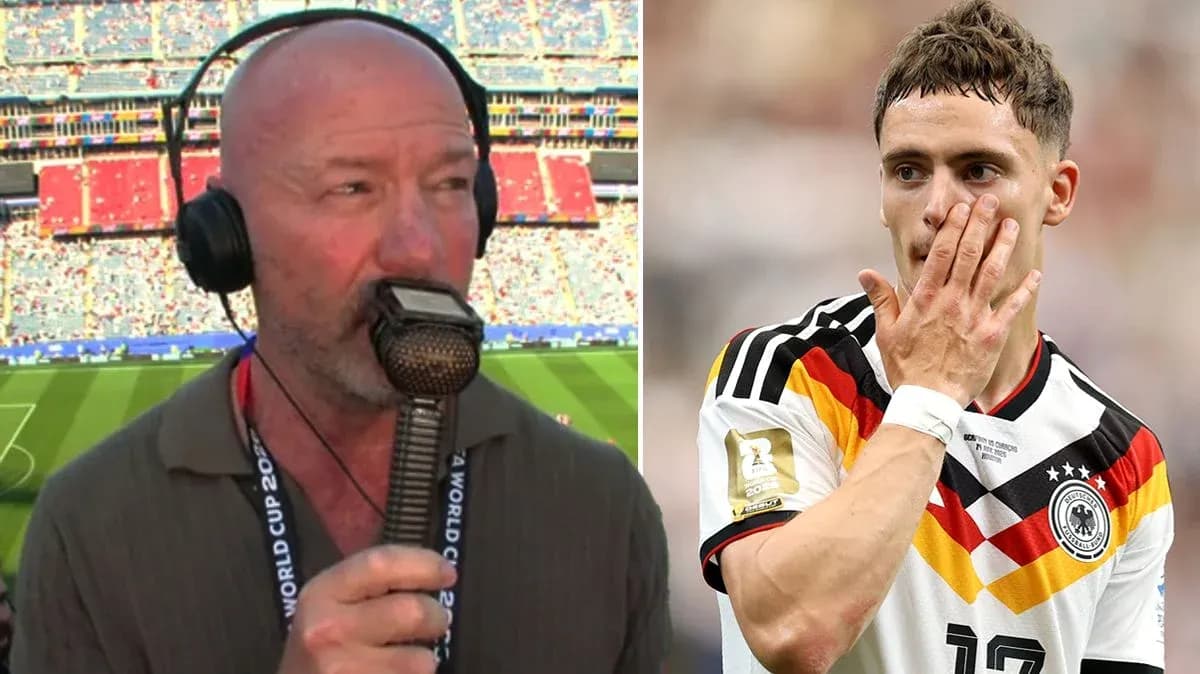
On Netflix’s The Rest is Football, Alan Shearer did not spare the Liverpool midfielder.
“They've got the quality in names and on paper, but they just didn't deliver,” the former England captain said, before zeroing in on individuals. Leroy Sané’s poor season. Denis Undav brought in to add penalty-box punch. And Wirtz, the big-money signing who was supposed to light up both Liverpool and this World Cup.
“Wirtz has had a terrible season at Liverpool, he hasn't performed again at this World Cup,” Shearer said, cutting through the hype.
Micah Richards pushed back, pointing to that huge transfer fee as proof of his talent. “He's a superstar. We've not seen the best of him, totally agree with that, but we can't say he's not a good player,” Richards argued, insisting the raw material is still there.
He then reeled off the pedigree in this squad. Havertz, a Champions League final match-winner in 2021 and 2026, now a Premier League champion. Tah, fresh from earning his big move to Bayern Munich. Antonio Rüdiger, a model of consistency at Real Madrid. Young Nathaniel Brown, making waves. The names scream quality.
But names did not save Germany in Boston. Nor did they save them in recent tournaments.
Nagelsmann stands firm as critics circle
This exit, in the round of 32, comes after a 7-1 demolition of Curaçao, a narrow 2-1 win over Ivory Coast and a 2-1 defeat to Ecuador. The pattern is painfully clear: when the opposition stiffens, Germany fold.
Julian Nagelsmann did not flinch in the aftermath. He spoke of hurt, of bitterness, of a third straight failure on the biggest stage. Yet he refused to talk about walking away.
“When you exit the World Cup after you play Paraguay it is very bitter. It is very hurtful,” he said. “This is the third elimination in a row, so we are not part of the first-class teams any more.”
He knows what is coming. He admitted as much.
“If we're going to do a survey today in Germany, people are not going to speak about me positively obviously,” he said. He praised the travelling support, surprised by how strongly they backed the team even after the defeat, then drew a clear line.
“I'm not going to step back only because we are eliminated. If the DFB want me to continue, I am going to continue. I know how the industry works and a lot of people now want me to leave. I want to continue if the German FA wants me to.”
Defiance, yes. But also a manager who understands his job now hangs on other people’s patience.
Former internationals lose faith
Outside the dressing room, that patience is already thinning.
On BBC One, former Germany midfielder Thomas Hitzlsperger did not disguise his anger.
“It's hard to explain how Germany got into this tournament with so many problems. It's unacceptable,” he said. “It doesn't look good for Nagelsmann. In the last few months, he hasn't dealt with situations well. With the expanded World Cup format, to go out so early would be tough to take for any big nation.”
Arne Friedrich, speaking on BBC Radio 5 Live, went even further. He looked at the bigger picture – the performances, not just the result.
“If you consider the whole tournament, the way we played, it is a deserved loss,” he said. “Nagelsmann has to face the consequences. It is very disappointing, but that is sport. I would definitely say the journey continues without Nagelsmann.”
That is the split now: a coach clinging to his project, and former players convinced the reset has to start at the very top.
A golden badge, a fading force
Germany have not reached the last 16 in any of their last three World Cup finals appearances. For a four-time world champion, that statistic borders on scandalous.
The 7-1 thrashing of Curaçao felt like a throwback to old Germany – ruthless, cold, inevitable. It proved a mirage. When it truly mattered, against organised and ambitious opposition, the quality vanished. The structure wobbled. The leaders disappeared.
And in the middle of it all, a £116million midfielder in a red shirt, expected to carry the weight of a new generation, left the tournament as a lightning rod for criticism.
The badge still glitters. The history still intimidates. But after Boston, after Paraguay, after another early flight home, one question hangs over German football: how many more shocks like this before the rest of the world stops being surprised?