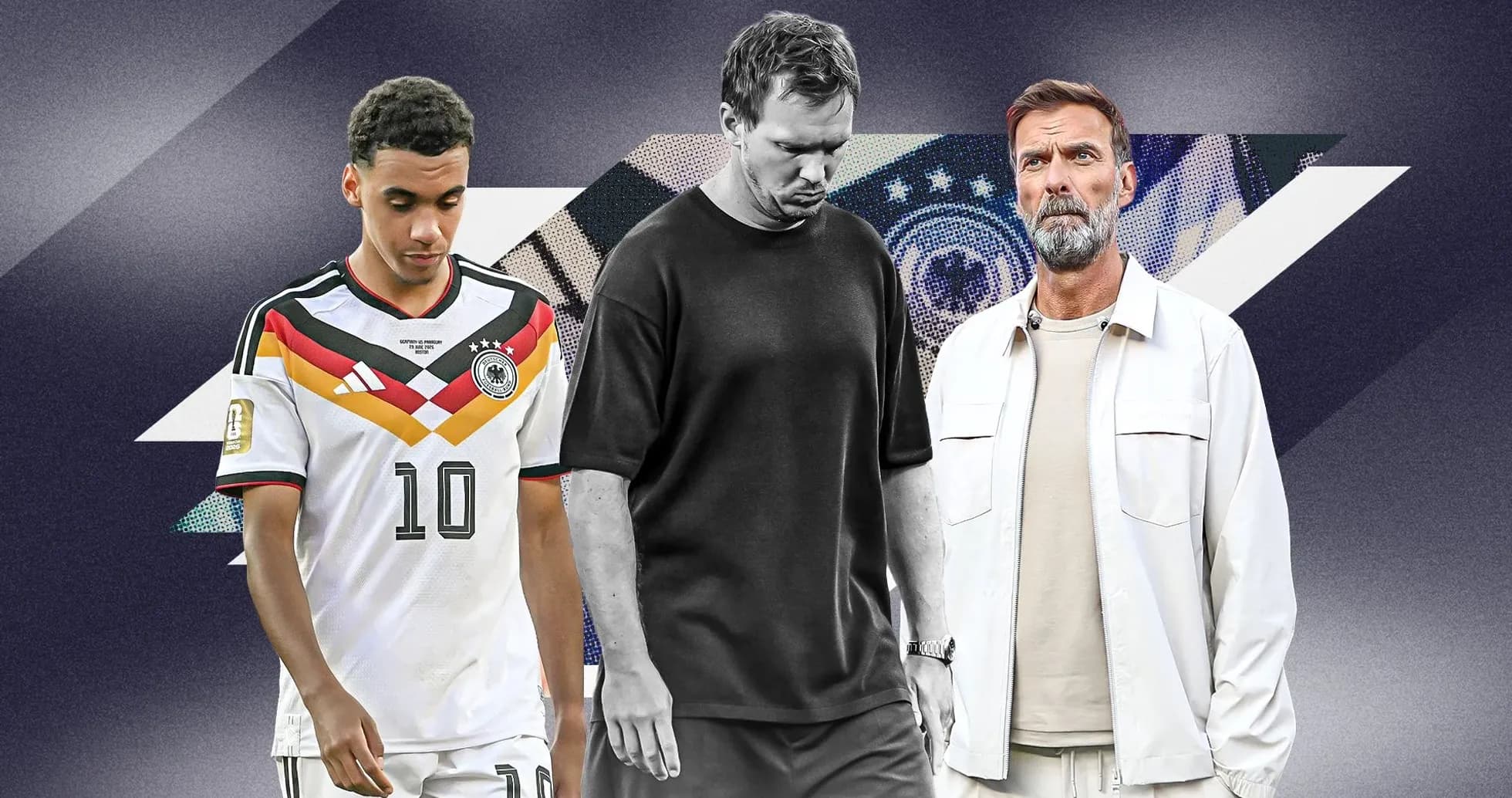
Germany's Coaching Crisis: Lessons from Past Failures
Germany have been here before. That is precisely the problem.
Ever since the 2018 World Cup collapse in Russia, the DFB has specialised in waiting too long, hoping a failing project might somehow right itself. Joachim Löw stayed beyond his natural expiry date. Hansi Flick did too. Now the federation stands on the brink of repeating the same mistake with Julian Nagelsmann – and this time the warning lights are blinding.
From Russia to Foxborough: a pattern of denial
When Germany crashed out of the 2018 World Cup in the group stage, beaten by Mexico and South Korea, the verdict felt clear. Löw, the man who had taken them to the top of the world in 2014, had overseen a shattering failure. Twelve years in charge looked like enough.
Instead, the DFB chose sentiment over steel. Löw’s past credit bought him another cycle. Germany stumbled through the following three years, showing little genuine evolution, and exited Euro 2020 in the last 16 against England. Only then did Löw walk away.
Flick rode a wave of optimism into Qatar in 2022. New voice, new energy, same ending. Germany again fell at the first hurdle, their campaign crippled by a defeat to Japan in the opening game despite taking the lead. The expectation was brutal but logical: Flick would go. He did not. Only a series of grim results through 2023 finally forced the DFB to act, clearing the way for Nagelsmann in the autumn.
The lesson should have been obvious. Delay carries a price. Germany are paying it again.
Nagelsmann’s rise – and rapid fall
Nagelsmann’s arrival in September 2023 felt like a reset. Young, sharp, tactically inventive, he picked bold squads and spoke with a freshness that resonated with a weary fanbase. For the first time in years, there was genuine belief that Die Mannschaft might be heading back towards the game’s summit.
Euro 2024 on home soil seemed to confirm it. Germany reached the quarter-finals, their first genuinely “successful” tournament in eight years. The bond between team, coach and supporters returned. The exit to eventual champions Spain hurt, but it also lit a fire. Almost as soon as the dust settled, Nagelsmann set his sights publicly on the 2026 World Cup.
At that moment he was the most popular national coach since peak Löw. Hard to imagine now.
In less than two years he has burned through that goodwill at a remarkable rate. What began as a modernising project has drifted into a muddled, ego-tinged experiment, culminating in the nadir at Foxborough on Monday.
A coach who wouldn’t get out of his own way
Nagelsmann’s problems have not been confined to the pitch. He turned press conferences and interviews into a running commentary on his own players, issuing detailed, public critiques with a frequency that grated. The impression grew of a coach who craved the spotlight as much as solutions.
Some of his statements were clumsy, others flatly untrue. Promises about roles and status within the squad were made, then quietly broken. When the questions sharpened, particularly around the World Cup, his composure slipped. Instead of authority, he projected irritation and condescension.
The decisions themselves told a similar story.
Toni Kroos’ triumphant return at the Euros emboldened Nagelsmann to make another big call: dragging 40-year-old Manuel Neuer out of international retirement for this World Cup. He had repeatedly denied any such plan. Oliver Baumann, rock-solid throughout qualifying, saw his position wiped out overnight.
It was a brutal move, handled clumsily, and in football terms unnecessary. Neuer did nothing in this tournament that Baumann could not have done. The gamble brought no upside, only resentment and scrutiny.
Then came the Joshua Kimmich saga. Germany’s captain became a symbol of tactical indecision, shunted between right-back and central midfield, even within the same match. The defeat to Paraguay, with Kimmich switching roles mid-game, crystallised the confusion. This was not flexibility. It was uncertainty.
A World Cup with no spark
The performance against Paraguay was a full-system failure – and it did not come out of the blue. The signs had been there all tournament.
Germany had not moved on since the Euros. Apart from a brief second-half surge against minnows Curaçao, the team laboured through the World Cup, consistently underwhelming. They lacked incision in attack, looked fragile in defence and never imposed themselves on opponents they should have outclassed.
- Ivory Coast
- Ecuador
- Paraguay
None of them are heavyweights. All of them made Germany look ordinary. Measured purely on football, this campaign cuts deeper than the 2022 fiasco. At least in Qatar there was a draw against Spain to cling to. This time, there was nothing of that calibre.
To their credit, the players fronted up after the exit. They spoke of collective responsibility and deliberately shielded Nagelsmann from blame. That is admirable dressing-room politics. It is not a blueprint for progress.
The coach is paid to provide a clear plan and a coherent structure. With a squad rich in individual talent, Nagelsmann never found either. His in-game management faltered too: questionable substitutions against Ecuador, and the decision to start super-sub Undav against Paraguay, blunting one of his few reliable impact options.
Klopp on the screen, Klopp in the air
If all of that hurt Nagelsmann, something else cut even deeper: the identity of his most forensic critic.
Every tactical misstep, every structural flaw, was dissected in real time on television by Jurgen Klopp – the man many see as his natural successor. Klopp’s analysis on Magenta TV after the elimination was as blunt as it was accurate.
“You have to attack down the wings. There’s no alternative,” he said. “We all know how well these guys can play, but they didn’t bring that to the pitch. In three months, we’ll be raving about [Florian] Wirtz and [Jamal] Musiala again about how great they are, but not now.
“Paraguay had the opportunity to achieve something, Germany was under pressure to achieve something. Everyone in the stadium thought: Now they’ll turn it around! But we didn’t. We let them off the hook... We can talk about the DFB. We absolutely have to change a few things.”
He did not need to say more. The subtext was obvious.
For many fans, the “few things” that must change start with the name on the coach’s office door. Klopp, now working as Red Bull’s head of soccer, is the dream ticket: the former Liverpool and Borussia Dortmund manager, the charismatic figurehead who could ignite a new era and lead Germany into Euro 2028 and the 2030 World Cup.
Asked in Boston about the national team job, he batted the question away.
“I haven’t thought about that yet. I understand that when the national coach position is discussed, my name is mentioned in some form. But it’s not the moment to really talk about it. There’s nothing to say about it. I have a job that I enjoy very much. As far as I know, it’s not a part-time job.”
Publicly, he is keeping his distance. Privately, the DFB cannot assume that opportunity will sit on ice indefinitely.
One decision left
Rudi Völler and the players have spoken up for Nagelsmann. The backing is loyal, even heartfelt. It does not change the reality.
Germany have drifted for eight years by clinging to what used to work, by giving one more chance, then one more after that. Löw stayed too long. Flick stayed too long. The pattern is clear, the consequences painful.
This time, the DFB has a choice – and, crucially, a potential successor of rare calibre already in the conversation.
They must not hesitate again. If they believe Klopp is the man to reshape the national team, to restore clarity and edge to a drifting giant, they cannot expect him to wait forever.
The clock is ticking. Who do Germany want on the touchline when 2026 comes into view?