Manchester United's Midfield Dilemma: The Kone Conundrum
Manchester United know exactly what they’re missing. They just look in danger of buying the wrong solution.
Casemiro has gone, Manuel Ugarte is sidelined, and the spine of United’s midfield has been rebuilt at speed. Andrey Santos and Youri Tielemans bring legs, passing range and Premier League know-how. On paper, the numbers look right again.
They aren’t. Not yet.
United still lack the one profile that holds everything together: a genuine specialist who lives in front of the back four, who organises, screens, and lets everyone else breathe. Michael Carrick, the manager, needs his own Michael Carrick on the pitch.
Carrick the player was never a destroyer. He didn’t thunder into tackles for the sake of it. He read the game, dictated tempo and anchored the side from deep. That distinction matters, because “defensive midfielder” covers a lot of ground. And it’s exactly where United risk misreading Manu Kone.
A box-to-box engine, not a handbrake
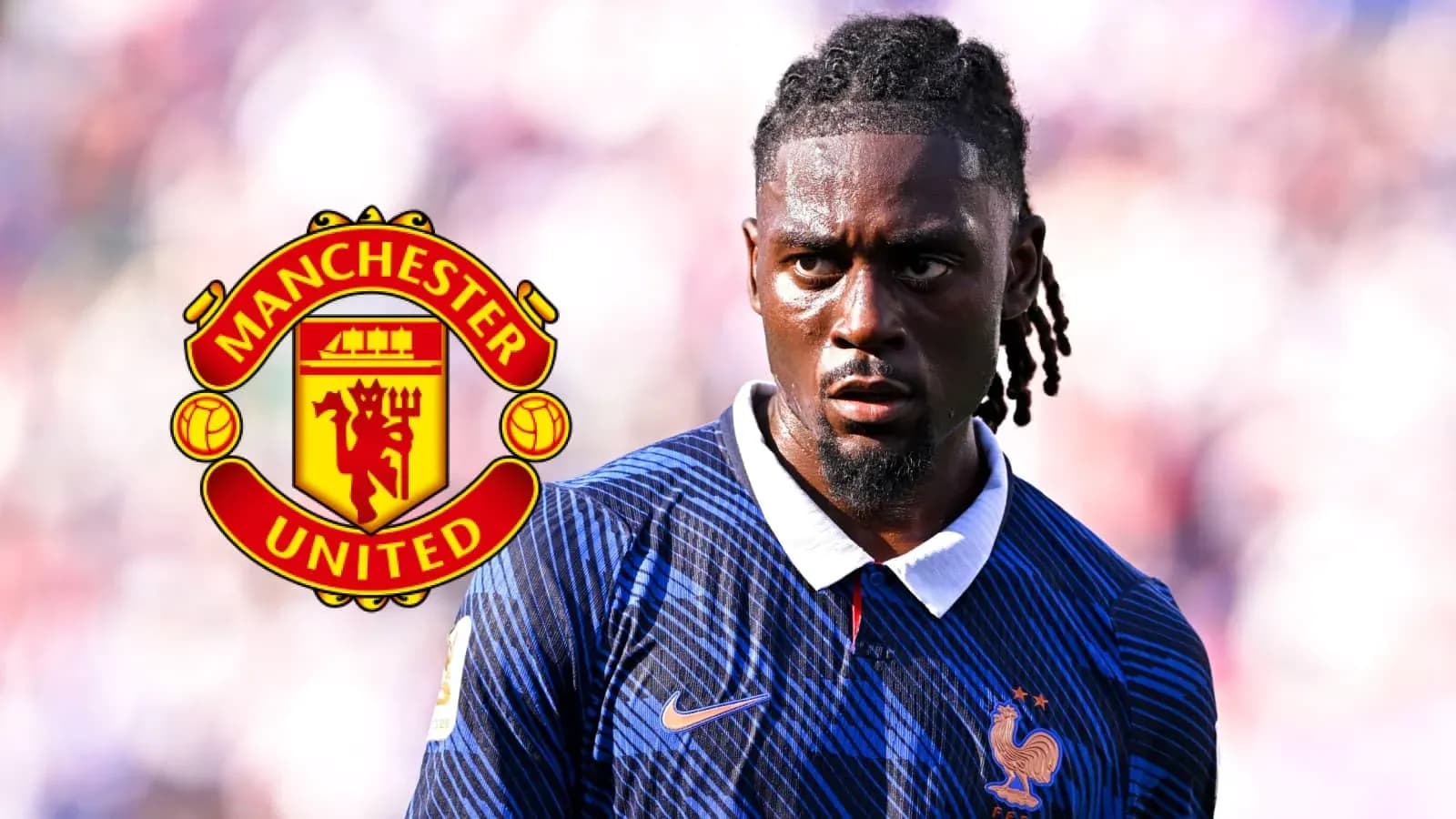
Kone has caught the eye for France at the World Cup. That stage can distort reputations, but in his case it has simply projected what those in Germany and Italy already knew: this is a serious footballer.
At 25, he is stepping into his prime. Three seasons at Borussia Mönchengladbach in the Bundesliga, two at Roma in Serie A – he hasn’t been sheltered. Roma regard him as one of their jewels, a late-summer 2024 arrival who immediately injected power and purpose into their midfield.
Not because he sat in front of the defence and tidied up. Because he carried the ball like a runaway train.
Kone’s standout trait is his ability to take the ball on the half-turn, shrug off contact and surge up the pitch. He gains territory. He breaks lines with his running, not just his passing. His natural role is closer to a No 8 than a No 6.
His first Serie A season underlined that. Time and again he drove Roma forward, brushing aside challenges, dragging his team up the pitch. He was the man who turned defence into attack in three strides.
Then came Gian Piero Gasperini.
Gasperini’s experiment – and the warning for United
Gasperini’s arrival suggested a perfect marriage. His football is built on intensity, aggression and man-to-man responsibility. Kone looked tailor-made for that chaos.
The reality was more nuanced. Gasperini saw a different use for him.
Kone found himself dropping into Roma’s defensive line in possession, shuffling across to offer cover, asked to think first about structure and balance rather than space to attack. The rampaging runs didn’t disappear, but they became rarer. His influence shifted from obvious to understated.
He still had a good season. But the version of Kone that terrorised midfields with the ball at his feet appeared less often. The numbers back it up: even with that more restrained role, he still ranked in the 78th percentile among Serie A midfielders for the average distance of his progressive carries. That’s what he does, even when the system pulls him back.
So if United are targeting him as a permanent sitter, they need to understand what they’re buying. He can “do a job” there. He just won’t be the best version of himself.
And United have been here before.
Lessons from “McFred” and the Casemiro compromise
The Fred–Scott McTominay partnership became a symbol of a club trying to improvise a midfield solution rather than build one. Both were asked to plug gaps that didn’t quite fit their strengths. The result was a double pivot that never truly convinced.
Since then, United have lurched between stopgaps and compromises. Casemiro arrived as a serial winner and had stretches where he looked every inch the elite holding midfielder they needed. But they signed him at 30. The dream scenario would have been getting that player five years earlier.
Then came Ugarte, recruited on the back of standout defensive metrics in Ligue 1 with PSG. The numbers didn’t translate cleanly to United’s system or the Premier League rhythm.
Now Tielemans and Santos are through the door, but neither has been bought to live as the deepest midfielder. That’s clearly where United see Kone plugging the hole.
It’s a risk. Not because he lacks quality, but because his strengths lie in the very things that role would restrict: those surging carries, that ability to drag a team 20 yards upfield in one movement.
The flaws that shape his ceiling
For all his physicality and dynamism, Kone is not a complete midfielder yet.
If he is to convince fully as a box-to-box presence, his end product has to improve. Four goals in 82 Roma appearances is a modest return for someone who often arrives in advanced areas. In the final third he can look hesitant, short of conviction when the moment demands a ruthless finish.
Gasperini himself put it bluntly last December, after Kone finally scored his first goal of the 2025–26 campaign. If he added more goals, the coach suggested, he’d already be operating at a higher tier than Roma. It was both a compliment and a challenge.
Since that strike, he has played 22 times for club and country and scored once. The perception that he is primarily a defensive midfielder lingers partly because the numbers in the other direction don’t shout loudly enough.
There are other rough edges. His off-the-ball movement in possession phases needs sharpening. Too often last season he failed to drift into ideal pockets to offer himself as a passing option, or he moved into lanes that blocked more dangerous passes for teammates. For a lone holding midfielder, that kind of positional awareness must be automatic.
Price, profile and the Premier League gamble
Then there is the market.
Midfield prices have detached from traditional measures like goals and assists. Elliot Anderson produced fewer than 10 goal contributions last season and still moved to Manchester City for £116m. Tottenham paid around £85m for Mateus Fernandes, another midfielder United admired before stepping back.
Roma turned down roughly £38m from Inter for Kone last year. After his World Cup exposure and another solid Serie A season, their asking price is likely to climb north of £50m. That fee demands clarity. Any club paying it must know exactly what they are buying.
Kone is not a specialist No 6 in the classic sense. He is a central midfielder who defends well, covers ground aggressively and drives play forward. If you chain him to the centre circle, you’re paying a premium for half a player.
United’s 4-2-3-1 at least offers a potential workaround. In a double pivot, Kone could share duties with Tielemans or Santos: one goes, one holds. The key would be genuine alternation, not one being permanently sacrificed as the sitter.
France have shown the template at the World Cup. When Kone has partnered Adrien Rabiot or Aurelien Tchouameni, he has had licence to mix his game. Both teammates are comfortable dropping in, both understand when to cover. At Roma, Bryan Cristante often played that role, even if he himself pushed on at times.
For United, the blueprint is simple to describe, harder to execute: when Tielemans roams, Kone stays. When Kone bursts forward, Tielemans anchors. Equal responsibility, not a fixed hierarchy.
Is there a better fit elsewhere?
United are not alone in circling.
Atletico Madrid have been mentioned. Arsenal, too, at one stage, before their focus drifted towards Bruno Guimaraes. Liverpool have monitored Kone since his Bundesliga days and could re-enter the picture.
At Arsenal, a true anchor like Martin Zubimendi would free Kone to play the Rice role – the version of Declan Rice that looks far more dangerous when allowed to surge into the final third rather than simply patrol in front of the defence.
At Liverpool, if Andoni Iraola leans into a 4-2-3-1, Kone could dovetail with someone like Ryan Gravenberch, two athletic, forward-thinking midfielders sharing the load. Again, the key would be balance, not labelling one as a permanent No 6.
Whoever wins the race will be getting a high-level midfielder with time on his side and clear areas to polish. The talent is not in doubt. The question is how brave – and how smart – they are in using it.
If United decide Kone is their missing piece, they cannot simply drop him in front of the back four and tick a box on a depth chart. They would have to build a structure that lets him run, carry, and occasionally crash the box.
Otherwise, they won’t just be misprofiling another midfielder. They’ll be paying £50m or more to discover, yet again, that the hardest position to get right is still the one they understand the least.