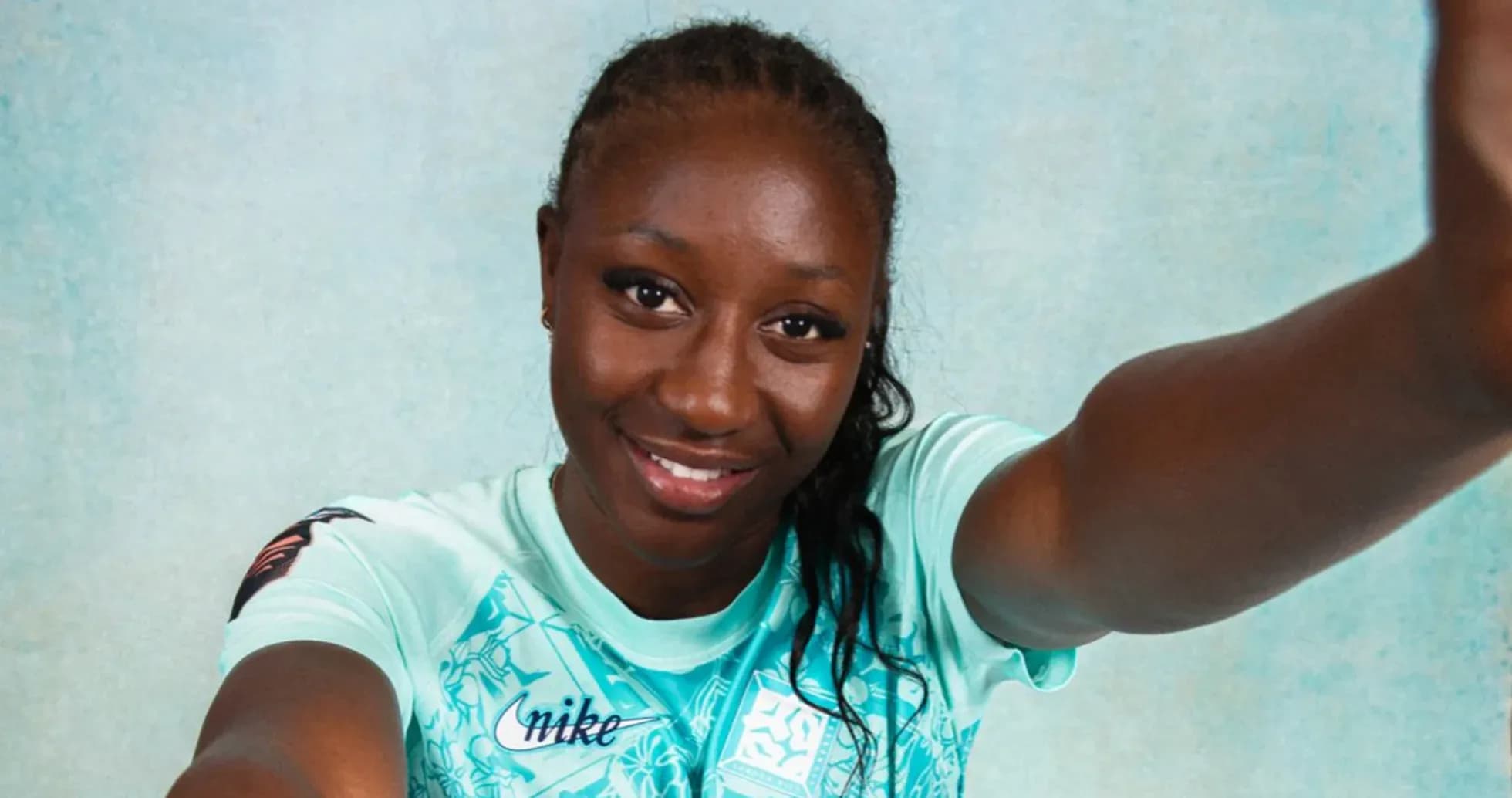
Kadidiatou Diani: The Goal Machine London City Lionesses Needed
London City Lionesses wanted goals. Not just a lift in numbers, but a guarantee. A forward who treats the penalty area like home and the net like a habit. In Kadidiatou Diani, they have signed exactly that.
The numbers alone feel heavy. Forty-one goals in 93 games for OL Lyon. Eighty-six in 145 for Paris Saint-Germain, where she sits as the club’s second-highest goalscorer of all time. These are not the stats of a streaky winger. They belong to a forward who has spent a decade living at the sharp end of elite football.
On the biggest stage, she delivers. At the 2023 Women’s World Cup, Diani finished as joint second-highest scorer with four goals, just one behind Japan’s Hinata Miyazawa. When the pressure rose, she didn’t shrink. She took centre stage.
Her consistency borders on ruthless. Diani has hit 14 or more goals in each of her last seven seasons, a level of output that turns good players into feared ones. Her peak so far came in 2022–23: 26 goals across competitions, 17 of them in just 17 league games. A goal a game in a top European league is not a hot streak. It is domination.
Trophies have followed. She lifted the French league title in 2021 and twice won the Coupe de France Féminine. With France, she tasted success at the SheBelieves Cup in 2017. Individually, the honours stack even higher, crowned by the UEFA Women’s Champions League top scorer award in 2024. Wherever she has gone, the pattern repeats: goals, influence, silverware.
Her story begins far from London, in Vitry-sur-Seine, a Parisian suburb better known as a cradle of French hip hop than a production line for international forwards. Diani carries that culture with her. Music runs through her routine, through her personality. She leans towards hip hop, R’n’B and Afrobeats, and teammates talk about the way she lights up a dressing room after a win, dancing with the same freedom she shows when she drifts in off the flank.
There is a Malian heritage behind the French international, a blend of backgrounds that shapes her identity but never overshadowed her ambition. From a young age she was marked out as different, the kind of talent France’s youth system quickly wrapped its arms around.
Those early years were relentless and successful. She won the FIFA U17 World Cup in Azerbaijan, then followed it up with the UEFA Women’s U19 Championship title in Wales a year later. Different age group, different country, same outcome: Diani with a medal around her neck.
Her rise through club football moved just as quickly. When PSG signed her from Paris FC in 2017, they did it with conviction, paying what was then a record transfer fee in Division 1 Féminine. It was a statement that one of Europe’s richest clubs believed she would define their attack for years. She did.
What makes her so valuable to coaches is not only the end product, but the options she brings. Diani can play on either wing or through the middle. She can stretch a back line with runs in behind, pin centre-backs with her strength, or isolate full-backs and beat them one-on-one. Systems bend around players like this. Managers draw arrows on whiteboards with her movement in mind.
Off the pitch, those who know her talk about a different kind of star power. Friends and teammates have compared her mannerisms to Beyoncé: the presence, the poise, the sense that the room tilts slightly when she walks in. It is not about celebrity for Diani, but there is an unmistakable aura.
She has kept close ties with those who shared her journey through the French ranks. Among them, Marie Adram, a former French development international, remains her closest friend in the game. In a career of constant change and rising stakes, that kind of anchor matters.
Now she lands in London with a CV that would intimidate most defences before kick-off. League titles, cups, youth World Cups, Champions League goals, international pedigree. London City Lionesses asked for goals. They may have signed a lot more than that.