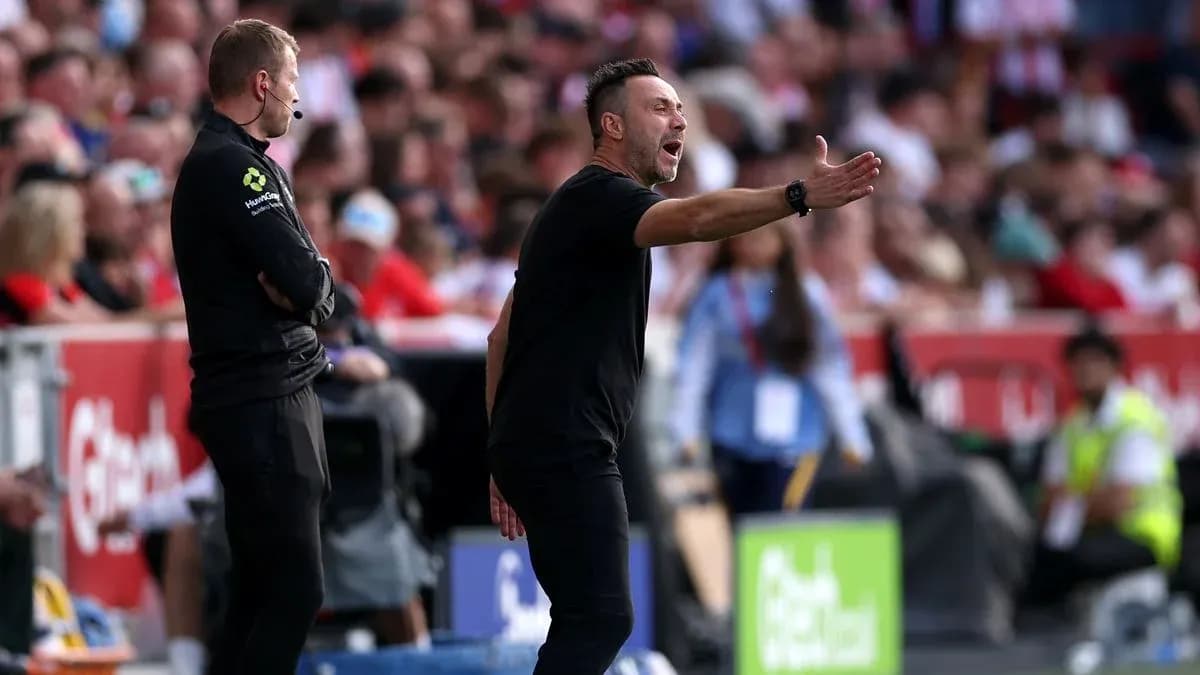
Manager's Blunt Assessment After Defeat to Brentford
The inquest started almost as soon as the final whistle went. No dressing it up, no soft landing.
“Bad game. We lost and suffered the difference in the duels. It was the key of this game. We didn't fight in the right way.”
The manager’s verdict was as blunt as the performance. Brentford out-ran, out-fought and out-muscled his side, and he knew exactly where the damage had been done. Every 50-50 seemed to go the same way. Every loose ball, every second phase, every shoulder-to-shoulder. Brentford won the fight, then won the match.
He refused to hide behind the calendar, but he kept coming back to it.
“Our physical condition was not at the right level for all players because many came later after the World Cup and there were many new players in the squad and first XI,” he said. “But we have to analyse this game better because we can't play this way in this type of game.”
He was “surprised” – not by the problems, but by the scale of them. The lack of intensity, the softness in duels, the disjointed pressing. He had expected teething issues from a “new project”. He had not expected this.
“I am surprised by the result and performance. I knew we were not in the right condition. We can't find an excuse. I am sorry for the result and performance. We are starting a new project and we couldn't find the principal.”
Key names were singled out, not to blame them, but to underline the physical shortfall. Marcos Senesi, Jan Paul van Hecke and Sandro Tonali, he admitted, are “not in the best physical condition”. The staff knew it before kick-off. They picked them anyway.
“We have to improve on that and many other things, like organisation and pressing,” he said. “We can improve quickly but first, we have to understand this game better. I know their physical condition and new players but we have to put something more. We had to fight more.”
That word kept returning: fight. The manager insisted the players have his trust and his backing. He praised their character, their “value and memory”. But when the game turned into a scrap, they were second best.
“Players know I have a lot of confidence in them and we hope to improve quickly.”
No excuses, no transfer smokescreen
With the defeat still raw, the easy route would have been to hint at more signings, to point at the bench and talk about depth. He refused.
“I don't want the excuse that the first XI was not enough to compete and get a result,” he said. Brentford, he pointed out, showed exactly what he wants his side to mirror. “Brentford's spirit on the pitch was great, it has to be the right example for us.”
The numbers behind that spirit were obvious to anyone watching. His team “suffered physically”, he admitted, and they knew that risk before the game. The pressing was off, especially around Mikey Moore, and when they tried to step out, they arrived late, or not at all.
“We were not ready to fight the duels. We made a lot of mistakes in the timing of the pressure with Mikey Moore. We arrived too many times late and we lost too many duels to compete with Brentford.”
He apologised more than once. Not for the idea, but for the execution.
“I am sorry for the defeat. I know we have to improve in our physical condition, in the organisation. There were many new players but it was the first game. It's part of our journey. With a lot of new players, we knew we needed soul and style of play to become a team. Today I think there was the soul but we didn't fight in the right way.”
Duels lost, lessons clear
Why didn’t they fight? The question came, and he did not duck it.
“Especially in the first half, we were not in the right position to make the right pressure,” he said. The shape was wrong, the distances were off, and Brentford exploited every gap. “If you analyse the game, you can see how many duels we lost in the first half when the game went in Brentford's direction.”
The verdict on the display was unflinching.
“We didn't play well. We didn't fight in the right way. Not because we didn't remember the last season. Because these players are good people and with value and memory. But we lost too many duels.”
Questions about the line-up and possible changes in the coming weeks followed. Again, he stood by his players.
“The first XI should be able to compete normally if the game went in this way. I don't lose confidence in my players and these people. We have to work and improve, analyse the game better and find the improvement.”
He stressed that the work on the training ground has not been torn up by one bad afternoon.
“We have to analyse this game. We cannot destroy everything because we are working well. Physical condition is not the same for all players because many started the season later.”
He repeated that he did not want “excuses”. The physical gap is real, the tactical flaws are clear, but the response, he insisted, has to come from within the group.
“I don't want to make excuses but we need to keep improving. We need to find the right spirit to fight but today, it wasn't there. I expected better for sure. I didn't expect this result but I knew the problems we would find today.”
The diagnosis is sharp, the language unforgiving. The question now is simple: how quickly can that “soul” be matched by the steel he demands?