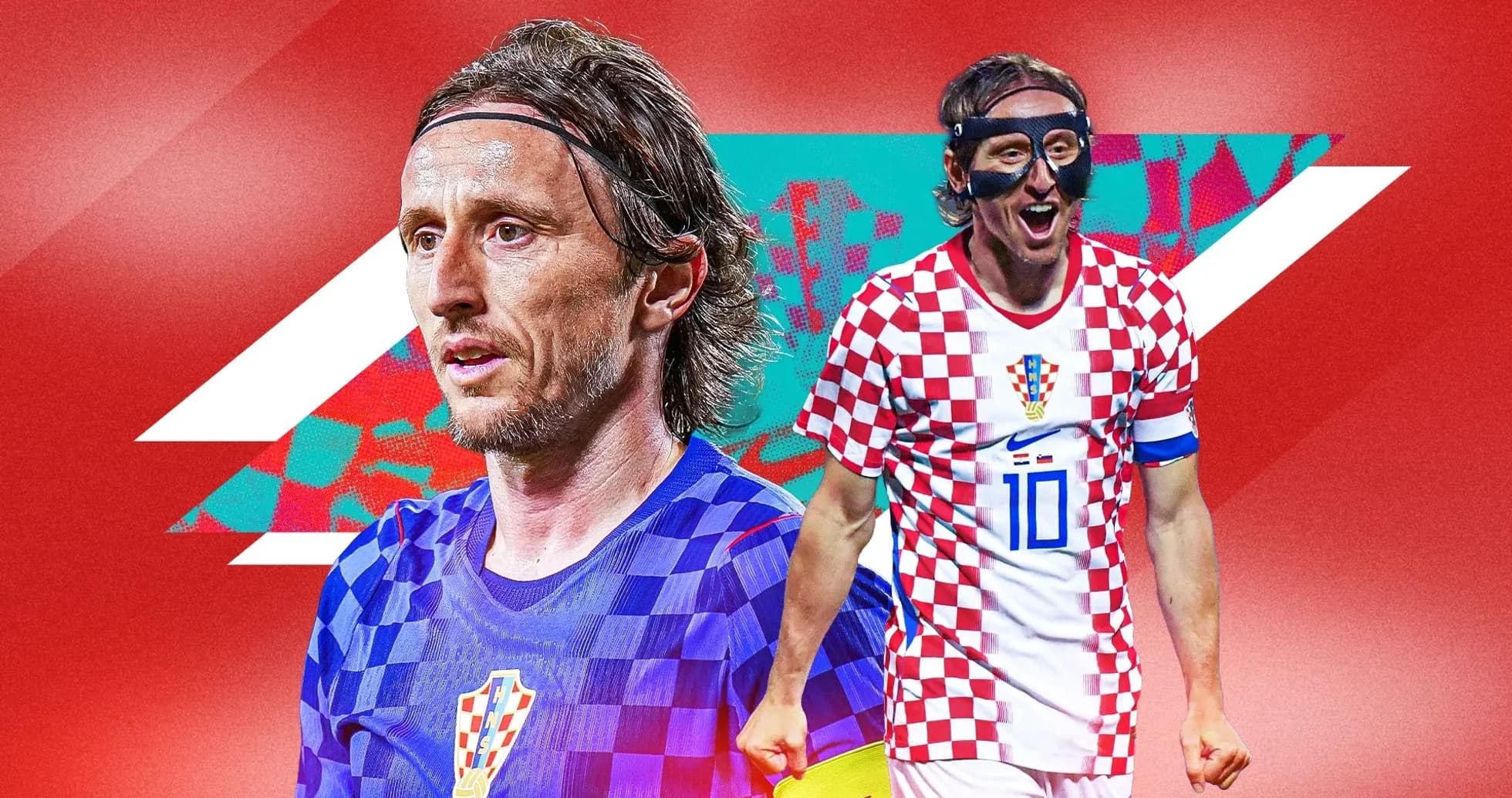
Luka Modric: Defying Age and Expectations at 40
Luka Modric walked out of Leipzig last summer looking like a man who had just watched the curtain fall on his international career. Croatia had one foot in the Euro 2024 last 16, he had scored what felt like the decisive goal, and then, in the 98th minute, Mattia Zaccagni ripped it all away.
A missed penalty, a rebound buried, a Player of the Match award clutched in his hands – and a haunted stare into the middle distance. Croatia were out. Italy, poor for most of the group, were through. This was not how a legend was supposed to bow out.
The room felt it. The world felt it.
In the post-match press conference, Italian journalist Francesco Repice did what many wanted to do. He thanked Modric for “everything you have shown, not just tonight but in your career” and begged him to “never retire”. It was less a question, more a plea on behalf of anyone who still believes football belongs to players like him.
Modric, then 38, offered the only answer a football romantic never wants to hear.
“I'd like to keep playing forever,” he said, “but there probably will come a time where I’ll have to hang up my boots. I'll keep playing on for now, but I'm not sure for how much longer.”
That was supposed to be the beginning of the end.
It wasn’t.
Milan’s gamble – and Modric’s answer
Fast forward. New shirt, same conductor.
When Modric left Real Madrid after 13 years and a mountain of trophies, his move to AC Milan carried the faint whiff of nostalgia. Boyhood club, Serie A, the lure of the Rossoneri he had adored because of Zvonimir Boban. It would have been easy to file it under “last dance” and move on.
Modric refused that script. He insisted this wasn’t a farewell tour. He wanted to help drag Milan back towards the top, not just pose for photos in red and black.
Plenty doubted him. He was 39 turning 40, leaving the comfort of Madrid for a club trying to rebuild its identity. Milan had already signed Samuele Ricci, a 24-year-old Italian midfielder seen as part of the future. On paper, they didn’t need another ageing great.
On grass, they needed him every week.
Ricci saw it up close. Any idea of a generational battle in midfield vanished as Massimiliano Allegri repeatedly wrote Modric’s name on the teamsheet first. The younger man didn’t complain. He marvelled. “He's the strongest player I've ever played with,” Ricci said, stunned by the veteran’s humility and relentless intensity.
Italy’s press box reacted the same way. Alberto Polverosi summed up the disbelief with a line that ricocheted around the country: “If he really is 40, let’s clone him!”
The numbers on his passport said one thing. His performances screamed something else entirely.
A force of nature at 40
How does a 40-year-old dominate midfields in one of Europe’s toughest leagues? Milan icon Kaka, who shared a dressing room with Modric at Real Madrid, didn’t dress it up as a miracle. For him, it was simple: this was a “force of nature”.
“I know what his mentality is like,” Kaka told Gazzetta dello Sport. “It’s human to lose a bit of motivation when you’ve already had it all – but Lukita is crazy. He still wants to pass on his knowledge, he calls his team-mates, he’s always ready to fight. He has energy and personality.
“His contribution to Milan is important in games and in training, and I believe that his being there is good for all of Italian football. It's great to see what he’s doing in terms of his enthusiasm, leadership and, of course, his technique.”
Milan felt it every day. Allegri, often cautious with praise, fell hard for Modric’s standards and presence. The relationship grew so strong that whispers began to circulate: could Modric slide straight into an assistant coach role when he finally stopped playing?
The idea made sense. Until the downside of depending on a 40-year-old hit them in the face.
When the engine stopped
Milan didn’t just use Modric. They leaned on him. Then they clung to him.
And when he went down, they collapsed.
A fractured cheekbone in a 0-0 draw with Juventus on April 26 ruled him out of the starting XI for the final four games of the season. Milan’s form fell off a cliff. Three defeats in those last four matches dragged them from third to fifth, out of the Champions League places and straight into a storm.
The cost was brutal. No Champions League football. No safety net for Allegri, who paid with his job after failing to secure a top-four finish. A season that had promised a revival under the guidance of one of the game’s great midfielders ended with regret and recrimination.
Modric, as ever, stood apart from the noise. He had delivered. Milan, without him, had not.
What comes next?
Now comes the part no one wants to confront: the future.
His contract situation and the club’s direction suddenly look far less certain. With Allegri gone and Milan reassessing everything, Modric’s next step is up in the air. He has spoken warmly about the club, about the city, about feeling at home. Yet the pull of Madrid has not disappeared.
Real Madrid, by all accounts, would welcome him back to the Bernabeu in some capacity if he decides this summer is finally the time to stop. A role awaits if he wants it. A seat at the table for one of their greatest modern midfielders is guaranteed.
But Modric has not given his final answer. Not yet.
What seems almost universally accepted, though, is that this will be his last major tournament with Croatia. The idea of him turning up at another World Cup or Euros feels like fantasy, even by his standards.
He will do it the hard way, of course. The fractured cheekbone that derailed Milan’s run means he will have to play at the World Cup in a protective mask, in conditions that will test even younger legs and fresher lungs. It is awkward, uncomfortable, unforgiving.
So is writing him off.
Modric has built an entire career on ignoring outside noise. “I never really cared what anyone else said,” he reminded everyone recently. “It only further motivated me.”
He has outlasted doubts about his size, his age, his pace, his league, his role. He has gone from the skinny kid in Zagreb to the heartbeat of Madrid to the soul of a golden Croatian generation. Now he stands on the brink, masked and 40, still dictating, still defying.
Who dares call time on that?
Certainly not in England. They know better than most what happens when you underestimate Luka Modric. And until he decides otherwise, the game still belongs, in part, to him.