
Marcelo Bielsa's Focus on Work Over Image at World Cup
Marcelo Bielsa has never cared much for the performance around football. He cares about the work. The rest, in his eyes, is noise.
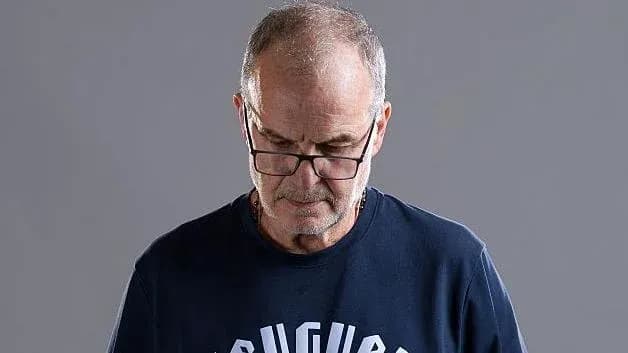
So when Fifa’s official World Cup portraits dropped and Uruguay’s 70-year-old coach appeared staring downwards, stone-faced, rather than posing for the camera like almost everyone else, it felt entirely on brand. No smile. No eye contact. No theatre. Just Bielsa, looking like a man dragged away from a tactics screen.
While players and managers from around the tournament leaned into the moment – pointing, grinning, folding arms with rehearsed swagger – Bielsa looked as if he’d rather be back at the training ground, watching a third replay of a Saudi Arabia counter-attack.
The image quickly did the rounds. Was it a silent protest? A message? A statement about modern football’s obsession with image?
Bielsa wanted none of it.
After Uruguay’s opening 1-1 draw with Saudi Arabia in Miami on Monday, the questions inevitably came. The portrait, the pose, the meaning behind it all. He bristled.
“I don't have to give any explanation, the picture was taken the way it was taken,” he said. “I'm not a model.”
That was that, as far as he was concerned. Fifa’s photography operation, now a staple of every major tournament, had simply collided with a man who has never been interested in playing along.
Bielsa is managing at his third World Cup with a third nation, after leading Argentina and Chile on this stage. His reputation as one of the game’s most influential coaches is long established, built on an obsessive attention to detail, a relentless work ethic and a refusal to compromise on how he sees football – or life.
The nickname ‘El Loco’ has followed him for decades. The ice box he sits on during games. The legendary video vault. The stories from Leeds of him ordering players to pick litter around the training ground to understand the effort of supporters. All of it feeds into the myth.
So a downward stare in a Fifa photoshoot was never going to be a simple headshot. It became a talking point, whether he liked it or not.
When another question came in the press conference, Bielsa circled back to the subject on his own terms.
“There is a limit in terms of what we need to explain,” he said. “If I'm wearing glasses, why am I wearing glasses?
“You look somebody in the eye, why do you do that?
“There is nothing wrong about wearing glasses or looking into somebody's eyes or looking down.”
To him, the line of interrogation seemed absurd. Why should a coach justify the angle of his gaze for a promotional image when there is a World Cup group to navigate?
For Uruguay, the focus now moves quickly to the pitch. A tricky 1-1 draw with Saudi Arabia has left work to do, and next up is Cape Verde on Sunday at 23:00 BST – the surprise package of the tournament and exactly the kind of opponent Bielsa will have been studying frame by frame.
The cameras will be there again. So will the ice box, the notes, the fixed stare. The portrait may have caused a stir, but Bielsa’s answer remains the same as ever: judge him by what happens on the grass.



