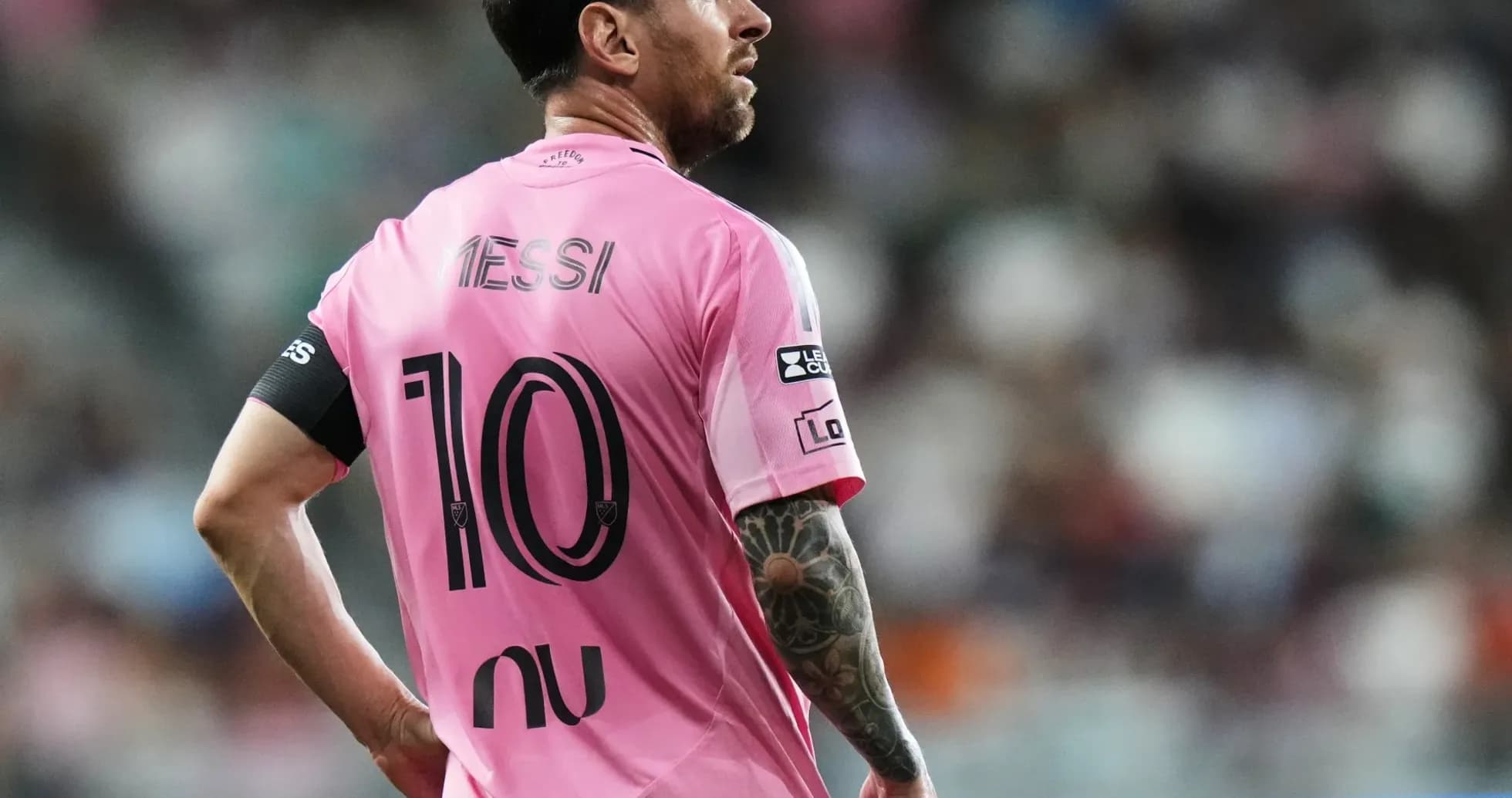
Lionel Messi's Emotional Return to the Pitch After Father's Death
Lionel Messi walked back onto a football pitch on Wednesday night carrying something far heavier than Inter Miami’s season.
Three days after burying his father and long-time agent, Jorge, in Argentina, the 37-year-old flew overnight to Florida, pulled on the captain’s armband and tried to drag his team through a must-win Leagues Cup tie. He left with a defeat, a tournament exit and the sound of his own words about retirement echoing around the stadium.
A return wrapped in grief
The roar when Messi emerged for the second half against León said everything. Miami trailed, their Leagues Cup hopes already wobbling, but the crowd rose as one when he stepped off the bench. It was an ovation steeped in sympathy as much as admiration.
Only hours earlier, the world had read his farewell to Jorge, who died last week at 68.
“I don’t know what I’ll do without you, I don’t know how to go on,” Messi had written in an emotional social media post on Wednesday morning. Then came the line that froze the football world: “I just played football, and now I have serious doubts about continuing to do so for much longer.”
By nightfall, he was back doing what he has always done, even as those doubts lingered.
Miami’s lead, León’s response
For a brief spell, it looked like Miami might give their captain a different kind of release.
They struck first, edging 1-0 ahead and lifting the mood inside the ground. The game opened up, space appeared, and the home side sensed an escape route from a group they had complicated with a loss to Monterrey on Saturday, when Messi stayed in Argentina.
Then the tie turned.
Colombian forward Daniel Arcila seized control, striking twice as León wrestled the game – and Miami’s fate – away from the MLS side. His brace powered a 3-2 comeback win that booked León’s place as the first quarterfinalist in this year’s expanded tournament between MLS and Liga MX clubs.
Miami, champions in 2023 and finalists again in 2025, were out in the group stage for the first time since the competition’s revamp.
“We just wanted to give 150 percent for him”
Inside the Miami dressing room, Messi’s decision to play in such circumstances landed hard.
Yannick Bright, one of Miami’s scorers on the night, admitted he was stunned to see his captain back so quickly.
“I wasn’t expecting it,” Bright said. “It shows how much he cares. When I saw he was here, all I was thinking about was to give my 150 percent for him.
“It’s a tough situation. We try to stay close to him and support him as much as we can, but it’s a lot.”
The words matched the body language on the pitch. Miami chased, pressed and threw themselves into challenges, driven by something beyond tactics or tournament stakes. The execution wasn’t enough; the intent was obvious.
Brazilian midfielder Casemiro, who joined Miami after the World Cup and has seen elite dressing rooms up close, framed Messi’s choice in simple terms.
For him, the captain’s willingness to play in the middle of raw grief was “an example for all of us” of professional commitment.
Respect from the other bench
The admiration didn’t stop with his own team.
León coach Javier Gandolfi, on the opposite sideline and on the right side of the scoreline, still paused to underline what Messi’s presence meant.
“Today he demonstrated once more what he’s made of,” Gandolfi said. “He is a human being that is different to the rest.”
Gandolfi’s team had just eliminated the holders, yet even in victory the conversation circled back to the man who had just lost his father and still chose to step into the spotlight.
A different kind of exit for Miami
For Inter Miami, this early exit lands with extra weight because of what came before.
They had turned the Leagues Cup into their stage in 2023, lifting the trophy shortly after Messi’s arrival alongside Sergio Busquets and Jordi Alba, a trio that transformed the club’s profile overnight. In 2025, they pushed all the way to the final again, only to be dismantled 3-0 by the Seattle Sounders in a bad-tempered showpiece that ended in a post-whistle brawl and a suspension for Luis Suárez, ruling him out of this year’s edition.
This time, there was no deep run, no late drama, no medals. Just a group-stage exit and the image of their captain, still in mourning, walking off under the floodlights.
The football questions will come quickly now. How does Miami reset after a tournament they had made their own? What does Messi’s hint at retirement really mean in the cold light of a new day?
On Wednesday night, though, one thing was clear: in a game that sent Inter Miami home, the result was only half the story. The rest was written on Messi’s face.