Lionel Messi's Emotional Return to the Pitch After Father's Death
Lionel Messi walked back onto a football pitch on Wednesday night carrying more than just the weight of a must-win game.
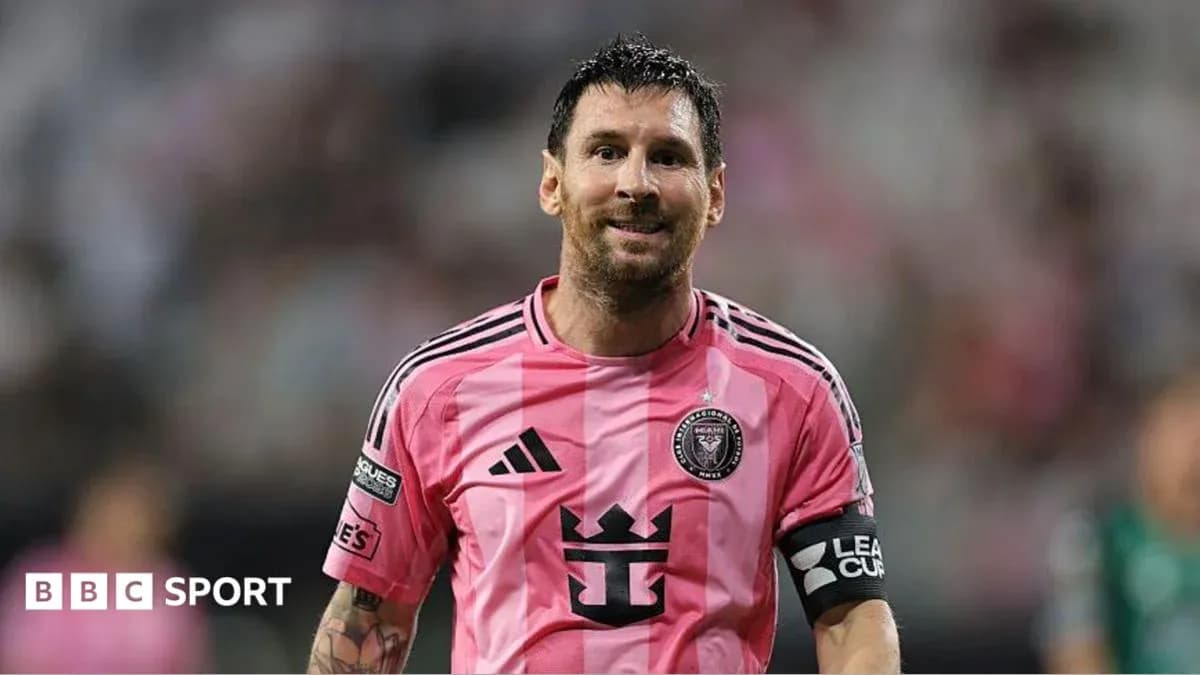
Four days after burying his father in Rosario and days after publicly admitting he is unsure how much longer he will keep playing, the 39-year-old came off the bench for Inter Miami in a raw, emotional return that cut through the noise of a chaotic 3-2 defeat to León in the Leagues Cup.
Grief, doubt, and a flight back to Miami
Jorge Messi, 68, died last week in Rosario after a long illness. He was not just Lionel’s father. He was his first and only agent from the age of 14, the man who walked beside him through Barcelona, Paris, Miami, and that night in Lusail when Argentina finally lifted the World Cup in 2022.
In a deeply personal social media post, Messi admitted the loss had shaken the foundations of his career. He wrote that he was thinking about his future in football and confessed he was "really not sure if I'll carry on doing it for much longer". He also revealed that, even as his health declined, Jorge had urged him “to play in one last World Cup”.
On Sunday, Messi attended a private funeral in Argentina. Then he boarded a flight back to the United States, back to a team that suddenly needed both its captain and its compass.
A subdued entrance, a defiant roar
He had missed Miami’s 2-1 defeat to Monterrey in the Leagues Cup at the weekend. Without him, they stumbled, and the group-stage finale against Mexican side León turned into a must-win scenario.
So he made himself available to coach Guillermo Hoyos.
When Messi emerged at half-time on Wednesday, the stadium noise changed. Miami were chasing the game, chasing qualification, and chasing a sense of normality. The cheers that greeted him were huge, but there was a different edge to them – respect, sympathy, gratitude that he had chosen to be there at all.
The result did not follow the script. Miami lost 3-2, knocked out in the opening phase of the Leagues Cup for the first time since the competition expanded in 2023. That was the year Messi arrived, transformed the club’s fortunes and carried them to the trophy. This time, the story ended early.
A captain in pain, a dressing room rallying
Inside the squad, Messi’s presence meant more than any tactical tweak.
Midfielder Yannick Bright, who scored Miami’s second goal, spoke for the dressing room when he described the impact of seeing the captain back so soon.
“I wasn't expecting it,” Bright admitted. “It shows how much he cares. When I saw he was here, all I was thinking about was to give my 150% for him.
“It's a tough situation. We try to stay close to him and support him as much as we can, but it's a lot.”
Those words captured the mood: a team trying to keep their season alive while protecting a grieving leader who might be edging towards the final chapters of his career.
A giant, but still human
Messi’s influence reached beyond his own bench. León coach Javier Gandolfi summed up what everyone watching already knew.
Messi, he said, “is human being that is different to the rest”. Then he added: “Today he demonstrated once more what he's made of.”
Different, but still human. A superstar who can change a game in an instant, yet on this night defined by something more fragile: the decision to show up at all.
The question that now hangs over everything
Argentina reached another major final this summer, only to fall 1-0 to Spain in extra time. Even in those moments, as his father’s health worsened, Jorge was still pushing his son towards one last World Cup.
That promise now hangs in the air.
Messi has not made a final call on his future. He has only admitted doubt, something he has rarely allowed into public view. Inter Miami must navigate the rest of this season knowing their talisman is hurting, grieving, and openly contemplating the end.
On Wednesday night, he stepped back onto the pitch and gave what he could.
How many more times will he choose to do that?