LAFC II Triumph Over Vancouver Whitecaps II in 2–1 Match
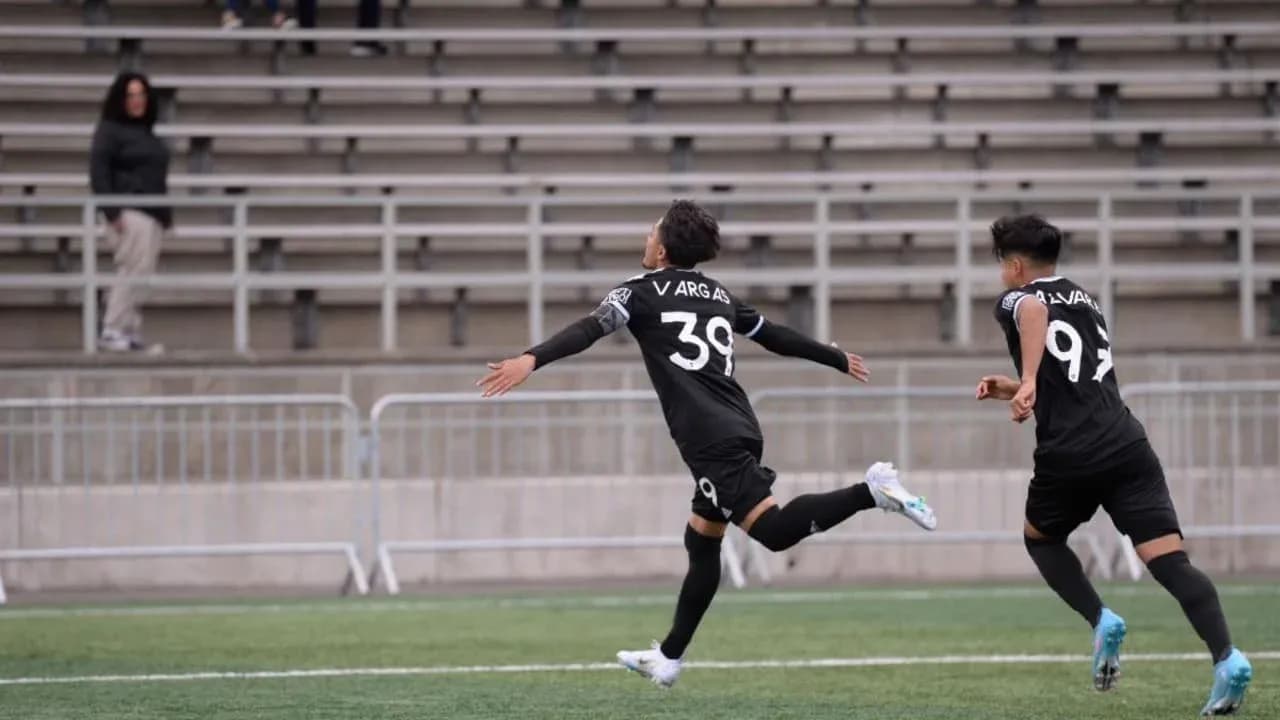
Under the lights at Titan Stadium, Los Angeles FC II edged Vancouver Whitecaps II 2–1, a result that felt as much about identity as it did about points. Following this result, LAFC II’s season snapshot crystallizes: a volatile, attacking side whose flaws are obvious but whose ceiling, especially at home, is rising. Vancouver, meanwhile, remain a team split in two — strong at home, fragile on their travels — and this match underlined why.
I. The Big Picture – contrasting seasonal DNA
Across the campaign, LAFC II have been a high-event team. Overall they have played 9 league matches, winning 4 and losing 5, with no draws. In total this campaign they have scored 16 goals and conceded 21, for a goal difference of -5, a touch worse than the -4 recorded in the standings snapshot that slightly undercounts their goals for and against. The pattern is clear: they lean into chaos.
At home, though, the chaos is controlled. Heading into this game they had played 3 home fixtures, winning 2 and losing 1. At home they had scored 4 goals and conceded 3, with a home goals-for average of 1.3 and goals-against average of 1.0. Titan Stadium is where their attacking ambition is just about balanced by defensive resilience.
Vancouver’s story is more extreme. Overall they had also played 9 matches, winning 3 and losing 6, with 15 goals scored and 19 conceded, giving a total goal difference of -4. But the split between home and away is stark. At home they had 3 wins and 1 loss from 4, with 8 goals scored and 6 conceded, averaging 2.0 goals for and 1.5 against. On their travels, however, they had lost all 5 away games, scoring 7 and conceding 13, an away average of 1.4 goals for and 2.6 against. Vancouver are a different team once they leave their own pitch, and the 2–1 defeat here extended that narrative.
II. Tactical Voids and Disciplinary Edges
The squads themselves told a subtle story. LAFC II’s lineup was built around a young, energetic core: T. Hasal in goal behind a back line including T. Babineau, L. Goodman and G. Whitchurch, with S. Kaplan and S. Nava offering legs and bite in midfield. Ahead of them, the creative thrust and vertical running of D. Guerra, M. Evans, J. Machuca and C. Kosakoff supported the spearhead T. Mihalic.
Vancouver’s XI, guided by coach Rich Fagan, leaned on balance and ball circulation. A. Zendejas anchored them from the back, with defenders like T. Wright and P. Amponsah stepping in, while Y. Tsuji and M. Garnette provided connective tissue in midfield. The front band of C. Bruletti, D. Ittycheria, L. MacKenzie, Y. Zuluaga and R. Sewell was designed to interchange and press rather than rely on a single talisman.
Neither side had recorded official absences in the data, but their disciplinary histories shaped the tone. LAFC II have lived on the edge all season. In total this campaign they have yet to keep a clean sheet, and their card profile is aggressive: 28.57% of their yellow cards arrive between 0–15 minutes, and 21.43% between 31–45, with another 14.29% in the 76–90 window. They also have a single red card, concentrated in the 46–60 minute range (100.00% of their reds), underlining how combustible they can be just after half-time.
Vancouver’s yellow card spread is more evenly distributed but spikes late. In total this campaign 22.22% of their yellows come between 76–90 minutes, and another 22.22% between 91–105. When games stretch and legs tire, they foul more, a trait that in a tight 2–1 contest at Titan Stadium would have tilted momentum toward LAFC II’s direct runners.
III. Key Matchups – Hunter vs Shield, Engine Room battles
Hunter vs Shield
LAFC II’s “hunter” is not a single prolific scorer but a collective front line that thrives in open games. In total this campaign they average 1.8 goals per match, and away from home that rises to 2.0, underlining how willing they are to commit numbers forward. Against a Vancouver back line that, on their travels, concedes 2.6 goals per game, the matchup was always tilted toward the hosts’ attack.
Players like T. Mihalic and M. Evans, supported by the wide movement of J. Machuca and C. Kosakoff, were primed to test a Vancouver defense that has yet to keep a clean sheet anywhere this season and has already suffered away defeats as heavy as 4–2. T. Wright, who appears in the league’s top lists as a defender, carried responsibility as one of the “shields” in front of A. Zendejas, but the structural weakness — 13 away goals conceded in 5 matches — was too much to paper over.
Engine Room – control vs disruption
In midfield, the battle was about who could impose tempo. For LAFC II, S. Nava and S. Kaplan form a disruptive axis: they break up play, absorb yellow cards if needed, and allow the front four to stay high. Their team’s yellow-card timing — heavy in the opening quarter-hour — reflects a strategy of early statement tackles and front-foot pressure.
Vancouver’s engine room, with players like Y. Tsuji and M. Garnette, is more about retention and progression. They come from a side that, in total this campaign, scores 1.7 goals per match and has shown they can build attacks methodically, especially at home. But away, their midfield is often overrun; conceding 2.6 goals per away game suggests they struggle to protect their back line once pressed.
In this match, LAFC II’s early aggression paid off with a 2–1 half-time lead that held to full time, reflecting a team comfortable living with risk if it yields territorial and scoring advantages.
IV. Statistical Prognosis – what this result signals
Following this result, the statistical trajectories of both squads sharpen. LAFC II remain a high-variance outfit: in total this campaign they concede 2.3 goals per match, fail to keep clean sheets, and yet still find ways to win through attacking volume. Their penalty profile — 0 taken, 0 scored, 0 missed — means their xG is likely driven by open play rather than spot-kick padding, adding weight to the idea that their chance creation is sustainable if they can tighten the back line.
Vancouver, conversely, are efficient from the spot — 3 penalties taken, 3 scored, a 100.00% conversion rate — which likely inflates their overall xG and masks some open-play issues, particularly away. With no clean sheets and a heavy away goals-against column, their defensive solidity on their travels is a clear red flag.
If this were a tactical preview of their next encounter, the prognosis would be clear: LAFC II’s aggressive, transition-heavy approach is statistically well-suited to exploit Vancouver’s away frailty, especially in the final quarter of games when Vancouver’s yellow-card count spikes and structure frays. Unless Vancouver can re-engineer their away block — giving T. Wright and his fellow defenders more protection and reducing the midfield turnovers that feed LAFC II’s front line — the numbers suggest more Titan Stadium nights tilted in black and gold.