Juventus vs Galatasaray: A Tactical Clash
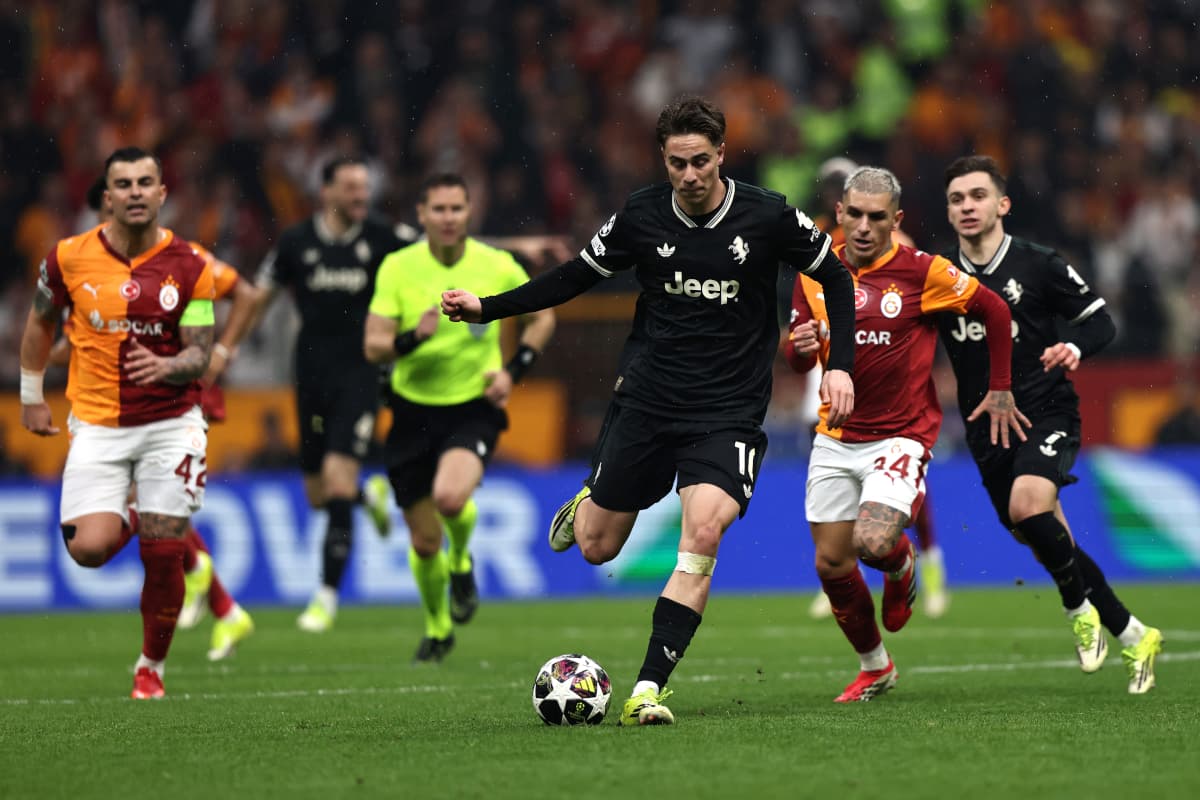
Across 120 minutes this was a clash between territorial control and ball control. Galatasaray edged possession with 53% and attempted more passes (576 total at 83% accuracy versus Juventus’ 498 total at 79%), reflecting Okan Buruk’s intent to build through a 4-2-3-1 and circulate in midfield. Yet Juventus, in a 4-3-3, controlled space and threat. Despite going down to ten men on 49 minutes, they consistently attacked the most dangerous zones, taking 23 of their 28 shots from inside the box. The Italians’ plan was vertical and direct rather than patient, forcing a chaotic, transition-heavy game that suited them until fatigue and game state flipped momentum in extra time.
Offensive Efficiency
Juventus’ attacking strategy was volume and territory. Their 28 total shots to Galatasaray’s 16, plus a 9–4 edge in corners, show a side relentlessly forcing the ball into the area. An xG of 5.06 versus Galatasaray’s 2.01 underlines how often they generated high-quality looks rather than speculative efforts; only 5 of their attempts came from outside the box. However, converting only three times from such a high xG points to wastefulness and a lack of clinical edge, especially given they registered 9 shots on target.
The match was physically intense and tactically disruptive. Juventus committed 17 fouls to Galatasaray’s 14, consistent with a side using aggression to break rhythm and protect space, especially after the red card. Three yellow cards and one red for Juventus versus four yellows for Galatasaray confirm a high-tension contest. The VAR review at 48 minutes that upgraded Lloyd Kelly’s booking to a red card in the 49th minute reshaped Juventus’ game plan into a compact, foul-heavy resistance.
Defensive Discipline & Intensity
The match was physically intense and tactically disruptive. Juventus committed 17 fouls to Galatasaray’s 14, consistent with a side using aggression to break rhythm and protect space, especially after the red card. Three yellow cards and one red for Juventus versus four yellows for Galatasaray confirm a high-tension contest. The early upgrade of Lloyd Kelly’s booking to a red reshaped Juventus’ game plan into a compact, foul-heavy resistance.
Goalkeeping did not dramatically skew the outcome: both keepers made 6 saves, and “goals_prevented” is listed as 0 for each, suggesting finishing quality and defensive structures, rather than heroic shot-stopping, determined the scoreline. Juventus’ 6 blocked shots against Galatasaray’s 3 also highlight the home side’s commitment to last-ditch defending once reduced to ten, whereas Galatasaray’s block numbers suggest less time under sustained siege.
Conclusion
Ultimately, Juventus’ territorial dominance (28 shots, 9 corners, 5.06 xG) and aggressive, space-focused approach outperformed Galatasaray’s higher possession and tidier passing. The Italians’ ability to generate repeated high-quality chances, even with ten men, set the platform; Galatasaray’s late surge in extra time capitalized on fatigue and numbers rather than sustained structural superiority.