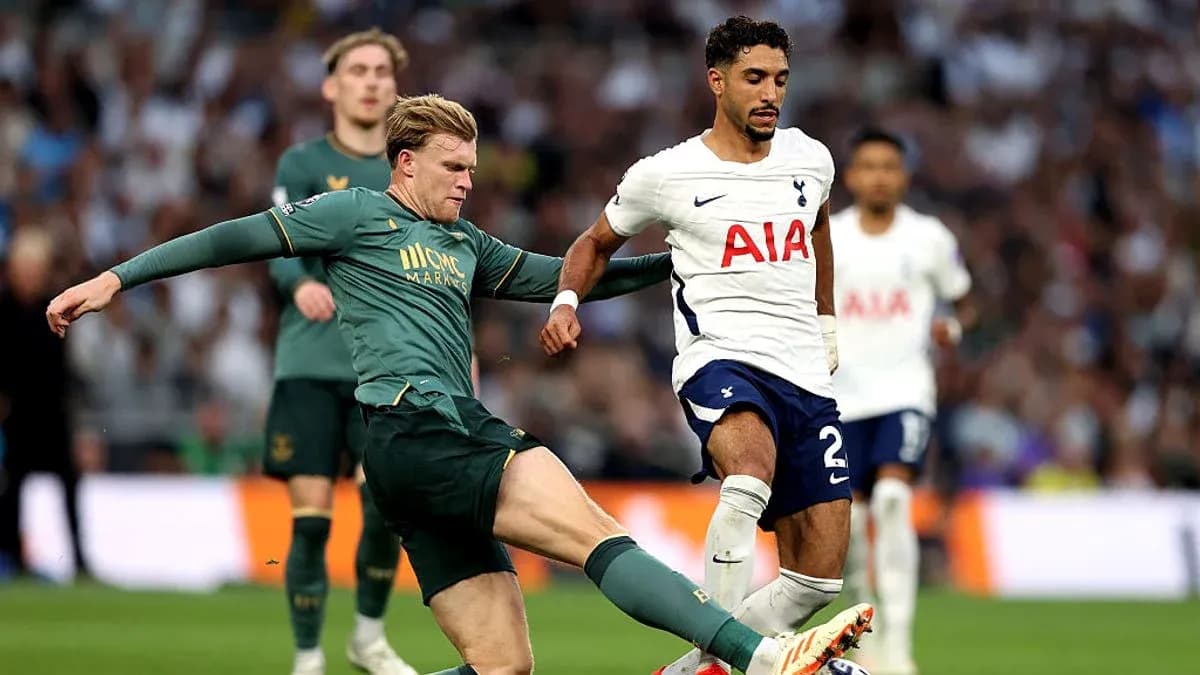
Jarrad Branthwaite's Dominant Performance in Everton's Draw Against Tottenham
Jarrad Branthwaite saw the hit coming and went up anyway.
In stoppage time, with home fans howling for one last chance, he climbed above a packed penalty area, met the cross, and headed clear. The collision arrived a split-second later, sending him thudding to the turf. He dragged himself back up, as he had all afternoon. It was the perfect final image of a game he had quietly controlled.
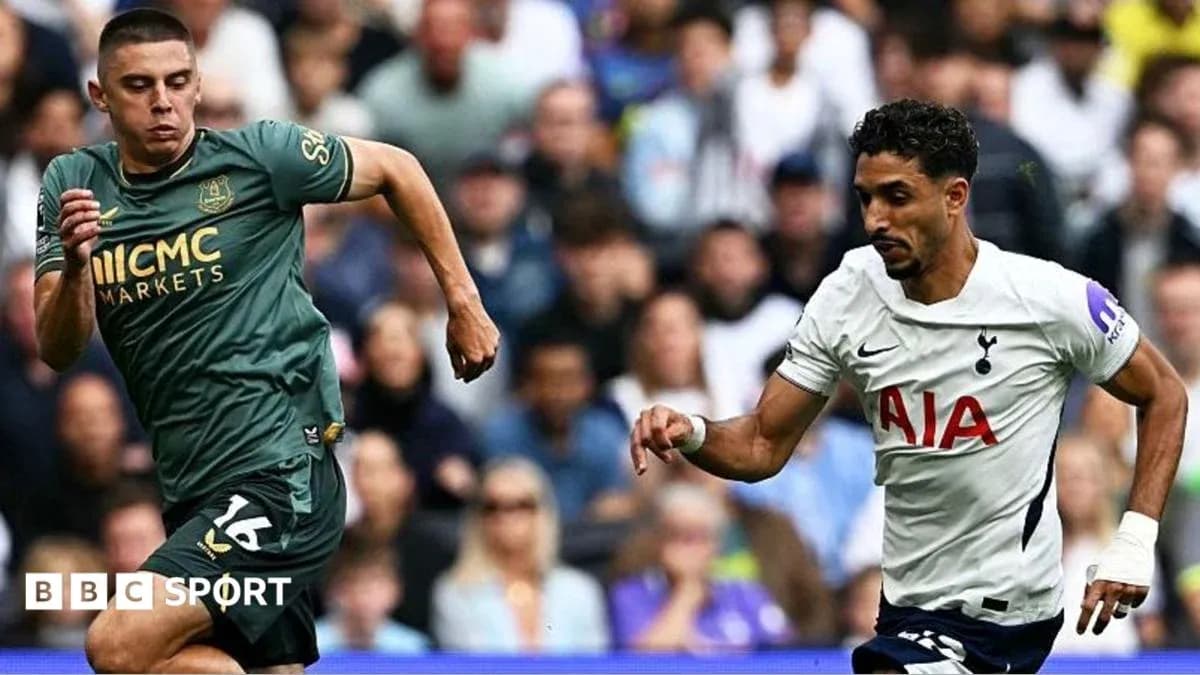
From first whistle to last, Everton’s centre-back played like a man determined to drag his team out of north London with something. He blocked, he intercepted, he bullied. When Tottenham Hotspur flew out of the blocks, swarming the flanks and swamping Everton’s midfield, it was Branthwaite who kept the dam from bursting.
Matheus Fernandes, Omar Marmoush, Dominic Solanke and Savio combined to cause chaos in the opening stages. They found pockets of space, pulled full-backs around, and forced Everton deeper and deeper. What they did not find was a way past the 24-year-old in the middle of that blue back line.
He has now started all four of Everton’s Premier League fixtures this season and no one influences this side’s ceiling more than he does. The club knows it, too. Every minute he plays feels precious after the campaign he lost to injury. Any talk of an England recall this month is laced with the worry of how much strain his body can take.
But when you see him like this, it is hard to look away. Tottenham hurled more than £400m worth of attacking talent at Everton over the course of the afternoon. None of them found the answer to a defender signed for £1m from Carlisle.
As chance after chance broke down, the mood in the stands shifted. The early hum of expectation turned into agitation, then open anger. By the closing stages, streams of home supporters were already heading for the exits, their faith gone. For all the possession, for all the territory, Jordan Pickford was only truly extended once – a late effort from Lucas Bergvall that came after the goalkeeper had gifted the ball away.
When referee Darren England finally blew, the split-screen reaction told its own story. Spurs were booed off. Everton’s players walked towards their travelling support and were met with songs, scarves in the air, and a roar that belonged to a victory rather than a goalless draw.
Truthfully, David Moyes’ team did not play well enough across 90 minutes to justify that level of celebration. Respect, yes. Adulation, probably not. The first half was a slog. Everton barely laid a glove on the hosts until the final moments of the half, when James Garner’s free-kick forced Antonin Kinsky into a sharp save around the post.
After the break, the pattern changed. Everton emerged with purpose, and belief started to grow. Thierno Barry ghosted in at the back post and was denied by Kinsky in the opening exchanges of the second period. That moment jolted the away side. It also rattled the home crowd.
The anxiety around the stadium seeped onto the pitch. The longer Spurs went without a breakthrough, the more their play frayed. When Kinsky rolled the ball into Kiernan Dewsbury-Hall, the midfielder drove forward but fired straight at the keeper. It felt like a warning.
Soon after, Dewsbury-Hall slid Brennan Johnson through on goal. Johnson burst into the box, the angle opening up, the net begging. He lashed his shot high and wide. Heads dropped. Groans spread.
Everton will leave north London with mixed feelings. They had to survive a storm and their record at this ground is grim enough that a point should never be sniffed at. Yet the second-half chances, the way the game tilted, means they will also wonder whether they let something bigger slip away.
Given the chaos that has swirled around the club in the opening weeks of this season, they can still walk away with something solid: they remain unbeaten, and on this evidence, deservedly so.
Outside the press room afterwards, one journalist remarked that in the second half Spurs looked further away from scoring than at any point this season. At the centre of that transformation, standing tall in both boxes and refusing to yield, was Branthwaite.