Jamal Musiala's Absence Seizures: What You Need to Know
Jamal Musiala had barely stepped onto the pitch when it happened again.
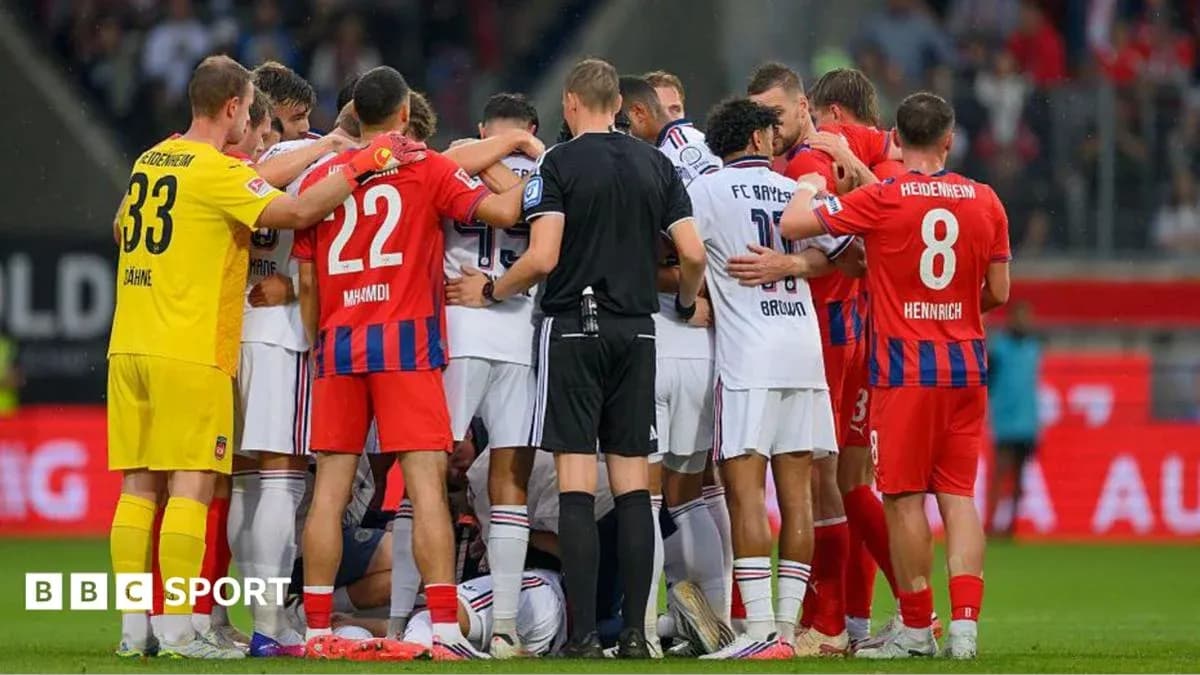
Eight minutes after coming on as a second-half substitute in Bayern Munich’s pre-season friendly against Heidenheim on Tuesday, the 23-year-old went down, collapsing for the second time in four days. The images were chillingly familiar to those from Saturday’s game against RB Leipzig: team-mates rushing over, Harry Kane among the first to comfort him, concern etched across faces that usually only betray frustration or joy.
This time, there was at least an explanation.
Musiala has revealed he is suffering from what he called “easily treatable absence seizures”, the result of a “neurological dysfunction”. The phrase is clinical. The reality, played out twice in less than a week in front of packed stands and television cameras, is anything but.
Bayern knew before the world did
Inside Bayern, this was not a complete shock. The club have confirmed there were signs of Musiala’s condition even before the World Cup. It had been monitored, managed, and crucially, it had never interfered with his ability to play elite football.
Then came Leipzig.
“We have been aware of the problems for some time,” honorary president Uli Hoeness told Sky Sports. “But last weekend against Leipzig was the first time it happened on the pitch and was visible to everyone.
“We thought that if it didn’t happen again so quickly, the medication he is taking would help. But when it happened again four days later, in the same way, I was stunned.”
The repetition changed everything. What had been a private medical issue became a public talking point, and many supporters immediately questioned why Musiala was back on the pitch so soon after fainting on Saturday.
Bayern moved fast to address that.
Hoeness stressed the club had sought and received explicit medical clearance before Musiala played on Tuesday. “We’ve already taken precautions,” he said. “The doctors treating him, the neurologists and specialists, have provided us with written confirmation – because this was absolutely essential for us – that, in their view, there are no concerns regarding Jamal taking part in high-performance sport.
“Without that, we would have been acting negligently. Since we’ve had this written confirmation, we’ve been sleeping a little more soundly.
“But I must say, I’m rarely at a loss for words or without a clear solution. We’ll have to feel our way through this new situation first.”
Kane: “He is going through something not everyone goes through”
Inside the dressing room, the response has been more emotional than procedural.
“Jamal is obviously going through a bit of a difficult moment right now,” Harry Kane told BBC Sport on Wednesday. “I know he posted on social media about the small condition he has and from our point of view it is just about supporting Jamal.
“He is going through something that not everyone goes through, but there are also people who have dealt with it before and he is doing everything possible to be his best version.”
Kane spoke like a captain who has seen enough careers derailed by bad luck to recognise the danger of isolation.
“He is a great player, extremely talented,” he said. “He is a big part of our team. We feel really sorry for him and frustrated for him when things happen like they do in the last couple of games.
“He has the full support from everyone here at Bayern and his friends and family, and we will be there to help him deal with it.
“He came off the back of a tough injury last season, I know how much he works behind the scenes and on the training pitch. From our point of view it is just to be there to support him and not just from my point of view, but the whole team as well.”
Musiala himself tried to take control of the narrative on Tuesday, posting on Instagram that the seizures have become part of his everyday life. That line, stark and matter-of-fact, underlined the scale of what he has been managing in the background.
What are absence seizures?
Strip away the football for a moment and the medical picture becomes clearer.
Absence seizures are a type of generalised seizure, most often seen in children and young adults. There are two forms: typical and atypical.
Dr Meneka Sidhu, a consultant neurologist at the National Hospital for Neurology and Neurosurgery in London, describes typical absence seizures as brief events, usually lasting only seconds. The person may look as if they are daydreaming, staring blankly, seemingly detached from what is happening around them.
In those moments, there is a varying degree of loss of awareness. Balance can go, responsiveness disappears. Then, just as suddenly, the person can snap back.
“It can be very short-lasting, and the person can continue like nothing happened,” Dr Sidhu said. With atypical absences that last longer, she added, people may show automatic movements – fidgeting with their hands, eyelid fluttering, lip smacking. “Some people may fall.”
If these episodes repeat over more than 24 hours, it can point towards epilepsy. That word often carries heavy stigma in sport, but the treatment is straightforward: medication, monitoring, trigger management.
“For anybody affected by epilepsy, it is important to try to identify triggers,” Dr Sidhu said. For athletes, that might include hyperventilation and dehydration – both common in high-intensity sport.
Her verdict on the bigger question is blunt and reassuring: “When effectively treated, there is no reason absence seizures should stop anyone playing sport.”
The evidence backs that up. Rugby player Tommy Freeman, for example, began having absence seizures at 14, was later diagnosed with epilepsy and now manages his condition with tablets while playing for Northampton and England.
Musiala is not stepping into unknown territory. Others have walked this path and stayed at the top.
A brutal 18 months
The timing, though, feels cruel.
Musiala’s diagnosis is the latest in a long line of setbacks that have battered what should have been the smooth rise of one of Europe’s brightest attacking talents.
His 2024-25 campaign was cut short in early April by injury. Just over a week later, he was involved in a serious traffic accident. For many players, that alone would define a year.
He still fought back to feature at the Fifa Club World Cup two months later. Then disaster struck again: a broken leg and dislocated ankle in the quarter-final against Paris St-Germain, after a collision with Gianluigi Donnarumma. The damage ruled him out for 196 days.
When he finally returned, it was with a metal plate in his foot, which he played with from January through to the end of this summer’s World Cup in North America, where he made four appearances for Germany. The plate was only removed in July, limiting his ability to train properly during pre-season and leaving him playing catch-up before a ball had even been kicked in anger.
“Musiala hasn’t been much of a factor in the past 18 months,” German football expert Constantin Eckner said. “He came back for the Club World Cup but suffered a broken leg when he collided with Gianluigi Donnarumma.
“It took him months to recover from that. He just had a metal plate removed from his left foot so he played with that for half a year and had to deal with ankle issues.
“Naturally, his performances left much to be desired. The start to the upcoming season would have been difficult anyway, because he didn’t take part in team training for some time due to the surgery in which the plate was removed. Now, there’s another stumbling block.”
Bayern’s insurance policy – and the contract question
Bayern’s response in the transfer market hints at how seriously they are treating those stumbling blocks.
The club spent £43m this summer to bring in Morocco attacking midfielder Ismael Saibari, a move Eckner believes is partly designed to guard against Musiala’s ongoing fitness problems.
“Musiala is Bayern’s top earner alongside Harry Kane, but his contribution hasn’t been anywhere close to Kane’s,” Eckner said. “He is still young and things can change again.
“He has a release clause in his contract that could be triggered next summer, but the fee would be in the nine digits. It is unrealistic that any club would be willing to pay that for him at the moment.”
That clause once looked like a countdown to a future bidding war. Right now, it feels more like a marker of what Musiala was projected to become before injuries, metal plates and neurological diagnoses cut across the script.
The doctors insist he can still play at the highest level. His team-mates insist they will carry him through the hardest stretch. Bayern have bought cover but not a replacement.
The question now is not whether Jamal Musiala is talented enough. It is whether his body will finally let his talent breathe.