Hellas Verona vs AS Roma: A Season's End Analysis
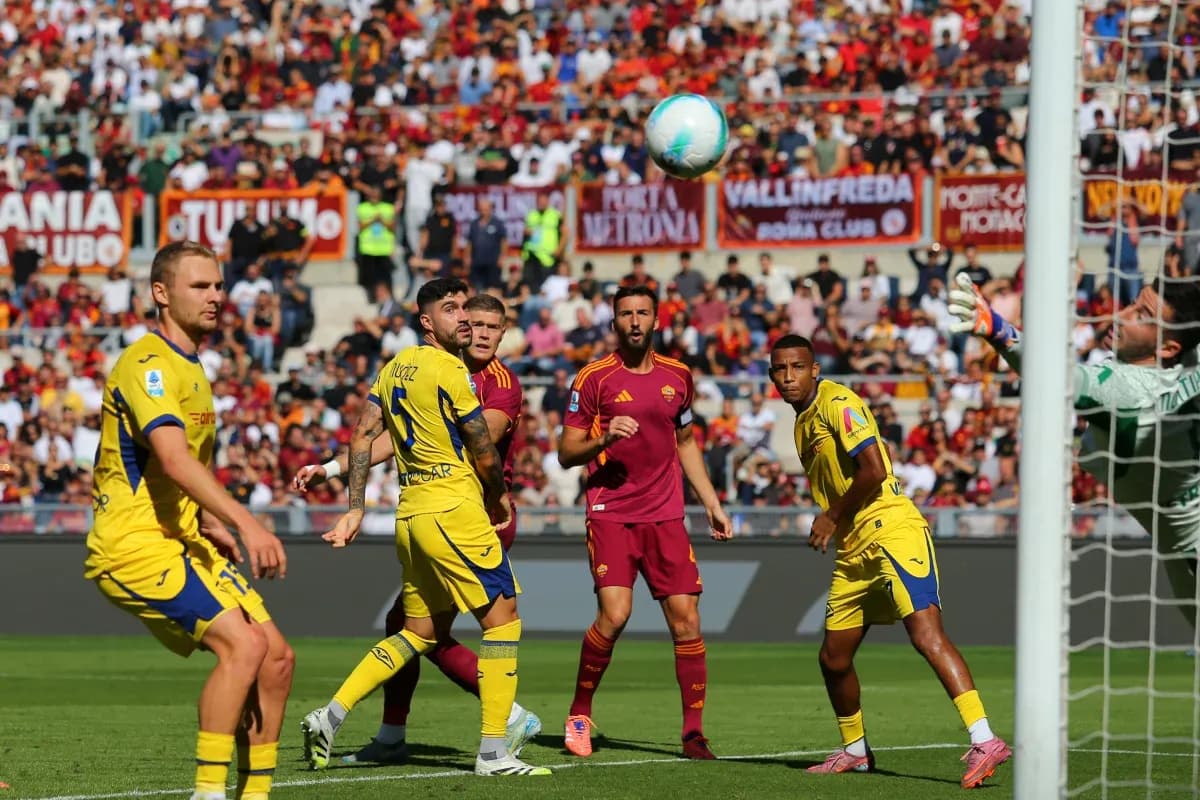
Under the fading spring light at Stadio Marcantonio Bentegodi, Hellas Verona’s season-long struggle met AS Roma’s relentless ascent, and the 0-2 scoreline felt less like a single match and more like a final, ruthless confirmation of where these two clubs now stand.
I. The Big Picture – Diverging Trajectories
Following this result, the table tells a stark story. Verona close their Serie A campaign in 19th place with 21 points, relegated after a year in which they won only 3 of 38 matches and carried a goal difference of -36 (25 scored, 61 conceded). At home they were especially fragile: just 1 win in 19, with 12 goals for and 28 against, an average of 0.6 goals scored and 1.5 conceded at Bentegodi.
Roma, by contrast, finish third with 73 points and a goal difference of 28 (59 for, 31 against), sealing Champions League football. On their travels they have been solid rather than spectacular – 10 away wins from 19, scoring 26 and conceding 21 – but in Verona they played like a side fully aligned with their season’s identity: structured, efficient, and ruthless in key moments.
The formations set the tone. Paolo Sammarco doubled down on Verona’s seasonal template, a 3-5-2 that the team has used in 26 league matches, leaning on compactness and wing labour rather than creative flair. Piero Gasperini Gian, in turn, went with Roma’s signature 3-4-2-1, the shape they have deployed 30 times this campaign, giving his side clear superiority between the lines.
II. Tactical Voids – Absences and Discipline
Verona came into this finale shorn of several structural pillars. Roberto Gagliardini, one of Serie A’s leading card-collectors with 10 yellows, was suspended for yellow cards. His absence ripped out a key ball-winner and organiser in front of the back three – a player who had made 73 tackles, 13 successful blocks and 54 interceptions across the season. Without him, the defensive screen became more porous and less aggressive.
Injuries to D. Mosquera, D. Oyegoke, J. Peci and S. Serdar further thinned the rotation, particularly in defensive and midfield depth. Gift Orban, notable for his red card earlier in the season and 7 goals, was also listed as inactive. Verona’s bench, rich in numbers, lacked established, season-long protagonists.
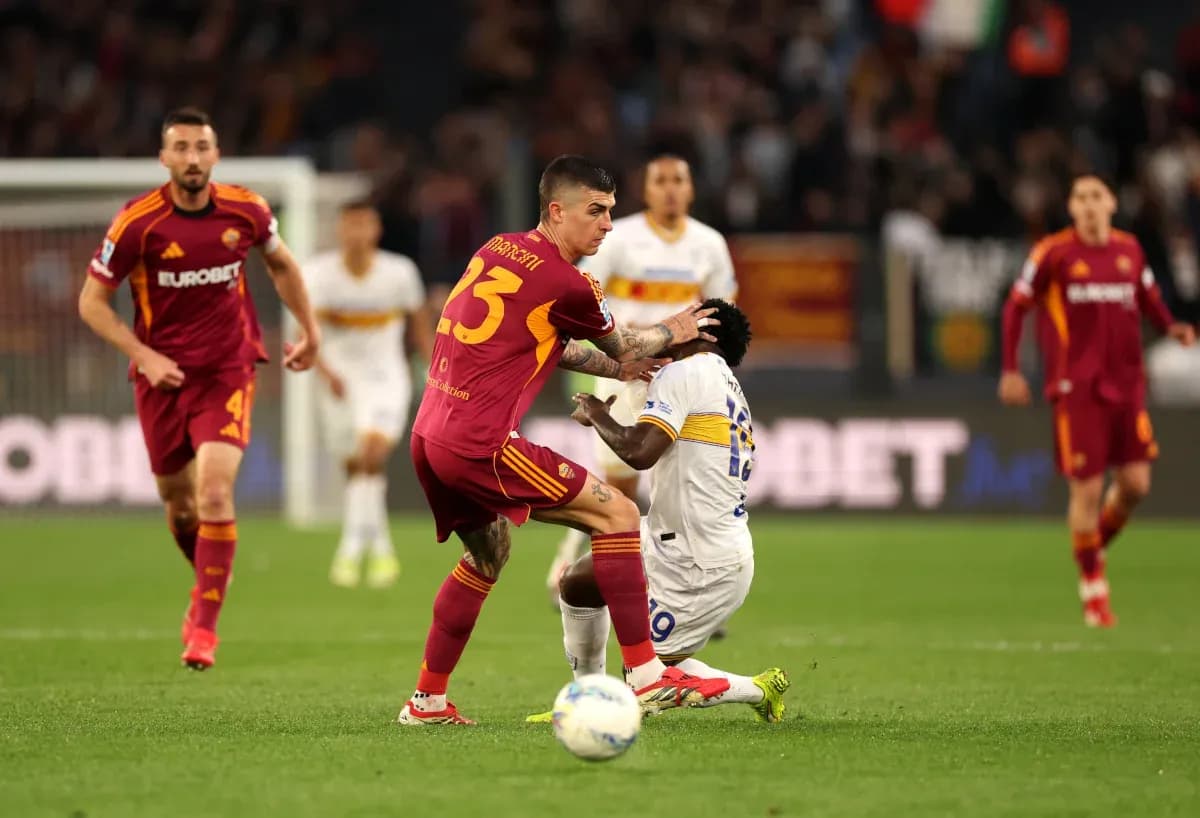
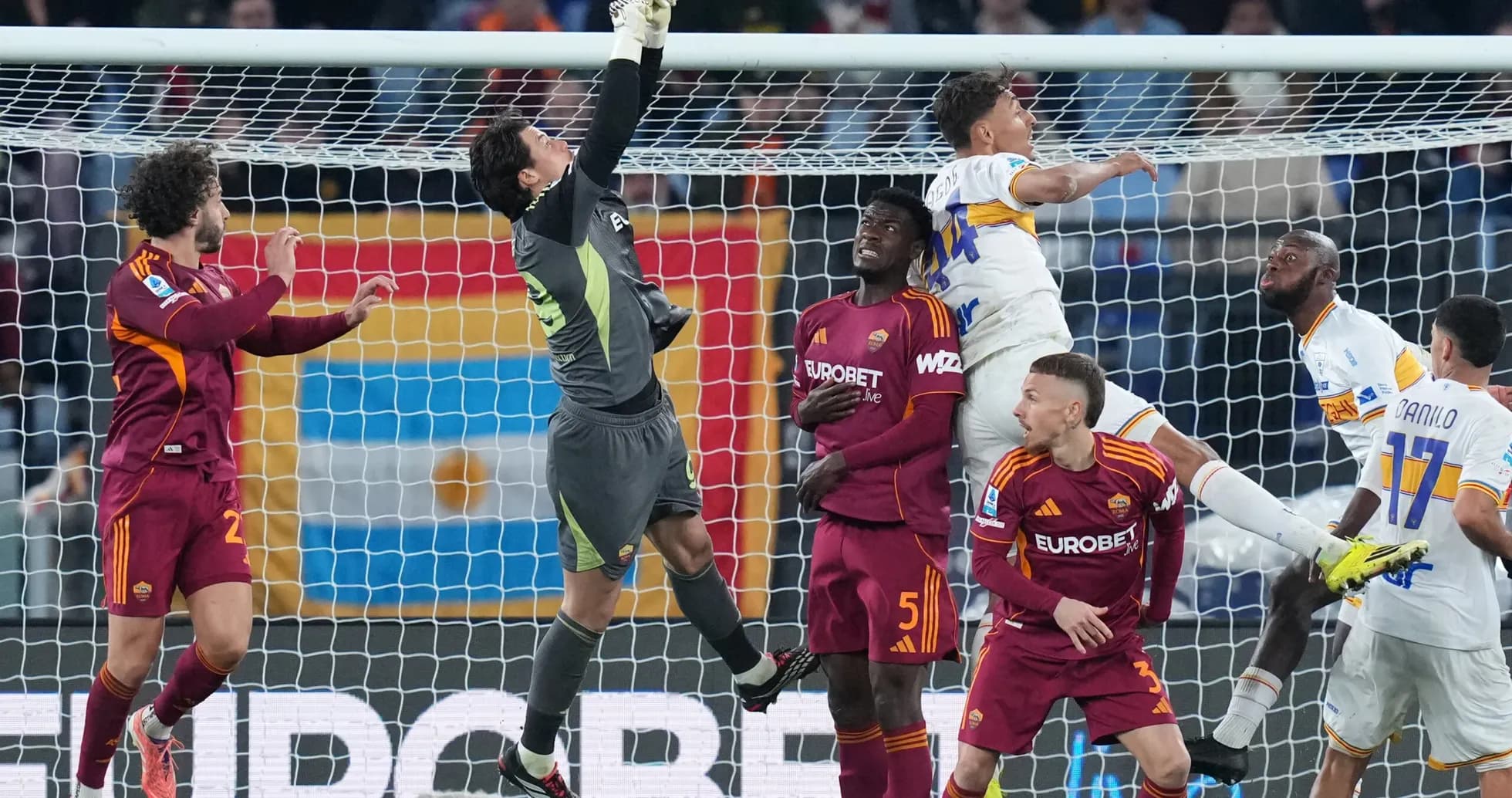
Roma were hardly at full strength either. E. Ferguson, E. Ndicka, L. Pellegrini, K. Tsimikas and B. Zaragoza all missed out, and Wesley was suspended after his red-card campaign. Yet their squad architecture absorbed the losses. The spine remained intact: M. Svilar in goal, G. Mancini and M. Hermoso in the back line, B. Cristante anchoring midfield, and the attacking trio of M. Soule, P. Dybala and D. Malen all starting.
Disciplinary trends framed the emotional temperature. Verona’s season-long yellow-card curve peaks between 46-60 minutes (24.72%) and 31-45 minutes (21.35%), reflecting a side that often resorts to reactive fouling as games open up. Roma’s bookings cluster late: 61-75 and 76-90 minutes both at 23.53%, consistent with a team that defends aggressively when protecting leads. That pattern replayed itself: Verona’s midfielders, without Gagliardini’s calibrated aggression, were often a step late; Roma, when ahead, tightened the screws rather than loosening them.
III. Key Matchups – Hunter vs Shield, Engine Room vs Enforcer
The headline duel was always going to be Donyell Malen against Verona’s defence. Malen arrived as one of Serie A’s top scorers: 14 goals and 2 assists in 18 appearances, with 49 shots and 31 on target. Crucially, his penalty record is not spotless – 3 scored but 1 missed – a reminder that even Roma’s spearhead can be fallible from the spot.
Across from him, Verona’s back three of V. Nelsson, A. Edmundsson and N. Valentini were asked to contain not just Malen’s depth runs, but also the drifting creativity of Dybala and the constant threat of Soule. Without Orban’s outlet in transition and Gagliardini’s presence in front of them, the defensive trio were forced to defend longer phases and deeper zones.
Roma’s “Engine Room vs Enforcer” battle unfolded in midfield. B. Cristante, with his 1,649 passes at 86% accuracy and 52 tackles this season, dictated tempo and broke up play, supported by N. Pisilli and the wing-backs Z. Celik and D. Rensch. On the other side, Jean-Daniel Akpa Akpro tried to be Verona’s disruptor. His 44 tackles, 7 successful blocks and 23 interceptions in the campaign show a player capable of dirty work, but without Gagliardini next to him he was overextended, dragged wide and high to plug too many gaps.
Further ahead, Roma’s creative axis of Dybala and Soule gave them a qualitative edge Verona simply could not match. Dybala, with 6 assists and 55 key passes, and Soule, with 5 assists and 46 key passes, repeatedly found spaces between Verona’s midfield and defence. Their movement forced Verona’s wing-backs, R. Belghali and M. Frese, into constant defensive decisions, blunting Verona’s ability to counter from wide areas.
IV. Statistical Prognosis – Why 0-2 Felt Inevitable
Even without explicit xG values, the season data provides a clear probabilistic frame. Heading into this game, Verona’s overall attacking average was 0.7 goals per match, and at home just 0.6. They had failed to score in 11 of 19 home fixtures and 20 matches overall. Roma, conversely, averaged 1.6 goals per match in total, 1.4 on their travels, while conceding only 0.8 overall and 1.1 away.
Overlay that with structural form: Verona closed the season with a form line of grinding draws and frequent defeats, while Roma arrived on a five-game winning streak. Roma’s 18 clean sheets in total, including 7 away, spoke to a defensive unit that knows how to suffocate weaker attacks, especially once they take the lead.
Tactically, Roma’s 3-4-2-1 compressed the central corridor where Verona’s 3-5-2 needed to build. With Cristante screening, Hermoso and Mancini stepping out aggressively, and Soule and Dybala ready to spring transitions, Verona’s already-limited creative capacity was reduced to hopeful balls into K. Bowie and T. Suslov. The absence of a proven, in-form finisher like Orban only deepened the attacking void.
In that context, a 0-2 away win aligns with the underlying numbers and the tactical reality. Roma’s superior structure, depth and attacking quality translated their season-long xG and defensive solidity into a controlled, almost clinical finale. For Verona, this match was less a collapse than an epilogue: a final chapter written in the same ink that had marked their entire campaign.