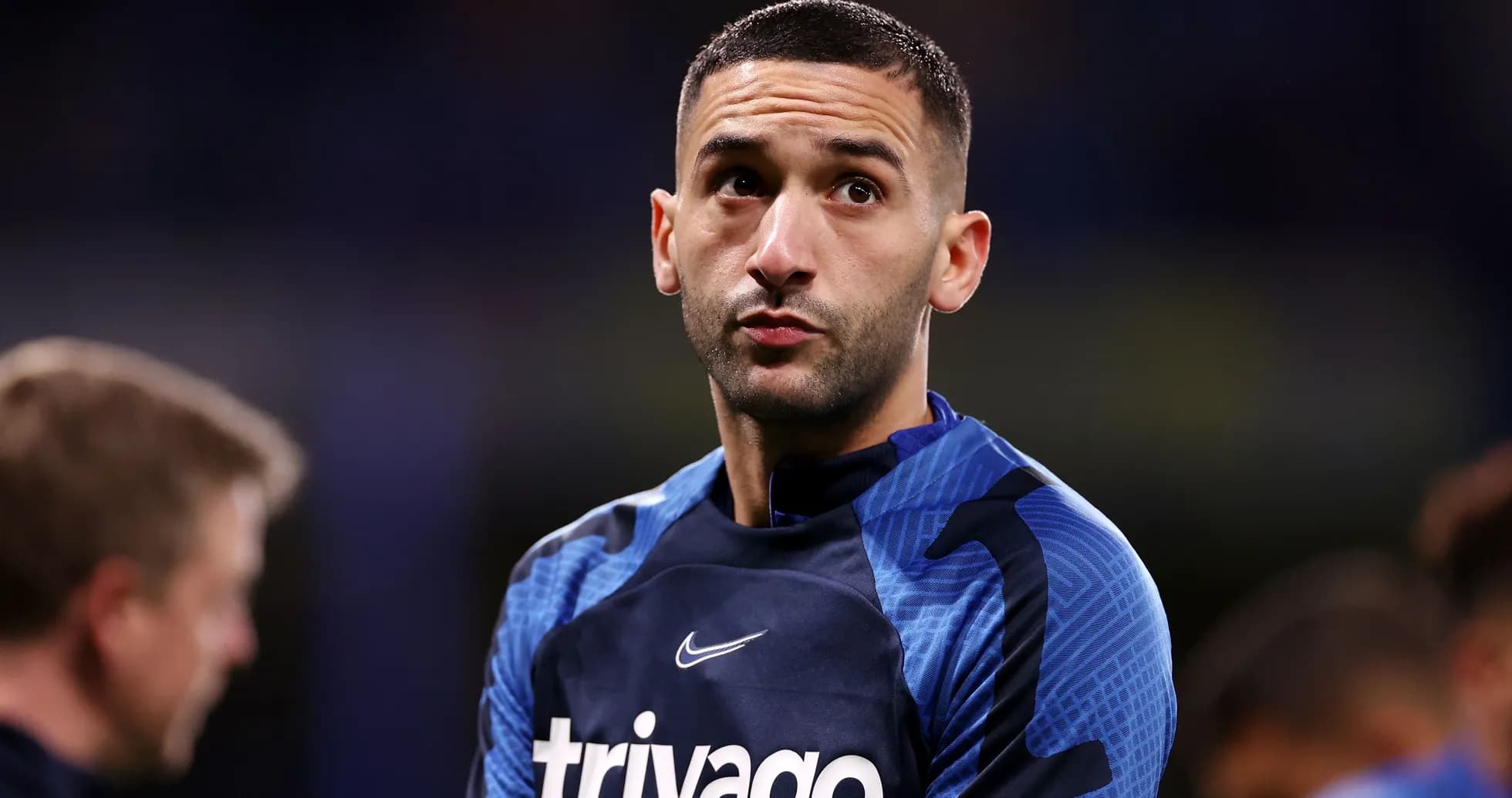
Hakim Ziyech Challenges Itamar Ben-Gvir Over Palestinian Rights
Hakim Ziyech is used to pressure. Champions League nights, World Cup glare, the weight of a nation on his left foot.
This time, the pressure came from a very different arena.
The Wydad Casablanca playmaker has been thrust into a fierce political confrontation with Israel’s Minister of National Security, Itamar Ben-Gvir, after publicly denouncing Israel’s policies towards Palestinian prisoners and questioning a controversial death penalty bill.
An Instagram post that ignited a firestorm
The spark was a single post on Ziyech’s official Instagram account.
As the Knesset debated legislation on the death penalty for perpetrators of armed attacks, Ziyech shared a photo of Ben-Gvir and attached a pointed caption. He questioned the legal and moral basis of such a law and asked, with clear sarcasm and anger:
“Will [Ben-Gvir] claim this time that the passing of the new law is merely self-defence?”
For a footballer with a vast following across North Africa, the Middle East and Europe, it was more than a passing comment. It was a direct challenge to one of Israel’s most hardline political figures at a moment of heightened tension over the treatment of Palestinian detainees.
The post raced across social media, amplified by supporters who saw in Ziyech’s words a reflection of their own frustration over the situation in the occupied territories and Israeli prisons.
Ben-Gvir hits back
If Ziyech expected silence from the other side, he did not get it.
Ben-Gvir, a leading figure of Israel’s far right and the man overseeing the country’s prison system, fired back with a scathing response. He branded Ziyech “an anti-Semitic player” and declared that the Moroccan international had no right to “lecture the State of Israel on morality.”
The language then hardened.
“From now on, Israel will no longer deal cautiously with its enemies… Since I took office, the prisons have changed, and God willing, we will apply the punishment to all militants,”
Ben-Gvir said, framing the entire exchange within his broader security doctrine.
What began as a footballer’s social media post had become a public clash between a global sports figure and a sitting minister, played out in full view of millions.
The law at the centre of the row
Behind the rhetoric lies a piece of legislation that has already drawn heavy criticism.
In late March, the Knesset approved a bill allowing the death penalty to be imposed on those convicted of carrying out armed attacks. Sixty-two MPs backed the measure, a clear sign of its political momentum inside Israel.
Outside the chamber, the reaction has been very different.
International and Palestinian human rights organisations have warned of grave consequences for thousands of detainees in Israeli prisons. Reports from rights groups and legal advocates have long pointed to deteriorating living and health conditions in detention centres. The prospect of adding capital punishment to that landscape has only deepened fears.
It is this context that framed Ziyech’s intervention: a high-profile Muslim player using his platform to question a law that many legal experts and rights defenders see as a dangerous escalation.
Morocco steps in
The storm did not stay confined to social media.
In Morocco, the affair quickly took on a political dimension. The Justice and Development Party, one of the country’s prominent political forces, issued an official statement backing Ziyech.
The party praised his position as “humane and courageous,” aligning his words with what it described as the broader sentiment of the Moroccan public. In its view, Ziyech’s comments on Palestinian prisoners were not a personal outburst, but an extension of “the Kingdom’s historical positions on the Palestinian cause.”
For a player already revered for his performances with the national team, the endorsement underlined how deeply his stance resonated at home. Ziyech, often cast as a symbol of Moroccan pride on the pitch, had now become a political symbol off it.
A footballer in the crosshairs of geopolitics
This is not the first time a footballer has strayed into political territory, and it will not be the last. Yet the scale and intensity of this confrontation stand out.
On one side, a star of Moroccan and African football, now with Wydad Casablanca, speaking to millions through a single post. On the other, a minister who has built his career on uncompromising security policies and who wields direct authority over the very prisons Ziyech was criticising.
The clash lays bare a growing reality in the modern game: elite footballers do not operate in a vacuum. Their words carry weight, especially when they touch on causes as charged and enduring as Palestine.
Ziyech has made his choice. He has stepped firmly into that space, aware of the backlash, but seemingly unwilling to retreat.
The question now is not whether this storm will pass. It is what his next move will say about the role football’s biggest names are prepared to play in the world beyond the touchline.