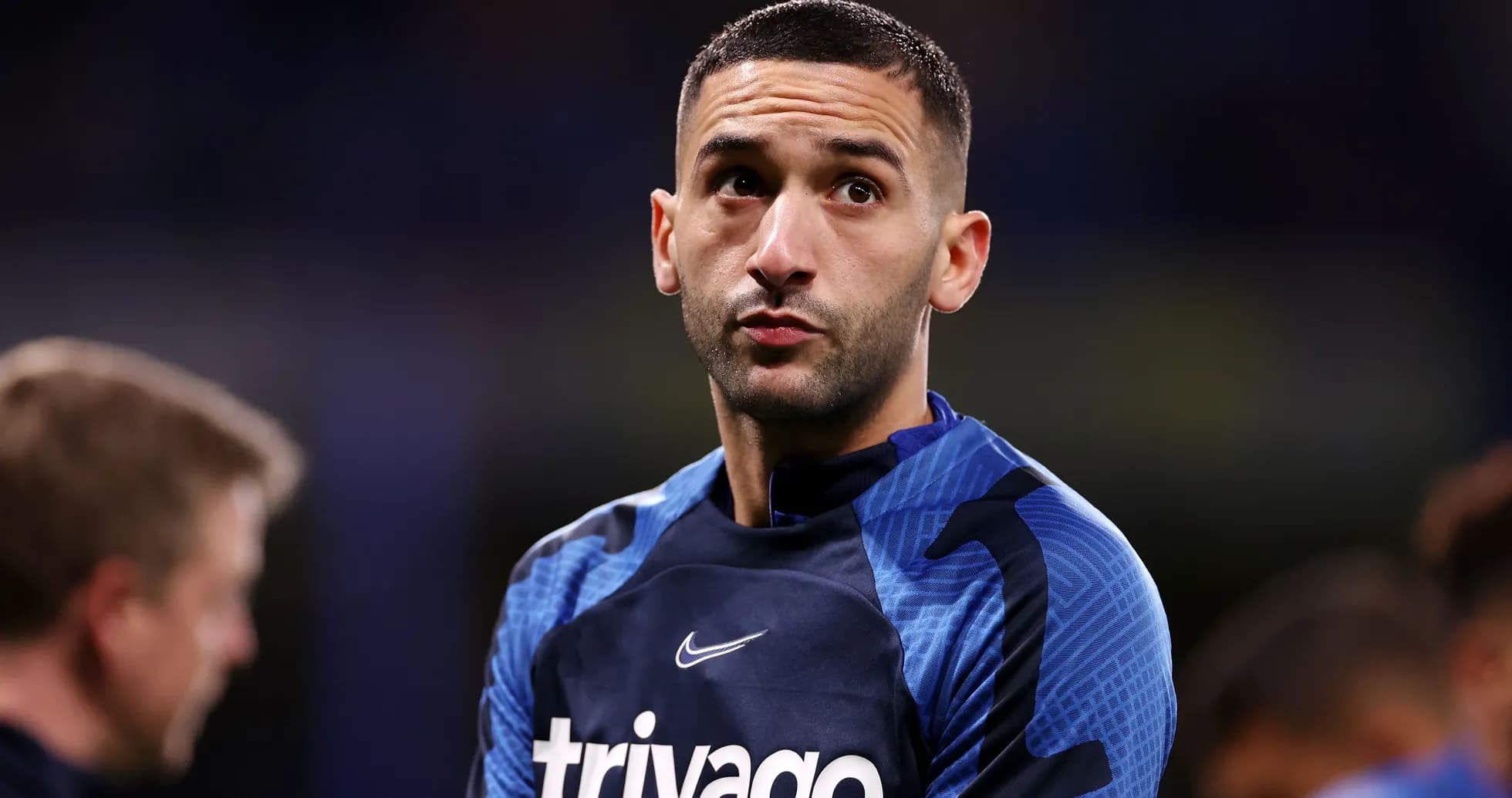
Hakim Ziyech's Instagram Post Sparks Political Controversy
Hakim Ziyech has spent a career threading passes through tight spaces. This time, one Instagram story was enough to split a geopolitical fault line wide open.
The Wydad Casablanca playmaker, a national hero in Morocco and a global football name, ignited a storm after publicly criticising Israeli policies towards Palestinian prisoners. His target: Israel’s Minister of National Security, Itamar Ben-Gvir, one of the most hardline figures in the country’s government.
An Instagram post that crossed from sport to statecraft
The confrontation began when Ziyech shared a photo of Ben-Gvir on his official Instagram account. The timing was pointed. Israel’s Knesset was in the middle of debating new legislation enabling the death penalty for those convicted of carrying out armed attacks.
Ziyech did not hide behind ambiguity. He accompanied the image with a sharp caption questioning the legal and moral basis of such a law, asking whether Ben-Gvir would once again justify it as mere “self-defence”.
In a football world where many stars choose silence on political issues, the post landed like a tackle from behind. It was direct, public and impossible to ignore.
Ben-Gvir hits back
Ben-Gvir, a central figure in pushing tougher measures inside Israeli prisons, did not let the criticism slide.
He fired back with a personal attack, branding Ziyech “an anti-Semitic player” and declaring that such a figure had no right to “lecture the State of Israel on morality.”
Then came the warning. Ben-Gvir insisted that Israel would “no longer deal cautiously with its enemies,” boasting that “since I took office, the prisons have changed,” and vowing that the new punishments would be applied “to all militants.”
The exchange pushed Ziyech from the sports pages into the heart of a heated political debate already raging far beyond any stadium.
A law that shakes the terraces and the streets
At the centre of the row lies a controversial bill that the Knesset approved in late March. Backed by 62 MPs, the legislation opens the door for the death penalty to be imposed on those convicted of armed attacks.
The reaction was immediate. International and Palestinian human rights organisations voiced deep concern, warning about the potential impact on thousands of detainees in Israeli prisons. Reports of worsening living and health conditions inside those facilities have already fuelled anger and anxiety; the spectre of capital punishment adds a darker edge.
Ziyech’s post tapped straight into that tension. For many supporters of the Palestinian cause, he put a famous face and a powerful platform behind long-standing fears about where this law could lead.
Rabat steps in: political backing for a football star
The storm did not stay on social media. It moved into Morocco’s political arena.
The Justice and Development Party, one of the country’s prominent political forces, publicly backed Ziyech. In an official statement, the party praised his stance as “humane and courageous,” framing his criticism as more than a personal opinion.
For them, Ziyech’s words reflected the mood on the Moroccan street and echoed what they described as the Kingdom’s historic positions on the Palestinian cause. A footballer’s Instagram story had become a mirror of public sentiment.
In Morocco, that matters. Ziyech is not just a club player at Wydad Casablanca; he is a symbol of a generation that carried the national team to new heights and a figure whose voice carries well beyond the pitch.
When the beautiful game collides with hard politics
This is not a transfer rumour or a contract dispute. It is a collision between a global football figure and a senior minister in a country at the centre of one of the world’s most entrenched conflicts.
One side, a playmaker using his social media feed to question the morality of a death penalty law and highlight the plight of prisoners. The other, a minister doubling down on a hard line, dismissing the criticism as anti-Semitic and promising harsher measures.
The law is now on the books. The human rights concerns are mounting. And a footballer who built his reputation on vision and courage in tight spaces has chosen to show the same traits in one of the most unforgiving arenas of all: the politics of the Middle East.